

Blue Patterned Ceramics
Blue patterned ceramics bring together centuries of glaze, pigment and form across porcelain, earthenware and ironstone.
Blue Patterned Ceramics
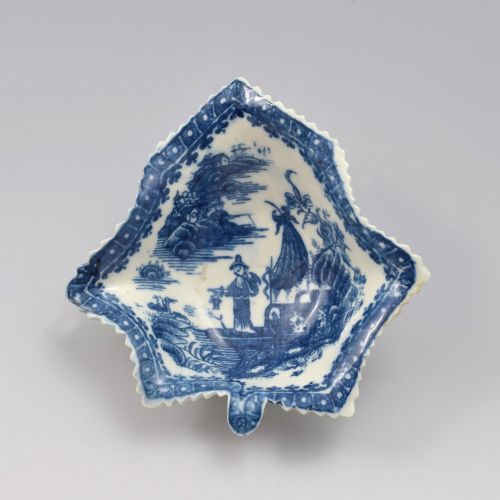
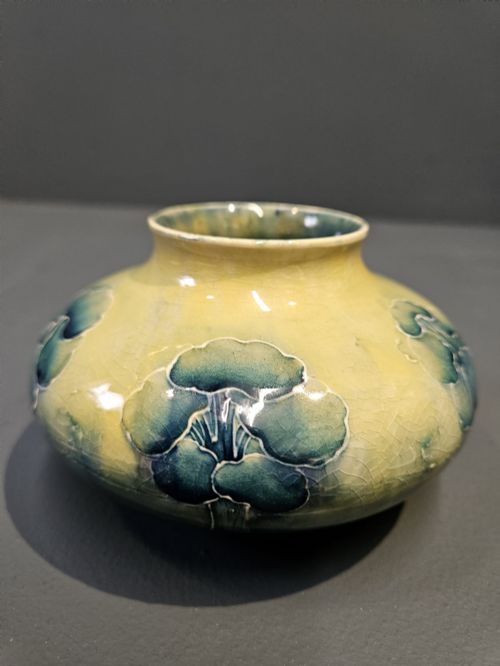
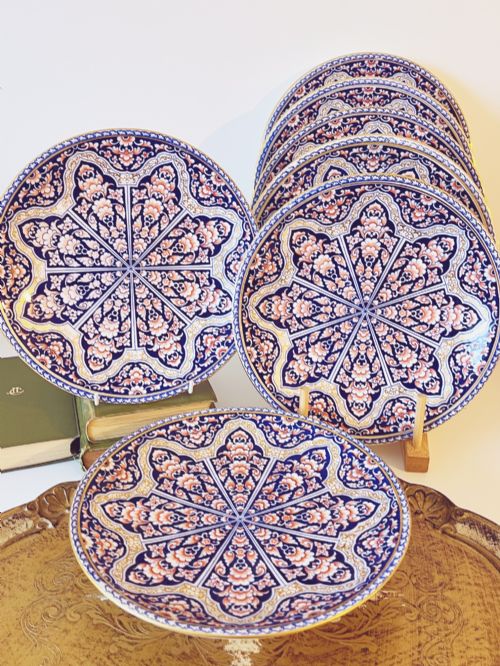
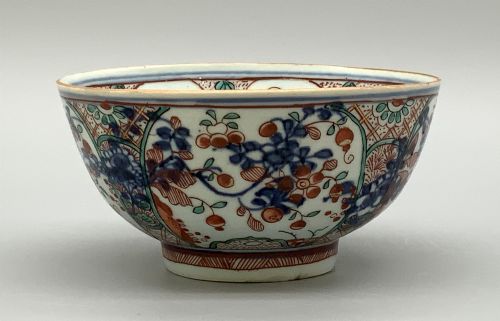
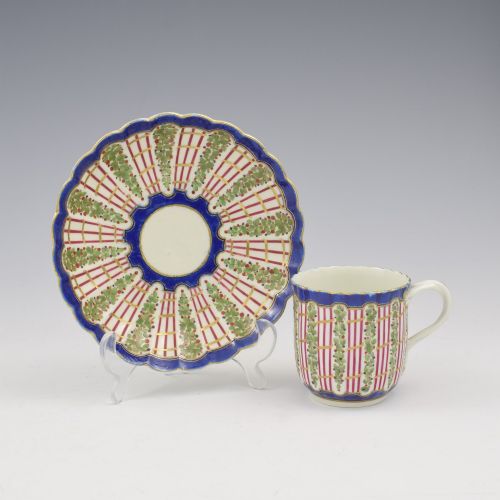
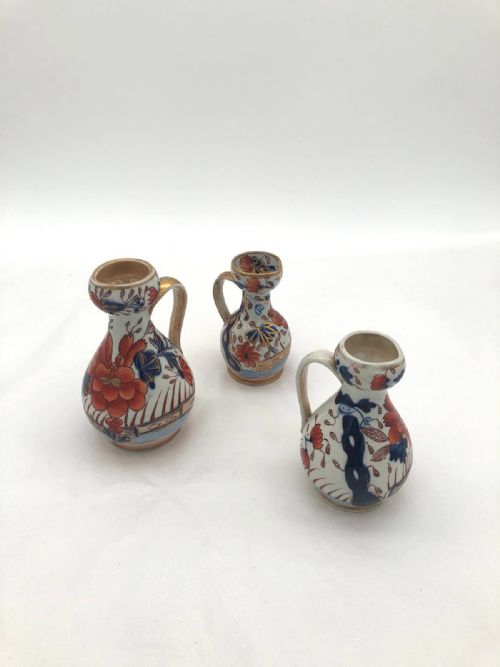
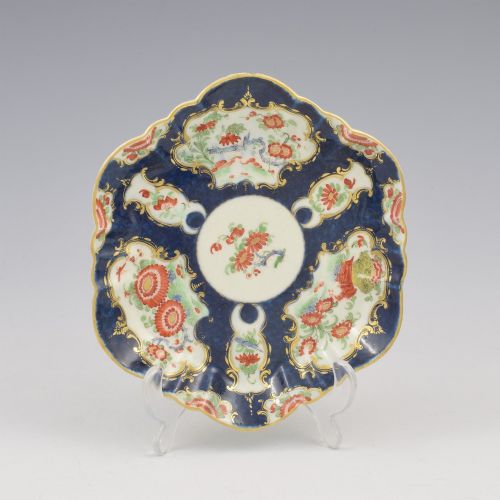
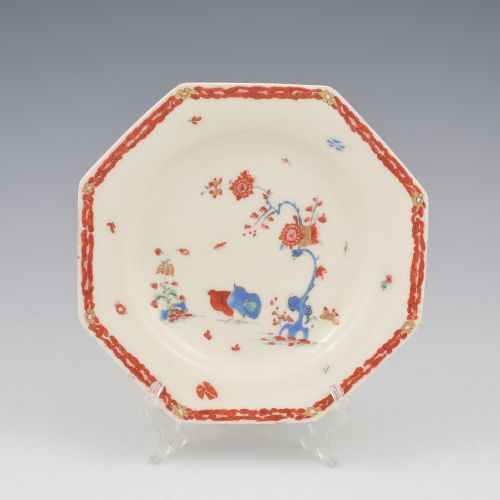
Blue patterned ceramics encompass domestic vessels, tableware and decorative objects spanning the 18th century, Georgian and Victorian periods, alongside Chinese export wares. The selection on this page relies heavily on 19th-century ironstone jugs, transferware chargers and porcelain cups from makers such as Spode and Mason's.
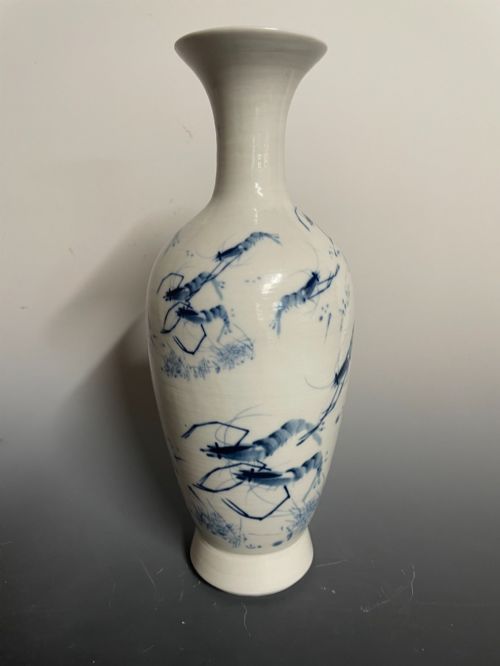
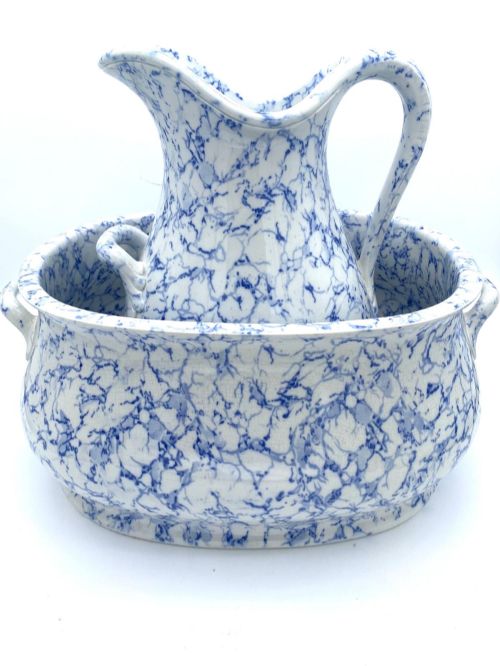
Forms range from utilitarian pitchers, footbaths and spice dishes to grand comports, vases and dessert services. Buyers encounter traditional motifs like blue scale, floral sheets, and schoolhouse patterns applied across diverse bodies.
How they were made
Potters shaped bodies from refined porcelain, earthenware, or dense ironstone, often applying cobalt blue pigments beneath or over the glaze before high-temperature firing. Transfer printing allowed intricate designs like Long Bridge or India Temple to transfer mechanically from engraved copper plates to tissue paper and onto the ceramic surface.
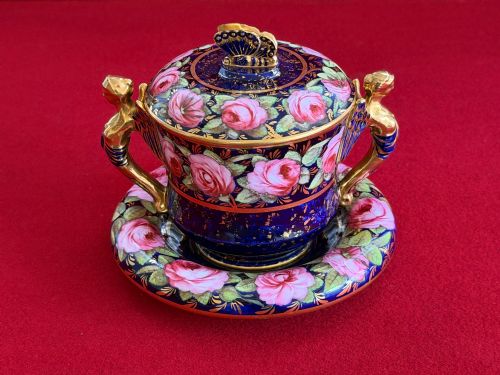
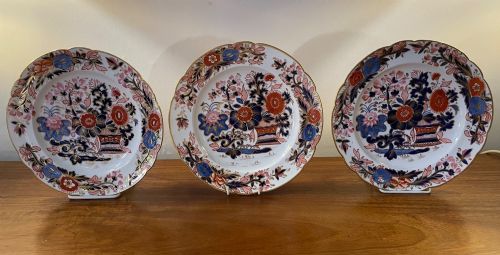
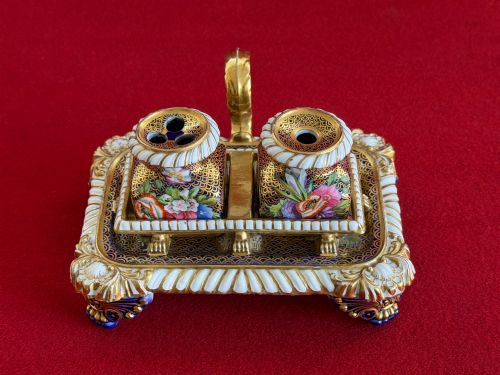
Finishing touches frequently included hand-applied enamel colours, gilding, and gold leaf accents to highlight specific mouldings, borders, or handles on plates, vases and tureens.
Listings feature 18th-century porcelain, Georgian ironstone, and Victorian earthenware decorated with transfer printing and hand-applied enamels.
What varies in quality
Quality rests upon the crispness of the transfer print, the depth and clarity of the cobalt blue glaze, and the precision of any secondary hand-colouring or gilding. Earlier 18th-century porcelain pieces often display finer body translucency and delicate potting compared to robust 19th-century ironstone bodies.
Condition and completeness also define the standard, especially in matched dessert services, sets of plates, and items retaining original covers, where crisp edges and unblemished enamel signal superior preservation.
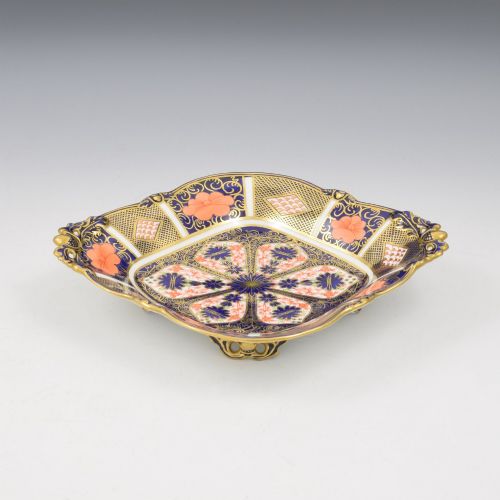
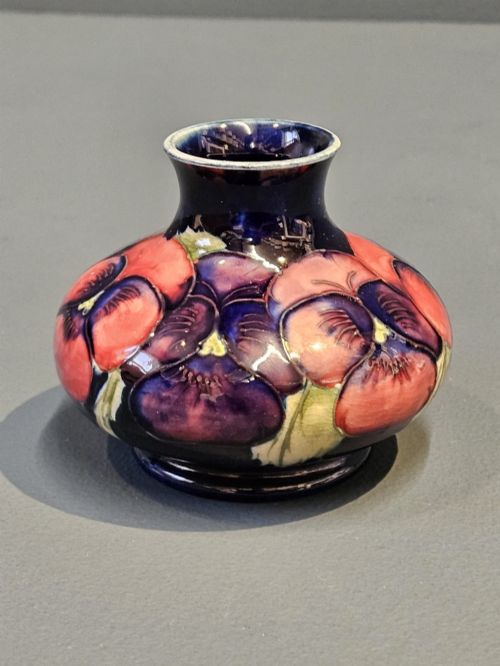
Moorcroft·Spode·Royal Crown Derby·Mason's·Hicks & Meigh
The Blue Patterned Ceramics Glossary
- Ironstone
- A patented ceramic body invented in the 19th century to provide a durable, heavy alternative to porcelain. It resists chipping and accepts cobalt blue transfers readily.
- Transferware
- Pottery decorated by pressing a design engraved on a copper plate onto tissue paper, which was then transferred onto the unglazed or bisque ceramic body. This technique revolutionised mass production of blue and white patterns.
- Imari
- A decorative style inspired by Japanese export porcelain, characteristically combining underglaze cobalt blue with iron red, green, and gold highlights.
- Comport
- A raised dish or bowl used for serving fruit or dessert as part of a formal table service. They sit on a central foot or pedestal.
- Gilding
- The application of gold leaf or gold powder to the surface of ceramics for decorative effect. It is often fired onto the glaze to secure adhesion.
Blue Patterned Ceramics: Frequently Asked Questions
How do I date blue and white transferware?
Dating relies on identifying the registry marks, maker's stamps, and specific pattern names recorded on the underside of the ceramic body. Stylistic clues in the border designs and the shade of the blue pigment also help narrow down the manufacturing decade.
Potters often updated their printed marks with each royal reign or partnership change, giving modern collectors a reliable chronology for pieces produced during the Georgian and Victorian eras.
Are these ceramics suitable for daily use?
Most antique earthenware and ironstone pieces were made for domestic service, but age, hairline cracks, and fragile overglaze enamels require careful handling. Many collectors prefer to display chargers, plates, and delicate porcelain cups rather than subject them to modern dishwashers.
Gentle hand washing in lukewarm water preserves the integrity of the glaze and prevents any delicate gilding from fading over time.
What is the difference between porcelain and ironstone?
Porcelain is a vitrified, translucent ceramic fired at high temperatures from kaolin and petuntse, resulting in a resonant, delicate body. Ironstone is an opaque, heavily vitrified earthenware designed for strength and durability.
While early porcelain pieces like those from Worcester or Caughley prioritize refined translucency, 19th-century ironstone jugs and platters focus on robust utility.