
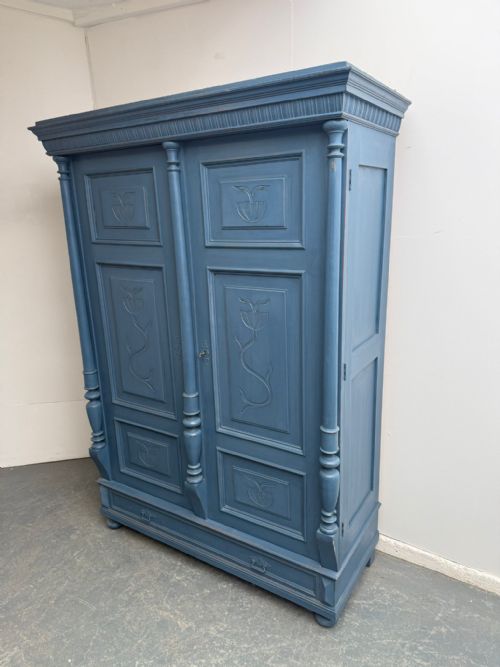


Blue Painted Linen Press
A blue painted linen press brings useful storage and calm colour into a room, joining practical storage with folk character.
Blue Painted Linen Press
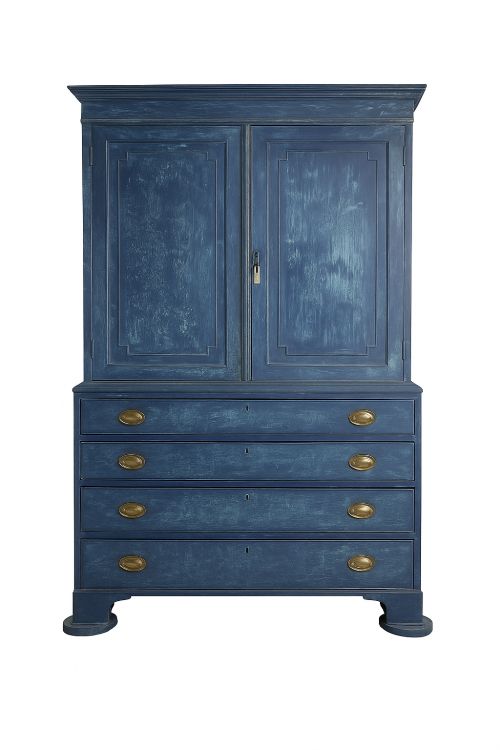
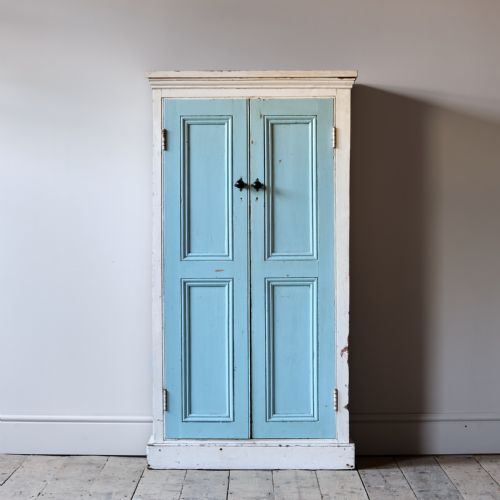
A blue painted linen press is a substantial storage piece used for household linens, clothing and provisions, appearing in forms such as cupboards, cabinets, housekeepers cupboards, and hall wardrobes. These pieces bridge utilitarian function and decorative painted surface, serving as focal points in kitchens, bedrooms, and hallways.
The selection on this page draws from the 18th century, 19th century, Regency, Victorian, and 1930 periods, spanning origins across England, Wales, France, Scandinavia, and India. Forms range from simple pine cupboards on stands to double door presses and tall carved hall wardrobes.
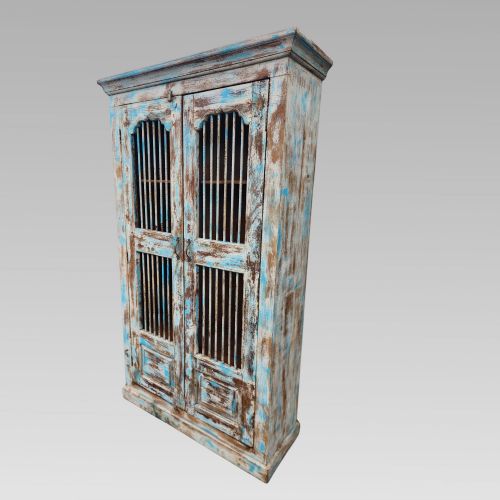
Buyers meet variations including rustic Scandinavian pine pieces, Swedish two door linen cupboards, and reclaimed Indian teak or cedar storage cupboards. Each provides enclosed shelving or hanging space behind panelled doors, finished in various shades of blue paint.
What varies in quality
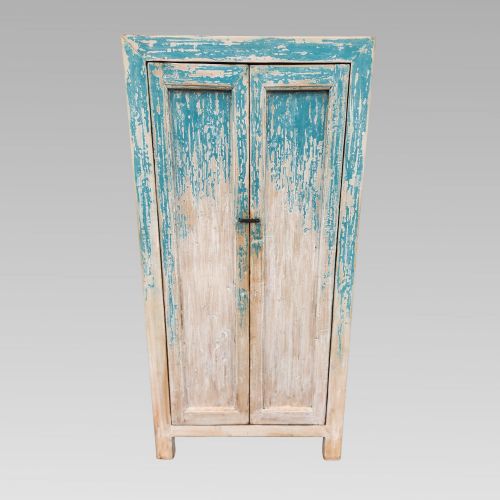
The standard of a blue painted linen press rests upon the integrity of its timber frame and the character of its painted surface. Original or historic paint layers that show natural weathering and depth hold greater visual interest than flat, modern overpainting.
Proportion and joinery execution distinguish simpler vernacular items from refined formal pieces. Balanced door alignment, well-fitted internal shelving, and intact iron or brass furniture contribute to the overall merit of the piece.
Several cupboards hide decades of quiet textile storage behind blue painted doors.
The Blue Painted Linen Press Glossary
- Linen press
- A tall cupboard or cabinet originally designed for storing folded linen and bedding on internal shelves. These pieces often feature double doors enclosing multiple sliding trays or stationary shelves.
- Housekeepers cupboard
- A large storage cabinet traditionally used in country houses to store household provisions, linens, and tableware. They typically combine upper cupboard storage with lower drawers or shelving.
- Pine
- A softwood commonly used in European vernacular furniture for its workability and availability. It accepts paint finishes readily, making it the primary base for painted country cabinets.
- Gustavian
- The Swedish neoclassical style spanning the late 18th and early 19th centuries, known for pale painted finishes, restrained carving, and functional elegance. Pieces from this tradition often feature subtle architectural mouldings.
- Buffet à deux corps
- A traditional French two-body cabinet consisting of a lower sideboard section surmounted by a smaller upper cupboard. These architectural pieces provide substantial display and enclosed storage.
Blue Painted Linen Press: Frequently Asked Questions
What is a linen press used for today?
A linen press serves as a versatile storage cabinet for folded clothes, bedding, towels, and general household items in bedrooms or hallways.
The enclosed shelving keeps contents dust-free while the substantial exterior presence anchors the room's decor.
How do I care for painted wood furniture?
Dust surfaces regularly with a soft, dry cloth and avoid harsh chemical cleaners that can damage historic or decorative paint layers.
Keep wooden furniture away from direct heat sources and strong sunlight to prevent timber movement and paint fading.
How do I tell a Swedish cupboard apart from an English one?
Swedish cupboards frequently display specific regional traits such as Gustavian mouldings, pale or blue folk painted finishes, and distinct panel proportions.
English counterparts, such as housekeepers cupboards or dressers, often utilise native pine or oak with simpler vernacular joinery.
What rooms suit a large painted cupboard?
Large painted cupboards work effectively in spacious kitchens for tableware, boot rooms for outerwear, or bedrooms as wardrobes.
The painted surface helps soften the visual weight of large storage pieces in domestic interiors.