

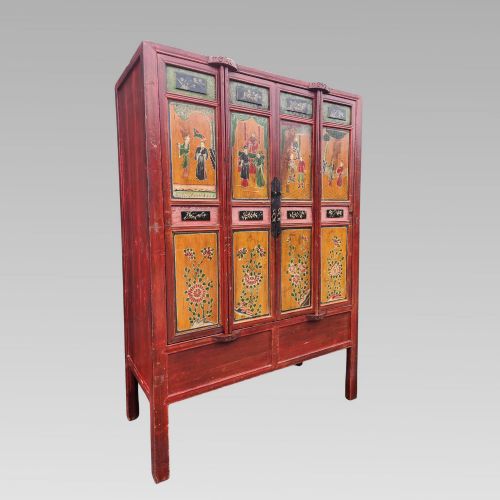


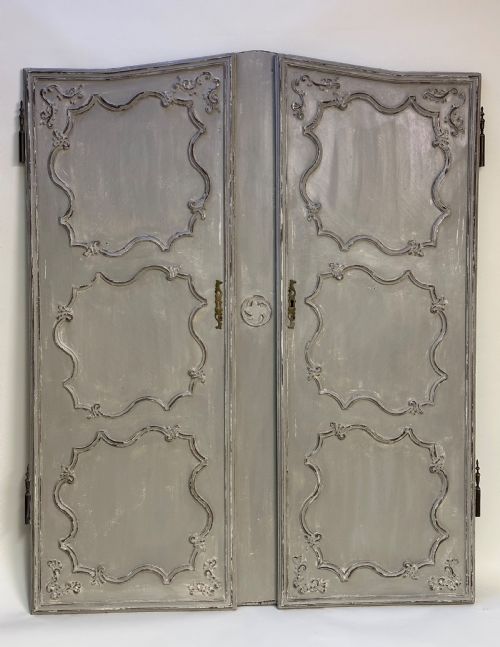
Painted Timber Armoire
These painted timber armoire pieces bring functional storage and rich colour to a room, offering robust utility wrapped in regional character.
Painted Timber Armoire
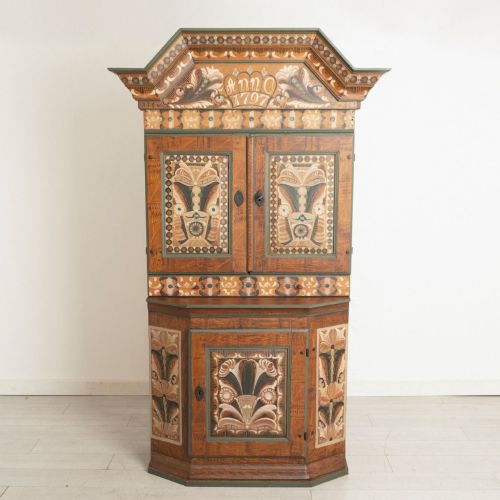
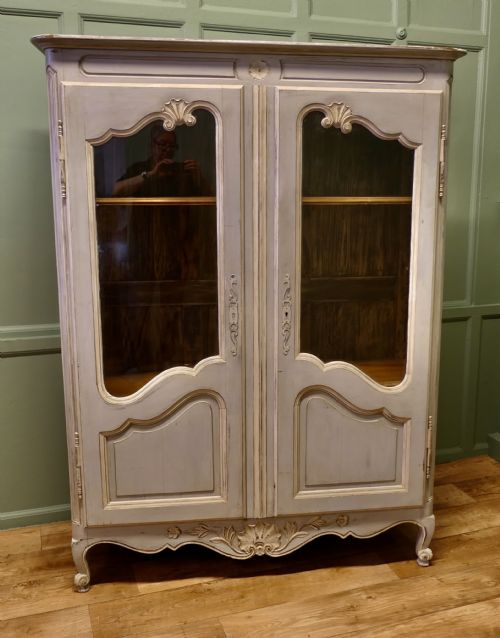
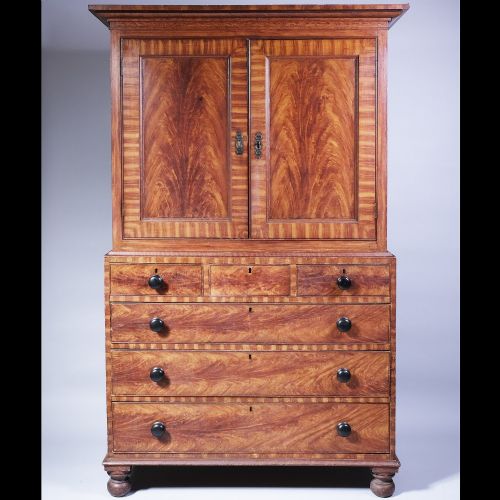
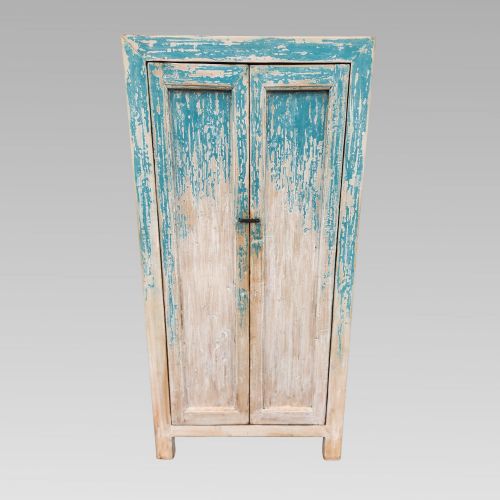
A painted timber armoire encompasses large storage cupboards, wardrobes, housekeeper cabinets, and marriage chests created across multiple centuries and regions. Buyers search for these items to gain substantial storage space while introducing distinct decorative painted surfaces into an interior scheme.
The pieces on this page span several distinct traditions, ranging from European country styles to British institutional pieces and Asian decorative works. Most examples belong to the nineteenth century or the early twentieth century, utilising robust timbers finished with decorative paint schemes.
Forms vary from grand vitrines and double-door wardrobes to simpler larder cupboards, hanging cupboards, and marriage cabinets. Each regional variation demonstrates specific construction methods and decorative motifs unique to its period of origin.
Materials and construction
Makers constructed these cabinets using regional timbers such as pine, cedar, and various hardwoods, depending on the local availability of materials. Metal elements like iron hinges and brass fittings provide structural support and operational hardware for doors and closures.
Surface decoration relies on paint, scumble finishes, lacquer, and polychrome detailing applied directly to the wood. Some items incorporate glass panels for display purposes or hand-carved details integrated into the timber framework.
Painted Timber Armoire Retail Price Guide 2026
Typical asking prices for painted timber armoire among the pieces listed under this phrase on Sellingantiques today, from the lower quarter to the upper quarter. They describe what is for sale here now, not the wider market.
The listings on this site feature pieces from the eighteenth, nineteenth, and early twentieth centuries, constructed in pine, cedar, and other woods.
Assessing quality
Quality rests in the integrity of the timber construction, the preservation of the original painted surface, and the balance of regional proportions. Pieces retaining their early or original paint layers command greater attention from collectors who value untouched historical surfaces.
Joinery techniques and hardware execution reveal the competence of the maker, whether working within a local rustic tradition or a formal institutional workshop. Refined carving, well-fitted doors, and harmonious decorative schemes separate standard utility furniture from exceptional examples.
The Painted Timber Armoire Glossary
- Armoire
- A large wardrobe or cupboard, traditionally used for storing clothes.
- Scumble painted
- A decorative paint technique involving translucent layers dragged or textured over a base coat to simulate grain or depth.
- Polychrome
- Decorated in multiple colours, frequently seen on folk art and country furniture.
- Vitrine
- A glass-fronted cabinet or display case used for showing objects.
- Larder cupboard
- A tall storage unit originally designed for keeping food cool and organised.
Painted Timber Armoire: Frequently Asked Questions
What is a painted timber armoire used for?
These cabinets serve as substantial storage furniture for clothing, linen, and household goods in bedrooms and living spaces. Their generous internal capacity makes them practical solutions for everyday organisation.
Beyond simple storage, they function as decorative focal points within a room due to their painted surfaces and architectural presence.
How do I care for a painted timber cabinet?
Maintain the timber and paintwork by keeping the cabinet away from direct sunlight and fluctuating heat sources. Gentle dusting with a dry or slightly damp cloth preserves the finish without harming historical surfaces.
Avoid chemical polishes and liquid cleaners that might degrade fragile scumble or polychrome paint layers over time.
How do I identify the period of a painted cupboard?
Dating relies on examining construction joints, hardware types, timber species, and the characteristics of the paint application. Nineteenth-century examples often display hand-mixed pigments and traditional joinery methods distinct from twentieth-century pieces.
Regional styles also provide clues, as specific decorative motifs and structural forms align with particular eras and geographical origins.
Are these cabinets suitable for modern homes?
Their substantial size and distinctive painted finishes allow them to anchor modern interior schemes by introducing texture and historic character. They fit well in large bedrooms, hallways, or kitchens depending on the specific internal layout.
Buyers frequently utilise them as standalone wardrobes or linen presses where fitted furniture is absent.