
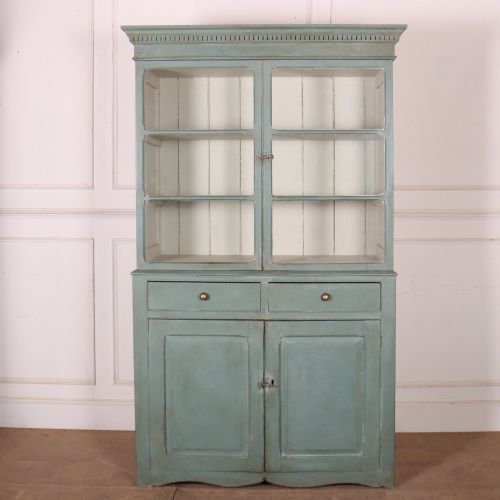
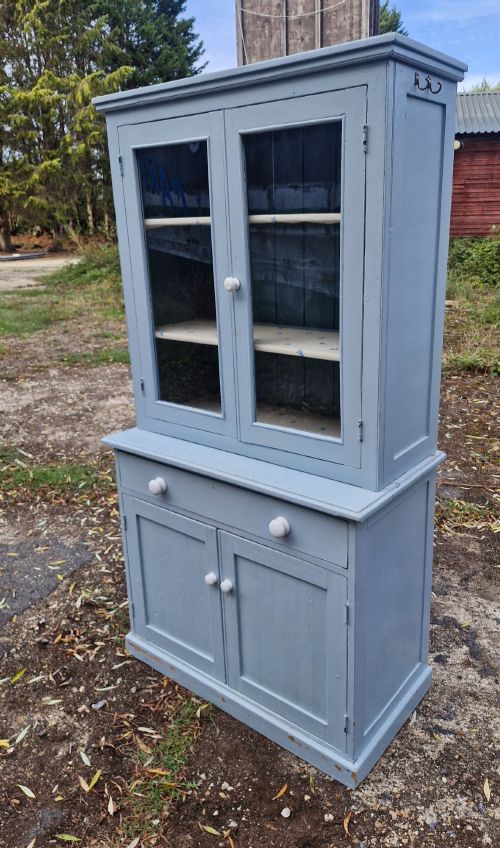
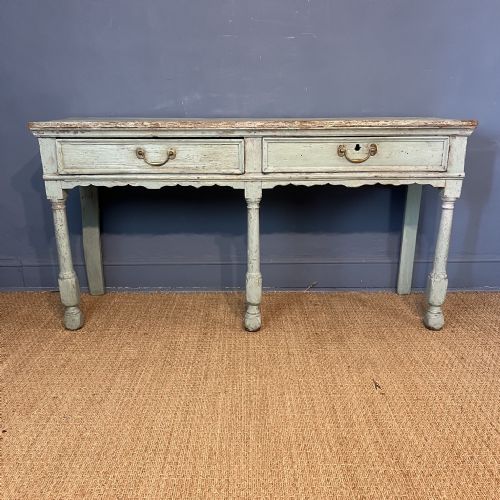
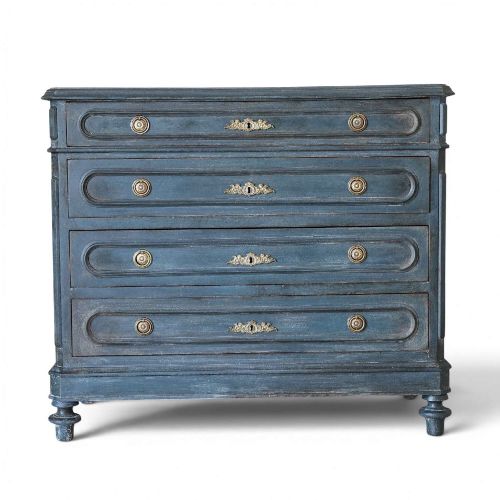
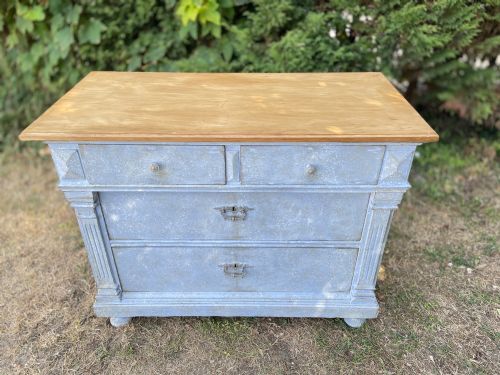
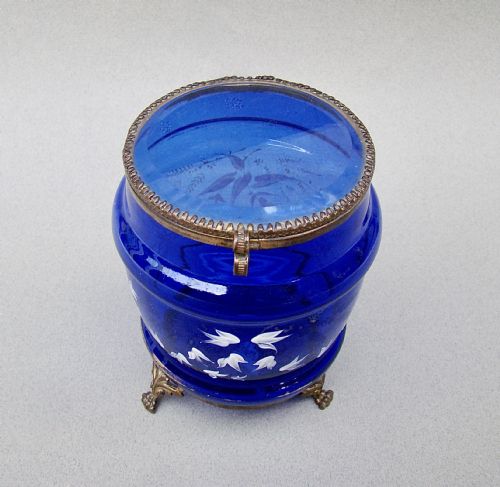
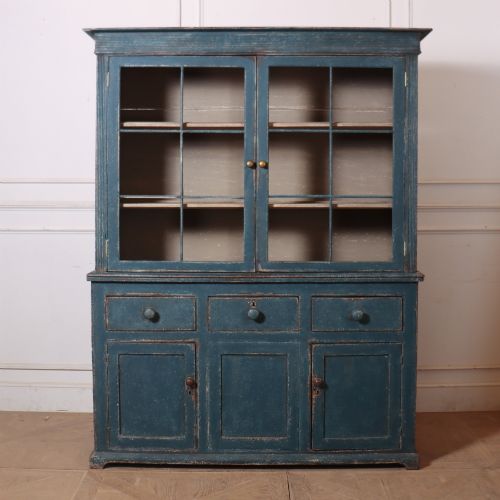
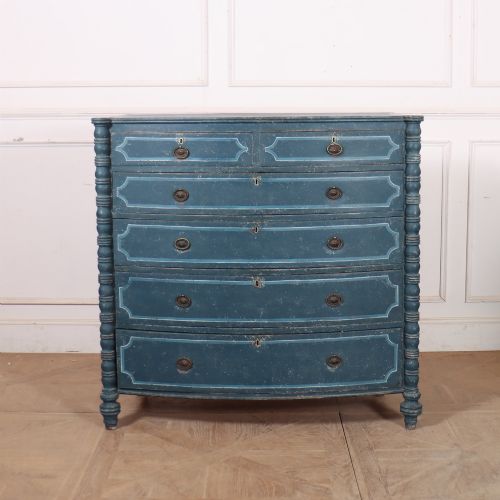

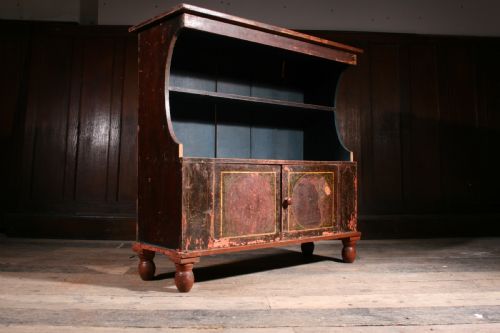


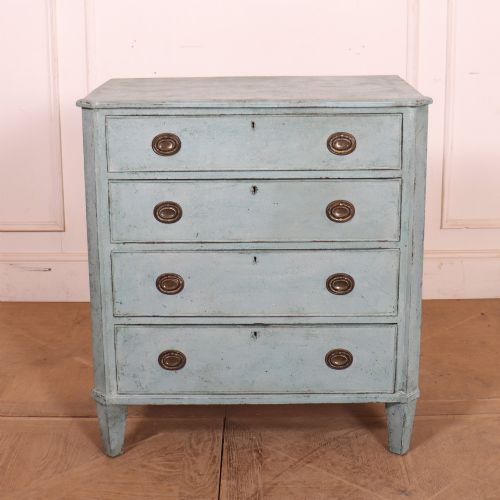

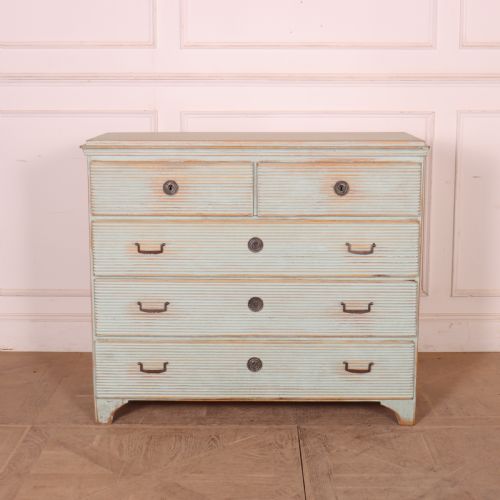

Blue Painted Dresser
A blue painted dresser brings practical storage and a distinctive hand-finished colour to a room.
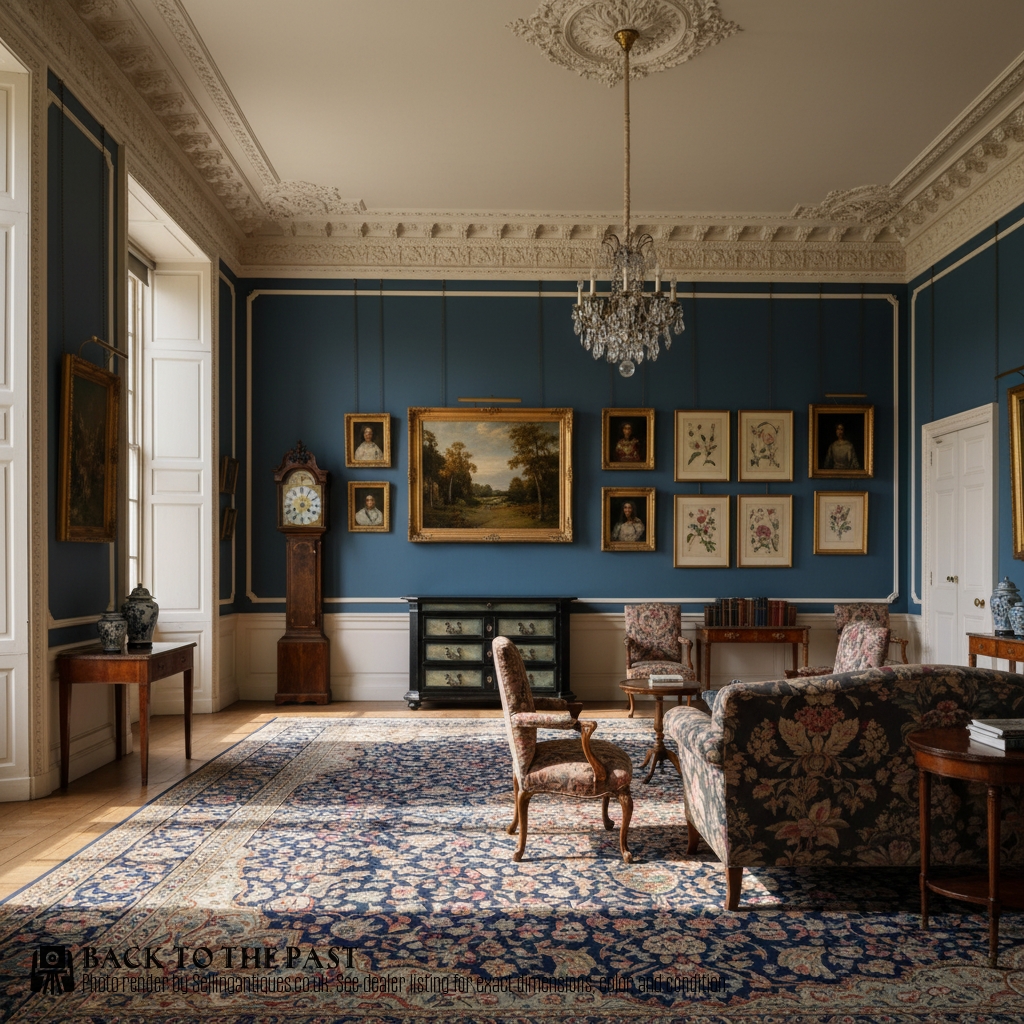
Blue Painted Dresser
A blue painted dresser encompasses sturdy kitchen storage units, potboard bases, and multi-tier cabinets from the eighteenth, nineteenth, and early twentieth centuries. These pieces originate from English country houses, French provincial settings, and Scandinavian rural workshops.
Buyers will most frequently encounter painted pine construction, often featuring original blue scraped finishes or later decorative coats applied over time. Forms range from two-part kitchen cupboards to open-shelf dresser bases designed for display and utility.
Regional variations span from West Country English farmhouse dressers to Gustavian Swedish commodes and cabinets. Each geographical style brings distinct proportions, from the linear restraint of Scandinavian neoclassical pieces to the robust utility of British country furniture.
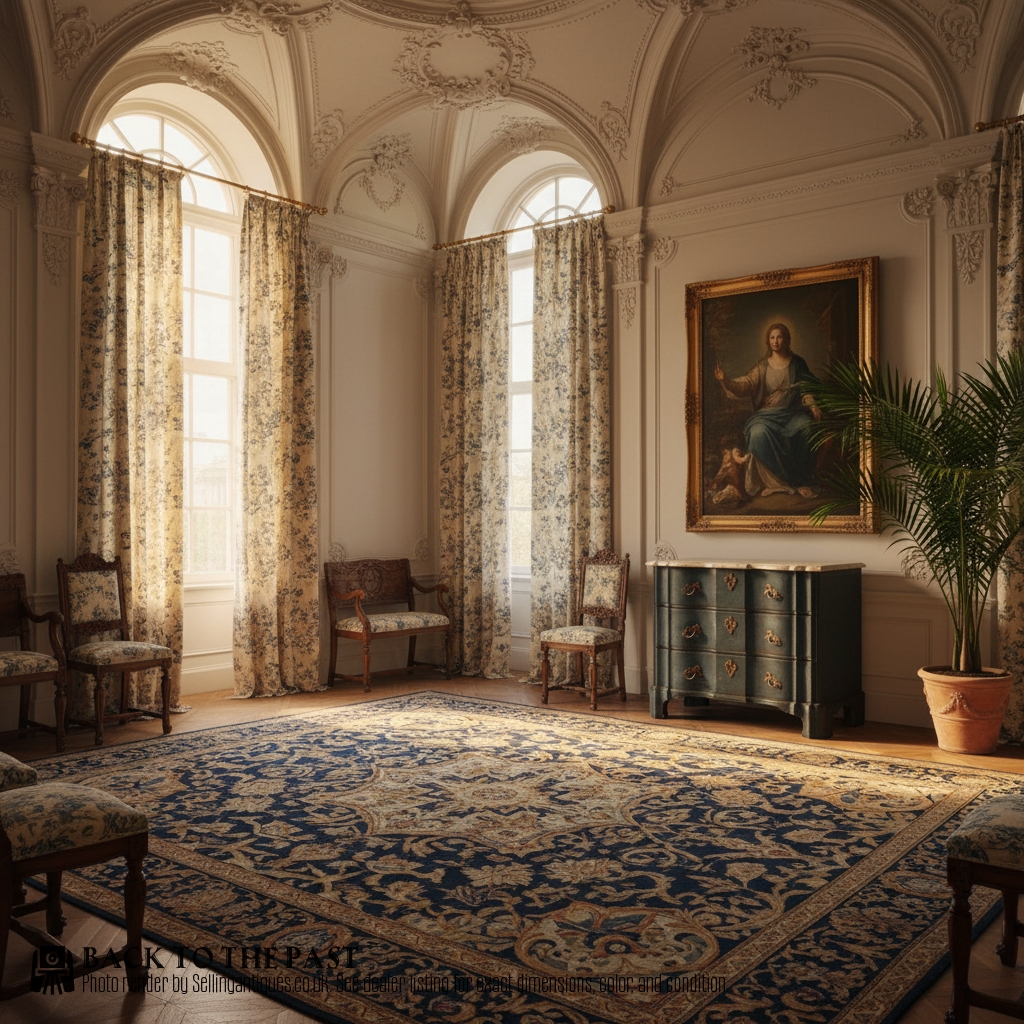
Materials and construction
Makers relied primarily on pine, oak, and other domestic softwoods and hardwoods to build these carcases, utilising traditional joinery such as dovetails for drawers and pegged joints for frames. Iron and brass hardware, including handles, hinges, and escutcheons, fastened doors and secured compartments.
Surfaces were finished with paint, sometimes complemented by gilt detailing, faux marble tops, or enamel elements. Layers of pigment applied over centuries created the patinated textures observed on original pieces today.
Blue Painted Dresser Retail Price Guide 2026
Typical asking prices for blue painted dresser among the pieces listed under this phrase on Sellingantiques today, from the lower quarter to the upper quarter. They describe what is for sale here now, not the wider market.
Listings span pine, oak, brass, glass, iron, and enamel, encompassing periods from the Georgian era through the early twentieth century.
Assessing quality and character
Quality rests in the integrity of the original construction and the survival of early or untouched surface paint. Pieces retaining their initial scraped paint finish or authentic period patination hold greater historical cohesion.
Proportion and execution distinguish finer regional workshops from standard utility pieces. The balance of drawer stacks, the subtlety of fluted drawer fronts or diamond-point mouldings, and the harmony of hardware all indicate the level of craftsmanship involved.
The Blue Painted Dresser Glossary
- Dresser base
- A low sideboard or cabinet with drawers and frequently a potboard shelf beneath, intended for kitchen or dining room utility.
- Gustavian
- The Swedish neoclassical style spanning the late eighteenth and nineteenth centuries, characterised by restrained lines, pale paint finishes, and subtle classical carving.
- Potboard
- An open slatted lower shelf fitted beneath a dresser base, historically used for storing heavy pots and pans.
- Commode
- A low chest of drawers or cabinet on legs, originating in French furniture design and adopted widely across Europe.
- Buffet à deux corps
- A tall two-part storage cabinet or cupboard, typically featuring an upper display section placed upon a deeper lower base.
Blue Painted Dresser: Frequently Asked Questions
Where were blue painted dressers used?
These pieces served practical storage functions in domestic kitchens, dining rooms, and pantries across rural England, France, and Scandinavia. They held tableware, linens, and provisions for daily household life.
Over time, many transitioned into living spaces and hallways to display ceramics and books while providing concealed storage within drawers and cupboards.
How do I care for original paint?
Protect the surface by keeping pieces away from direct sunlight and fluctuating heat sources, which can cause wood to move and paint to flake. Dust gently with a dry, soft cloth.
Avoid commercial cleaning sprays, waxes, or solvents that might soften or strip historic pigment layers and alter the natural patina.
What is Gustavian style?
Gustavian design is the Swedish interpretation of French neoclassical taste, named after King Gustav III and prevalent from the late eighteenth century onward. It relies on symmetrical forms, fluted columns, and pale painted surfaces.
Pieces from this tradition often feature simplified classical motifs, making them adaptable to both period and contemporary interiors.
How do I distinguish regional styles?
English country dressers typically present robust pine or oak frames with simple mouldings and deep drawers suited to farmhouse use. Scandinavian and French examples often incorporate neoclassical details like diamond-point carving or fluted drawer fronts.
Examining the underlying timber, joinery techniques, and construction hardware helps identify whether a piece originated in the West Country or a Swedish workshop.