
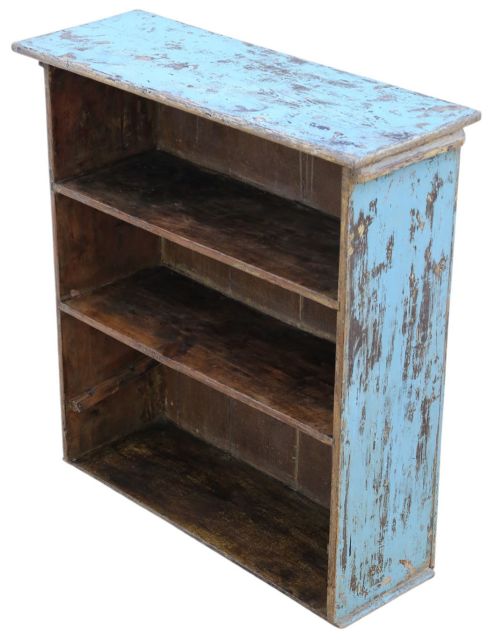
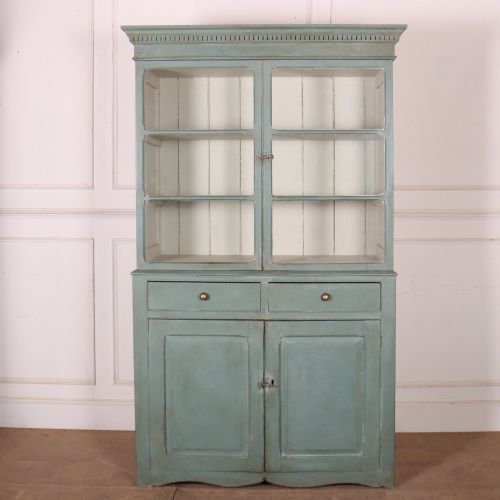
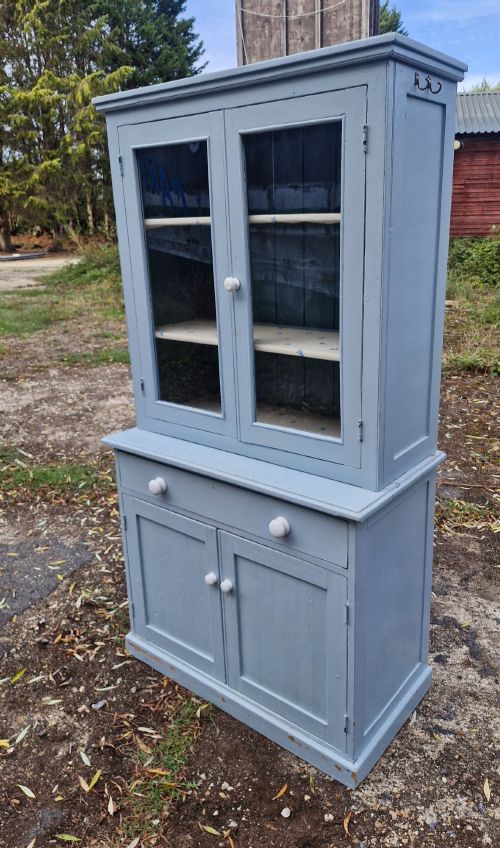
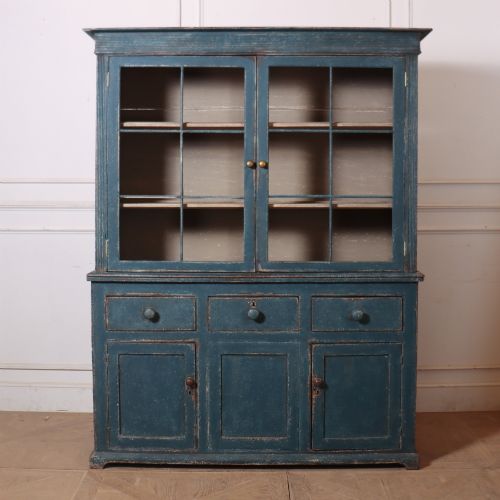
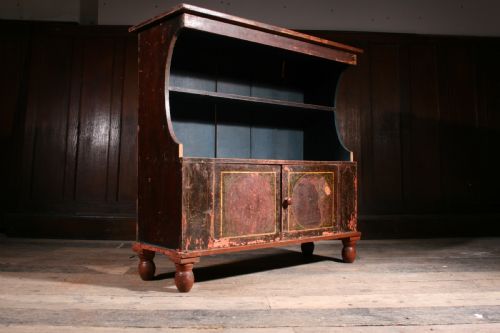


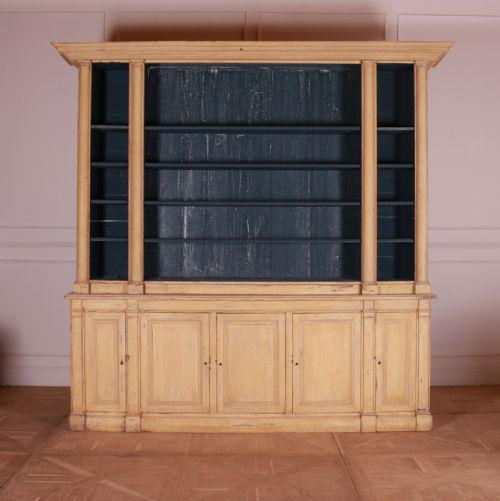
Blue Painted Bookcase
A blue painted bookcase brings practical display space and regional character into a room through honest timber and historic colour.

Blue Painted Bookcase
When you search for a blue painted bookcase, you encounter pieces that range from English country pine furniture to taller Georgian library pieces and glazed display cabinets. These items combine open or glazed shelving with storage cupboards, serving both practical and decorative purposes in domestic settings.
The versions most commonly met on this page span the nineteenth century, including regional West Country and Scottish pieces alongside later revival styles. Their forms vary from two-part kitchen dressers and corner cabinets to breakfront library bookcases, all sharing a foundation of timber finished in paint.
Materials and construction
Construction relies primarily on pine and various hardwoods such as mahogany and fruitwood, often incorporating glass for display doors and brass for hardware fittings. These materials are worked using traditional joinery methods suited to domestic storage furniture.
Surface finishes involve layers of paint applied to wood, with many examples retaining original or early painted surfaces that show natural ageing and wear over decades of use.
Listings feature items spanning the Georgian period, the nineteenth century, and the twentieth century, constructed from pine, mahogany, and fruitwood.
Assessing quality and character
Quality in these pieces rests upon the integrity of the original timber construction and the proportion of the cabinetry. Finer examples display balanced proportions, well-fitted doors, and untouched surfaces that tell a clear history of use.
The character of the paint finish itself dictates much of the appeal, where original pigment layers and natural patination distinguish a piece with authentic regional provenance from later or heavier alterations.
The Blue Painted Bookcase Glossary
- Breakfront
- A piece of furniture where the central section projects forward from the flanking sections. This configuration creates architectural depth in larger bookcases.
- Glazed
- Fitted with glass panes within the doors to protect books while keeping them visible. This treatment is typical of better library furniture.
- Dresser
- A dual-purpose piece combining base cupboards with upper display shelving. They frequently appear in regional country kitchen contexts.
- Pier cabinet
- A narrow display piece designed to fit into the wall space between windows. These often feature glazed doors for housing books or china.
- Fruitwood
- Dense timber derived from fruit-bearing trees such as pear or apple, sometimes used for inlay or cabinet construction. It provides a smooth grain and warm tone.
Blue Painted Bookcase: Frequently Asked Questions
How do I date a painted bookcase?
Dating relies on examining construction joints, timber types, and backboards alongside stylistic details. Earlier pieces often employ hand-cut boards and specific regional joinery.
Paint analysis also helps, as historic surface layers and preparation techniques differ between Georgian, Victorian, and later twentieth-century periods.
Are these bookcases suitable for everyday use?
Most examples are sturdy enough for daily book storage, provided shelves are not overloaded with excessive weight. Solid pine and hardwood frames handle normal household collections well.
Care should be taken with antique glass panes and historic hinges during regular cleaning and adjustment.
What is original paint?
Original paint refers to the earliest or primary decorative coating applied to the timber surface when the piece was first made. It shows natural integration with the wood underneath.
Over generations, this surface develops a soft patination and wear pattern that cannot be replicated by modern repainting.
Where were regional bookcases made?
Regional pieces originate from specific areas such as the West Country of England, Scotland, and Ireland, reflecting local workshop traditions. Makers utilised native timbers available in their immediate vicinity.
Distinctive mouldings and proportions often give away the geographic origin of an unlabelled country cabinet.