
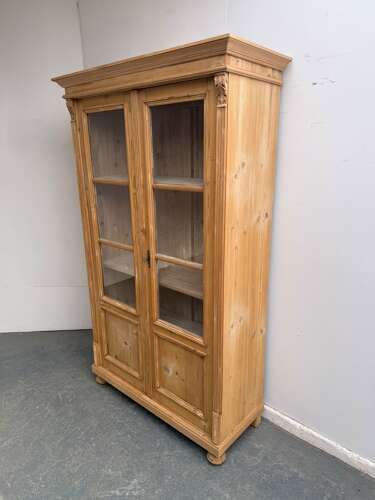
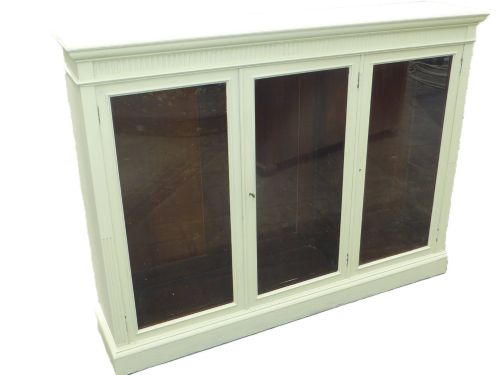
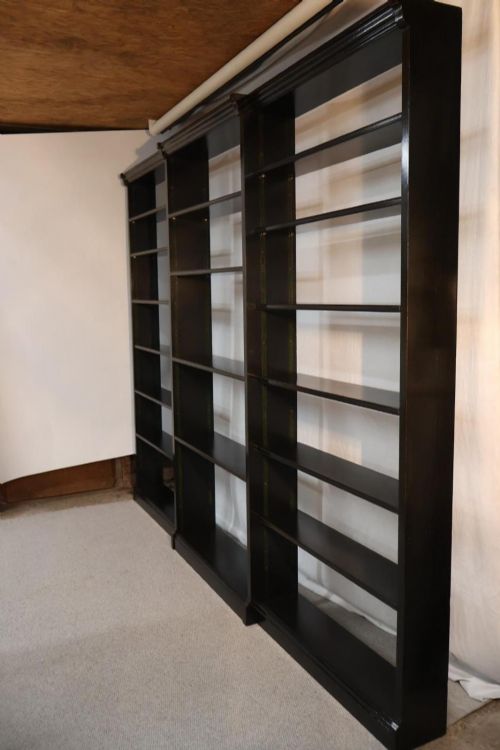
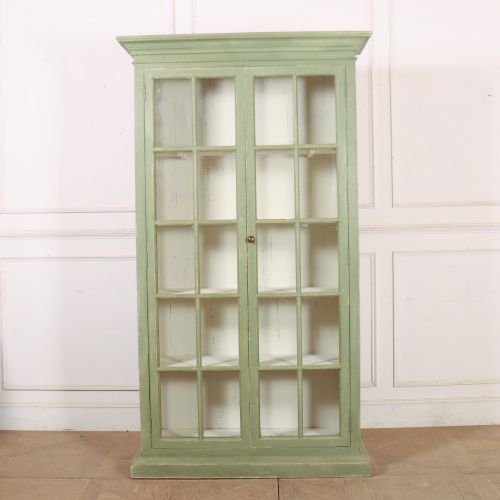


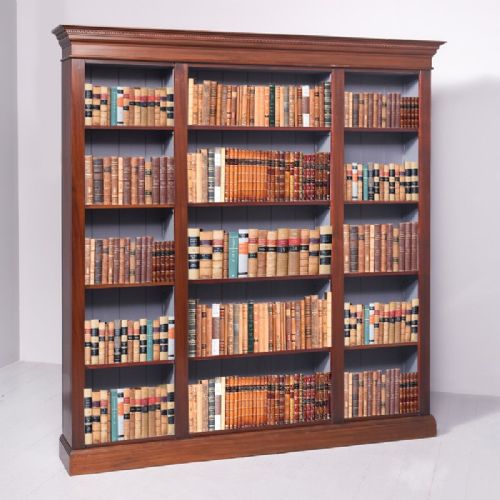


Painted Library Bookcase
A painted library bookcase brings useful shelving and surface character to a room, offering glazed doors or open display suited to heavy volumes.
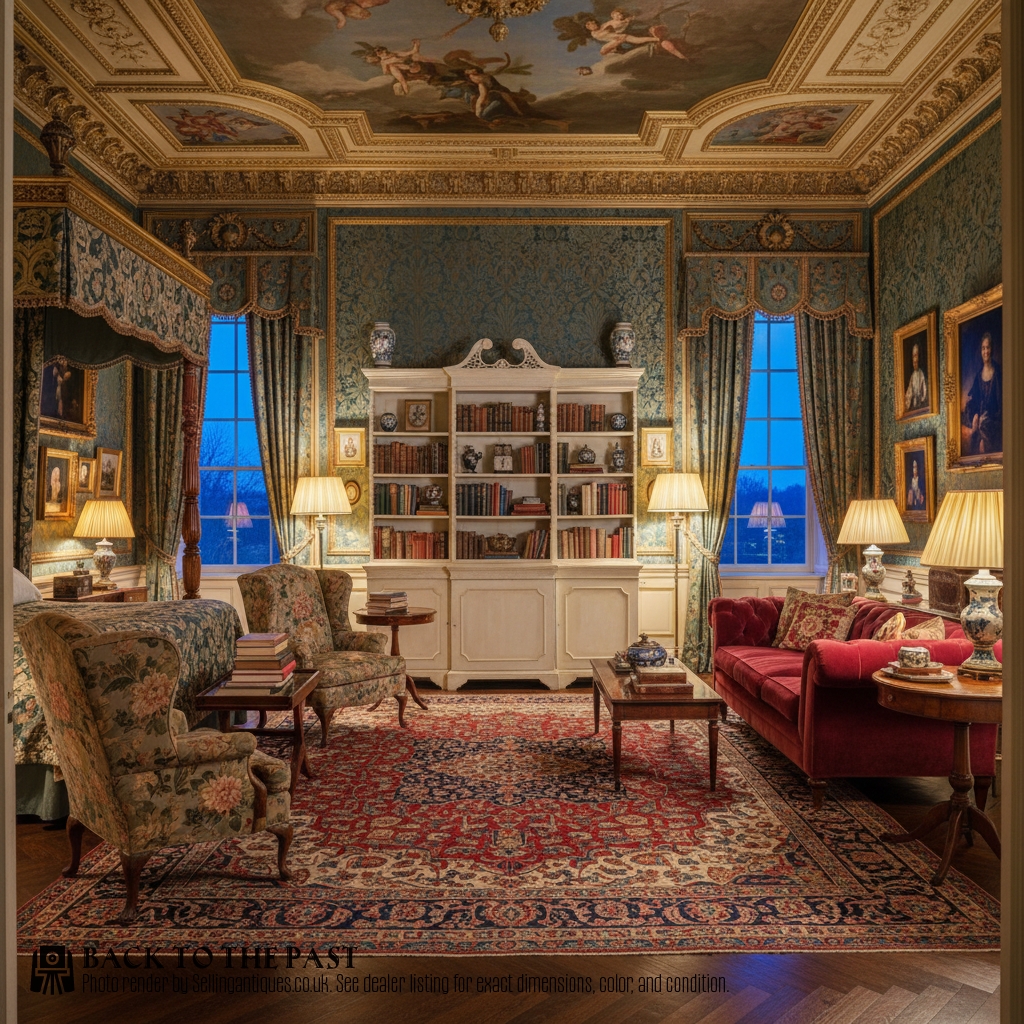
Painted Library Bookcase
A painted library bookcase combines functional book storage with a painted finish, appearing in forms ranging from tall breakfront cabinets to open display shelving. Buyers seeking this phrase encounter large architectural pieces designed to hold substantial private collections.
The pieces appearing here span the nineteenth century, the Edwardian era, and the 1930s, alongside revival styles. Scottish, Irish, English, French, and Swedish regional origins emerge across the selection.
Tall glazed bookcases, breakfront cupboards, and open bookshelves dominate the forms. Pine, oak, and softwood serve as the primary structural woods beneath layers of historic and later paint.

Materials and construction
Makers utilised solid timbers such as pine, oak, mahogany, and softwood to build these large storage units. Glass panels fitted into wooden doors protected fragile volumes, while brass mounts and adjustable shelves provided functional adaptability.
Surfaces received layers of paint, wax, or ebonised finishes applied over pine, oak, and mahogany. Carpenters constructed breakfront facades, carved pediments, and knockdown frames to accommodate substantial domestic and institutional libraries.
Painted Library Bookcase Retail Price Guide 2026
Typical asking prices for painted library bookcase among the pieces listed under this phrase on Sellingantiques today, from the lower quarter to the upper quarter. They describe what is for sale here now, not the wider market.
Periods represented span the Victorian era, the Edwardian period, and the 1930s, alongside nineteenth-century regional workshops.
Distinctions in quality
Proportions and timber selection separate standard utility pieces from grand architectural examples. Fine breakfront design, original decorative paint schemes, and substantial scale elevate a piece above straightforward pine shelving.
The integrity of glazed doors, the presence of adjustable shelving, and the preservation of early painted surfaces determine the standing of each cabinet. Finer examples maintain original brass hardware and balanced proportions across multiple doors.
The Painted Library Bookcase Glossary
- Breakfront
- A cabinet design where the central section projects forward from the flanking wings. This configuration adds architectural depth to large library bookcases.
- Glazed bookcase
- A piece featuring glass-panelled doors that protect books from dust while allowing them to remain visible. These often include adjustable wooden shelves.
- Ebonised
- Wood finished with a dark, polished stain intended to imitate ebony. This treatment appears frequently on nineteenth-century and 1930s institutional furniture.
- Book trough
- A small open stand designed to hold a selection of volumes on a desk or table. These appear in Edwardian library settings.
- Pediment
- The triangular or decorative architectural crowning feature above a bookcase cornice. Carved pediments add formal presence to large pine and oak library pieces.
Painted Library Bookcase: Frequently Asked Questions
How do I choose the right size bookcase?
Measure the available wall height and floor space carefully before selecting a tall breakfront or multi-door cabinet. Consider ceiling clearance, especially with architectural pieces featuring prominent pediments.
Ensure clearance for opening doors and check that the internal shelf depth accommodates your largest volumes.
Are the shelves adjustable?
Many of the listed bookcases include adjustable shelving to accommodate books of varying heights. This flexibility allows you to reorganise the interior layout as your collection changes.
Older pine and oak examples often utilise traditional support systems within the cabinet walls.
How should I care for painted wood?
Maintain painted surfaces by dusting regularly with a soft, dry cloth. Avoid harsh chemical cleaners that might degrade historic or decorative paint layers.
Keep the timber away from direct heat sources and dramatic humidity shifts to protect the wood and glass joints.