



Blue Orange Decorative Plates
These blue orange decorative plates bring together striking palettes of cobalt and iron-red, offering bold colour and rich pattern for display.
Blue Orange Decorative Plates
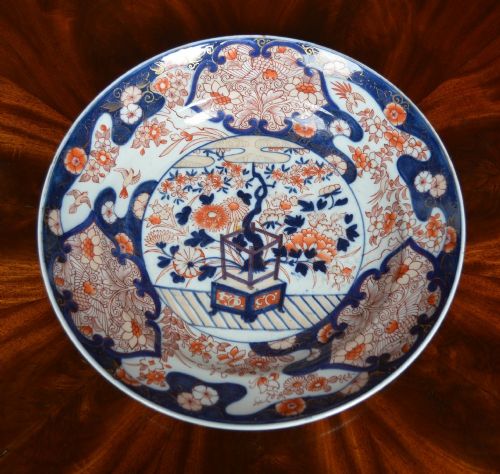
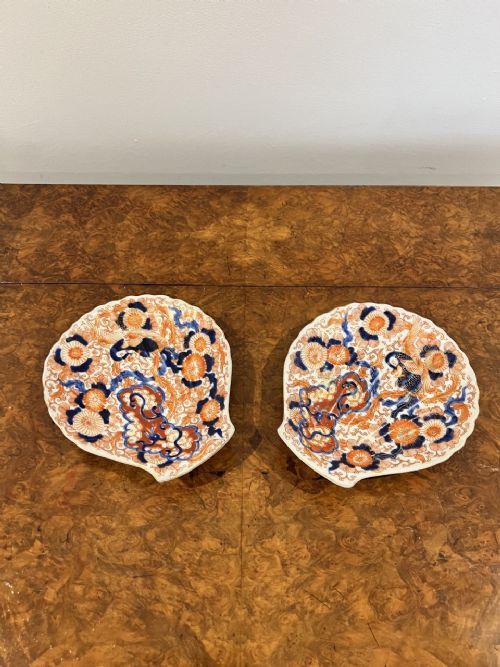
When you search for blue orange decorative plates, you encounter a strong concentration of Japanese Imari wares alongside Chinese export pieces and English ironstone adaptations. These objects function primarily as wall chargers, display dishes, and decorative plates rather than everyday tableware.
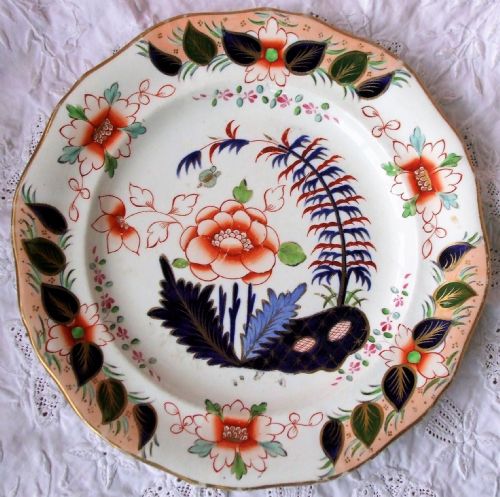
The Japanese examples, often originating from the Meiji period around 1900, dominate the selection with characteristic shell shapes, square profiles, and scalloped edges. Alongside them, English makers such as John Davenport and Mason's produced robust ironstone variations utilising similar colour schemes.
Earlier origins appear in eighteenth century Chinese porcelain plates from 1750, establishing the long lineage of this distinct decorative palette. The forms range from small individual plates to massive chargers depicting traditional scenes.
Materials and Techniques
Production relies heavily on hard-paste porcelain and ironstone bodies, fired at high temperatures to create durable display pieces. The characteristic blue and orange scheme typically combines underglaze cobalt blue with overglaze iron-red enamel.
Many examples incorporate supplementary detailing in gold leaf or gilding, highlighting specific motifs within the intricate designs. Hand-painted brushwork defines the Japanese Imari pieces and Chinese plates, whilst transfer-printing and hand-finishing appear on nineteenth-century English ironstone services.
Listings span from eighteenth century Chinese porcelain to twentieth century Japanese Imari chargers, incorporating both delicate porcelain and heavy ironstone bodies.
Judging Quality
Quality rests principally on the crispness of the hand-painted brushwork and the complexity of the composition. Finer pieces demonstrate precise control over the cobalt blue underglaze and vibrant, well-adhered iron-red enamels.
The physical form also dictates standing, with unusual shapes such as shell-moulded edges, ribbon borders, or large-scale chargers commanding greater visual weight. The integration of supplementary gilding provides a further distinction between standard production and exceptional examples.
John Davenport of Longport
The Blue Orange Decorative Plates Glossary
- Imari
- A style of Japanese export porcelain originating from Arita, shipped through the port of Imari. It is traditionally recognised by a palette of underglaze blue, iron-red, and supplementary gold.
- Charger
- A large decorative plate or platter intended primarily for display on a sideboard or wall rather than for serving food at the table.
- Ironstone
- A type of heavy, durable earthenware developed in nineteenth-century England as a robust alternative to porcelain. It readily accepted colourful enamel patterns.
- Meiji Period
- The era in Japanese history spanning from 1868 to 1912, characterised by extensive export of decorative arts to Western markets. Pieces from this time often feature elaborate hand-painted motifs.
- Enamel
- Opaque vitreous material fused to the surface of porcelain or ceramic over the glaze to provide secondary colours such as iron-red.
Blue Orange Decorative Plates: Frequently Asked Questions
How do I hang a heavy charger?
Large decorative plates and chargers require specialised wall-mounting hardware that distributes the weight evenly across the base and rim. Adjustable spring-loaded brass hangers with protective rubber tips are typically employed for this purpose.
Ensuring the hanger secures firmly around the outer rim without putting excessive pressure on the ceramic body is essential for safe wall display.
Are these plates meant for dining?
Most pieces found in this category are intended for display rather than functional dining use. Their overglaze enamels and delicate gilding can wear away with frequent cutlery contact and washing.
Smaller side dishes and ironstone plates from the nineteenth century are more robust, but large chargers and antique porcelains are best preserved as decorative objects.
How do I date a Meiji period plate?
Meiji period pieces date between 1868 and 1912, corresponding to the reign of Emperor Meiji. Dating relies on stylistic markers, potting characteristics, and export stamps where present.
Pieces from the later nineteenth and early twentieth century often display highly confident brushwork and rich gilding tailored specifically for the Victorian and Edwardian export trade.