



Blue Opalescent Glass Bowl
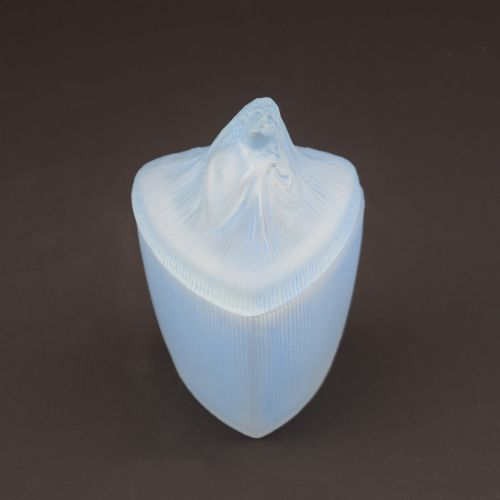
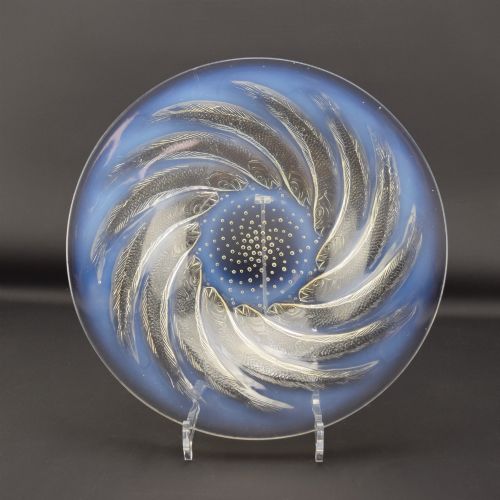
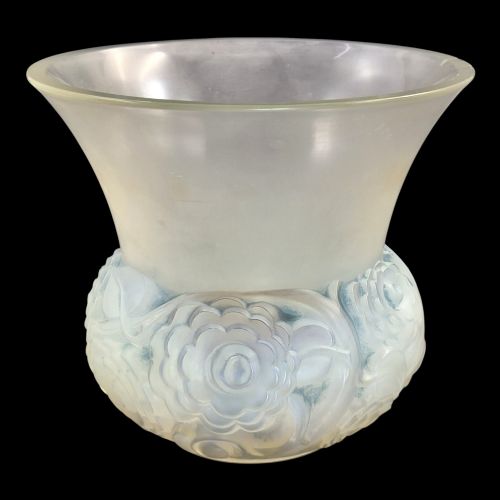
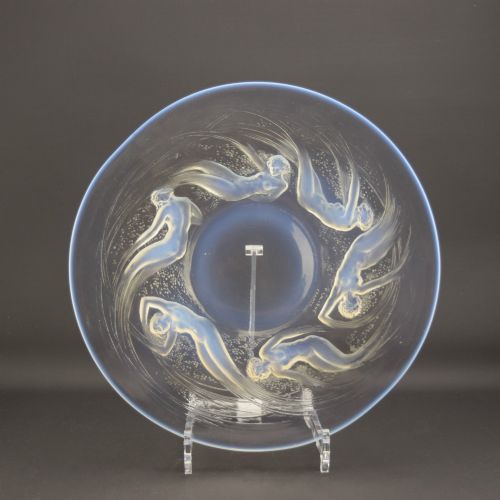
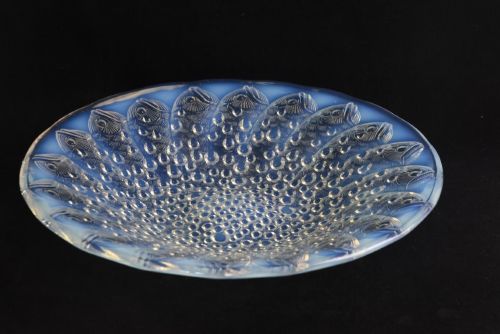
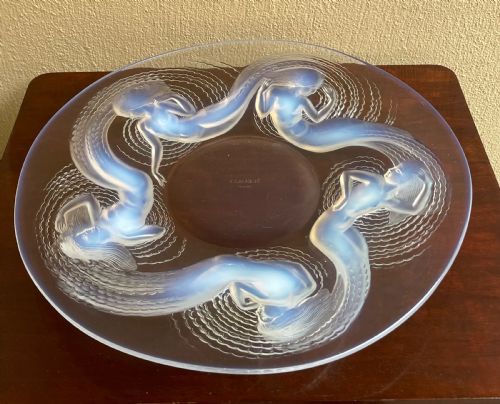
A blue opalescent glass bowl catches the changing light with milky blue highlights that shift across the moulded surface.
Blue Opalescent Glass Bowl
A blue opalescent glass bowl appears across periods from the Edwardian era through the nineteen thirties, encompassing styles such as Art Nouveau and Art Deco. These pieces take forms including shallow bowls, open bowls, chargers, coupe plates, and decorative dishes.
The version most commonly met on this page is the French press-moulded vessel featuring flora, fauna, or geometric motifs. Makers utilise techniques of relief moulding to bring out the translucent milky blue quality at the rims and raised details.
Materials and production methods
Makers create these items using opalescent glass, crystal, and frosted glass shaped through press-moulding techniques. The chemical composition of the material causes light scattering, which produces the characteristic milky blue optical effect.
The production relies on metallic additions to the glass batch, reacting during cooling to form the signature opalescence on raised areas like fish, flowers, and feathers.
Fish, feathers, and flowers emerge in milky blue relief every time the light shifts across these moulded glass surfaces.
Distinctions in quality
The distinction between tiers rests on the crispness of the moulding and the depth of the opalescent effect across the relief design. Superior examples display sharp definition in complex motifs such as fish scales or floral petals.
Quality also shows in the finish of the glass body, where even distribution of the milky blue tone enhances the three-dimensional impact of the moulded decoration.
Rene Lalique·Jobling·Sabino
The Blue Opalescent Glass Bowl Glossary
- Opalescent glass
- Glass that diffuses light to display a milky or bluish glow, particularly visible on raised relief elements. This optical effect is achieved through specific chemical agents added during manufacture.
- Coupe ouverte
- An open bowl shape with shallow sides, frequently utilised for decorative tableware and plates. The form provides a broad surface to showcase moulded patterns.
- Press-moulded glass
- Glass shaped by being pressed into a metal mould using a plunger, allowing intricate relief designs. This technique enables mass production of detailed decorative pieces.
- Charger
- A large decorative plate or shallow bowl used for display purposes rather than serving food. These pieces often feature prominent central motifs and borders.
Blue Opalescent Glass Bowl: Frequently Asked Questions
What is a blue opalescent glass bowl?
A blue opalescent glass bowl is a decorative vessel made from glass that scatters light to create milky blue highlights. These pieces range from shallow dishes to large chargers featuring moulded designs.
They date primarily from the early twentieth century, spanning Edwardian, Art Nouveau, and Art Deco periods. French and British makers produced them utilising press-moulding techniques.
How were these bowls used?
These items served primarily as decorative table pieces, centrepieces, or display items rather than utilitarian kitchenware. Their moulded surfaces and optical effects suited drawing rooms and dining settings.
Collectors today continue to display them on surfaces where natural light can pass through the translucent glass and activate the opalescence.
How do I live with opalescent glass?
Placing these bowls near windows or under dedicated spot lighting allows the blue opalescent highlights to shift and catch the light. Natural daylight reveals the milky quality most effectively.
Care involves gentle cleaning with lukewarm water and a soft cloth to protect the surface finish. Avoid harsh chemicals and sudden temperature changes.
How are periods and styles told apart?
Art Nouveau examples feature flowing organic lines, floral motifs, and sinuous plant forms typical of the Edwardian era. Art Deco pieces display symmetrical geometric patterns or stylised representations of animals and plants from the nineteen twenties and thirties.
Maker marks, signatures pressed into the glass, and specific mould numbers help identify the workshop and approximate date of creation.