



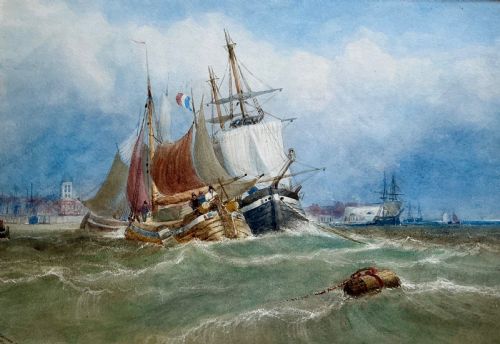


Blue Ocean Watercolour
A blue ocean watercolour captures coastal light and maritime movement on paper, bringing historic harbours and open seas directly into a room.
Blue Ocean Watercolour
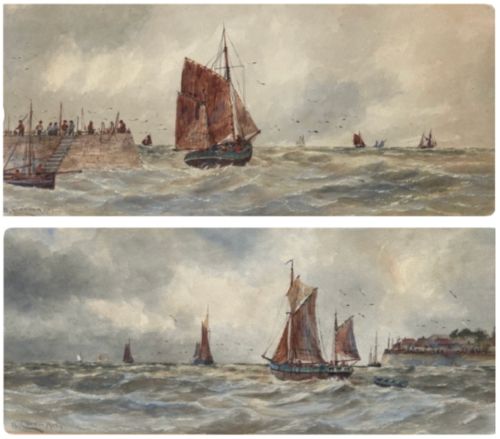
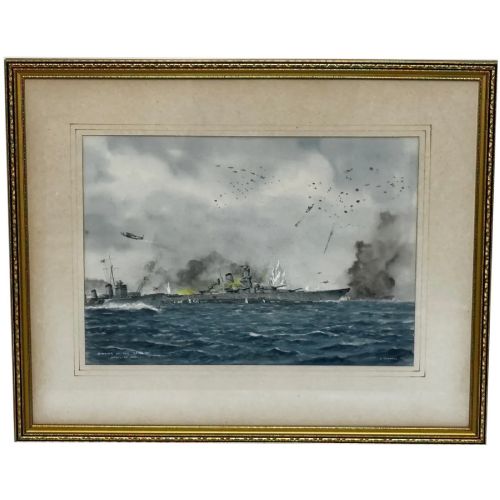
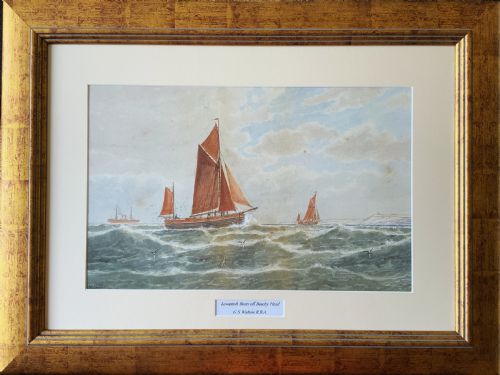
When someone searches for a blue ocean watercolour, they find marine and coastal artworks capturing seascapes, fishing boats, and historic harbours. The works on this page span the nineteenth century through to the mid-twentieth century, recording British and international maritime scenes.
The most common pieces met here are original works on paper set within traditional frames, portraying coastal life from Cornwall, Yorkshire, and wider coastal waters. Painters record sailing vessels, lighthouses, and choppy seas with pigment and paper.
These maritime paintings reflect various periods including the Victorian era, the Edwardian years, and the mid-century decades. Each piece offers a specific window into historical maritime activity and coastal geography.
Materials and technique
Artists apply watercolour pigment onto paper or cardboard supports, often utilising the white of the paper to render light on water and sails. Many works incorporate framing materials such as gilt wood, ebonised frames, and gold leaf.
Makers handle pigment with varying degrees of washes and fine brushwork to capture transparent sea tones and atmospheric coastal skies. The combination of watercolour pigment on paper remains the defining technical foundation across these maritime works.
Listings feature paper, watercolour pigment, glass, wood, and gold leaf across Victorian, Edwardian, and mid-century periods.
Separating the work
Quality rests upon the artist's command of maritime atmosphere, the precision of rigging and vessel anatomy, and the preservation of the paper surface. Stronger examples convey movement in water and light with decisive brushwork.
The choice of framing and the clarity of the signature or attribution also separate standard coastal views from accomplished works by recognised marine painters.
William Cannon·John E Aitken·Eric Tufnell·William Banks Fortescue·George Stanfield Walters·Warwick Goble·Henry Barlow Carter·Charles William Adderton·Frank H Mason·Sir William Russell Flint·Samuel Owen·Kate E Booth·Frederick Stuart Richardson·Percy Brooke·John McDougal·Frank Wood·Joseph Newington Carter·S J Lamorna Birch·Samuel Edward Kelly·Edmund Gouldsmith·J Syer·Fred Stead·Thomas Bush Hardy·J W Carey
The Blue Ocean Watercolour Glossary
- Watercolour
- A painting method where the paints are made of pigments suspended in a water-based solution. This medium allows for luminous washes that suit maritime scenes and coastal light.
- Barque
- A sailing vessel with three or more masts. These ships appear frequently in nineteenth-century marine art.
- Seascape
- A work of art depicting the sea. These compositions focus primarily upon open water, coastal cliffs, and marine traffic.
- Gilt wood
- Wood coated with a thin layer of gold leaf or gilt. Antique frames often utilise this finish to complement the artwork.
Blue Ocean Watercolour: Frequently Asked Questions
What periods do these watercolours cover?
The pieces span from the nineteenth century through the Edwardian period and into the mid-twentieth century. Most examples date from the Victorian era up to the nineteen-sixties.
This broad timeline encompasses traditional marine painting alongside later mid-century interpretations of the sea.
How should I frame an antique watercolour?
Antique watercolours require acid-free mounts and framing to protect the paper from degradation over time. Keeping the work away from direct sunlight preserves the original pigments.
Original frames, such as ebonised or gilt wood surrounds, often accompany these pieces and maintain their period character.
What subjects appear in these paintings?
Subjects include fishing boats off coastals towns, clipper ships in heavy seas, and quiet harbour anchorages. Scenes often record specific locations such as St Ives, Scarborough, and various international waters.
Artists document both working vessels and coastal landscapes under changing weather conditions.
How do I identify a signed watercolour?
Signatures typically appear in the lower corners of the painting, executed in ink or watercolour pigment. Examining the handwriting helps connect the work to recorded artists from the period.
Some pieces also carry inscriptions on the reverse detailing the ship name or location.