




Blue Ocean Watercolour Art
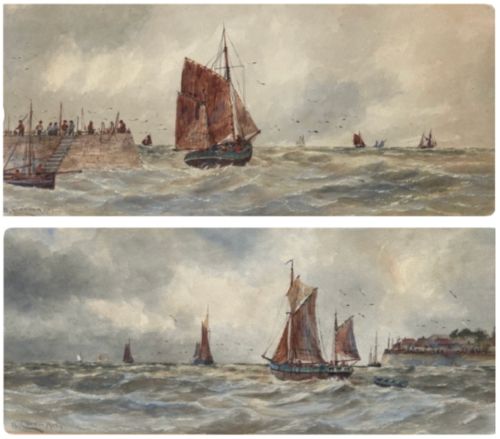
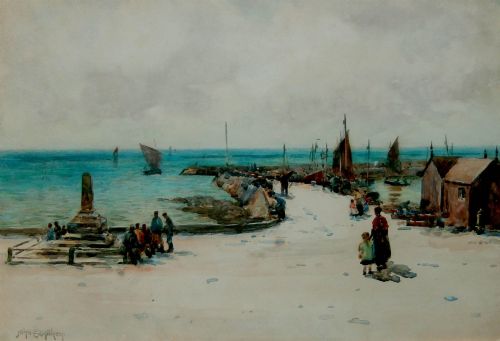
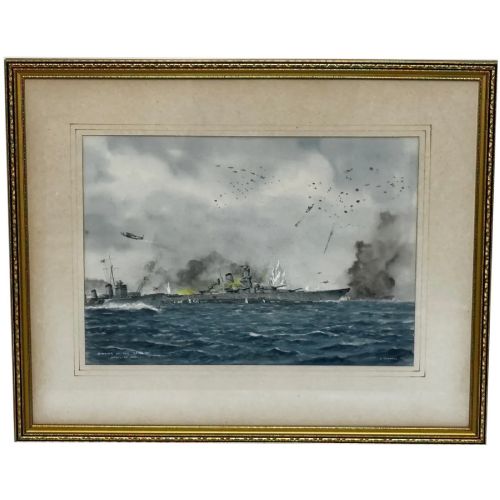
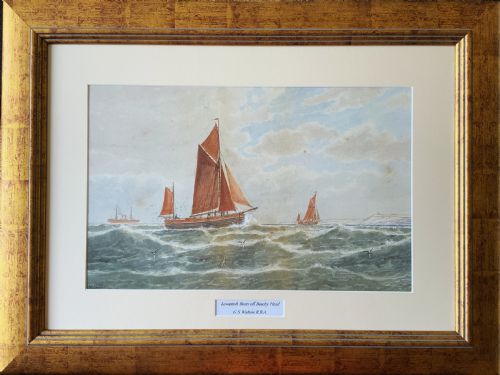
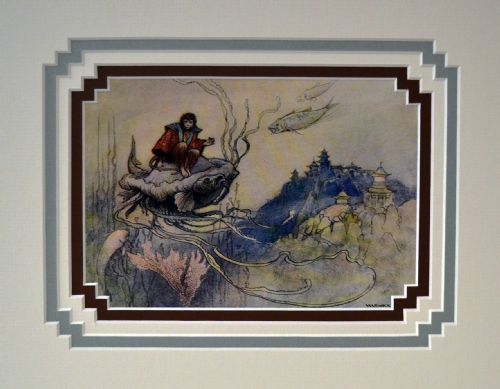
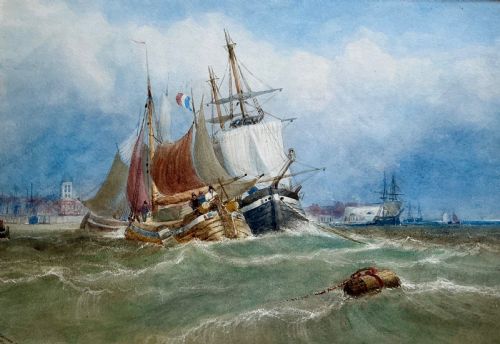
Blue ocean watercolour art captures the movement of the sea and coast through pigment on paper, offering a direct view of maritime history.
Blue Ocean Watercolour Art
When you search for blue ocean watercolour art, you encounter maritime scenes rendered on paper from periods spanning the Victorian era through the mid-twentieth century.
The works on this page concentrate on coastal landscapes, harbours, fishing boats, and open seas rather than inland subjects.
Most examples originate from British artists working in the nineteenth and early twentieth centuries, capturing domestic and international coastal views.
Materials and construction
These pieces utilise watercolour pigment applied to paper surfaces, often supported by cardboard or backing sheets.
Framing frequently incorporates wood, gilt wood, or ebonised frames combined with protective glass.
The inventory relies entirely on paper supports, watercolour pigment, and wooden frames.
Distinctions in quality
Quality rests upon the artist's handling of pigment and water to convey the motion of the sea and the atmosphere of the coast.
A successful piece demonstrates sureness of brushwork in rendering vessels and architectural elements within a maritime landscape.
William Cannon·John E Aitken·Eric Tufnell·William Banks Fortescue·George Stanfield Walters·Warwick Goble·Henry Barlow Carter·Charles William Adderton·Frank H Mason·Sir William Russell Flint·Samuel Owen·Kate E Booth·Frederick Stuart Richardson·Percy Brooke·John McDougal·Frank Wood·Joseph Newington Carter·S J Lamorna Birch·Samuel Edward Kelly·Edmund Gouldsmith·J Syer·Fred Stead·James Aitken·Thomas Bush Hardy·J W Carey
The Blue Ocean Watercolour Art Glossary
- Watercolour
- A painting method where the paints are made of pigments suspended in a water-based solution. The paper surface often remains visible beneath translucent washes of colour.
- Seascape
- A work of art that depicts the sea, coastal views, or marine subjects. These often feature vessels, lighthouses, and harbours.
- Gilt wood
- Wood that has been coated with a thin layer of gold leaf or gilt. This finish is commonly found on traditional frames.
- Barque
- A sailing vessel with three or more masts. They appear frequently in nineteenth and twentieth-century maritime paintings.
Blue Ocean Watercolour Art: Frequently Asked Questions
What periods do these paintings come from?
The works span from the nineteenth century through the Edwardian period and into the mid-twentieth century. Many date specifically to the Victorian era and the decades following.
Artists during these periods recorded coastal changes, working both in studios and directly on location at harbours and beaches.
How should these watercolours be framed?
Watercolours require framing behind glass to protect the paper and pigment from atmospheric moisture and dust. Many period pieces retain their original wood, gilt, or ebonised frames.
Direct sunlight causes fading on watercolour pigment, so placement away from bright windows helps preserve the tones.
What subjects appear in these scenes?
Common subjects include fishing boats, lighthouses, sailing barques, and coastal harbours. Locations range from British fishing ports like St Ives and Scarborough to international waters.
The works document working vessels, coastal weather, and maritime life before the widespread use of steam power.
How do I identify different artists?
Signatures appear on many of the paintings, often accompanied by dates or specific location titles written on the front or reverse. Researching the recorded exhibition history and working periods of named painters helps confirm attribution.
Style, brushwork technique, and subject matter also provide strong indicators of an artist's specific hand.