
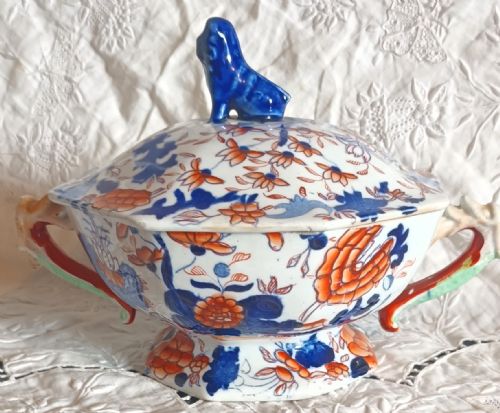


Blue Ironstone Tureen
A blue ironstone tureen brings weight and striking transfer-printed design to the table, offering robust utility wrapped in nineteenth-century character.
Blue Ironstone Tureen
A blue ironstone tureen is a heavy ceramic serving vessel designed for soup, sauce, or vegetables, appearing primarily across nineteenth-century styles. These pieces combine practical dining utility with decorative display, featuring covers and occasionally matching ladles.
The versions most commonly met on this page span the Georgian, Regency, and Victorian eras, often displaying intricate transfer-printed decoration. Forms range from large soup tureens to smaller sauce tureens and vegetable serving dishes.
English Chinoiserie and Regency Chinoiserie patterns feature prominently among these listings, alongside bamboo and basket motifs. Makers such as Mason's dominate the evidence, producing durable earthenware that mimics porcelain at a heavier gauge.
Materials and construction
Makers produced these tureens using dense ironstone ceramic and earthenware bodies, glazed to provide a durable and glossy finish. This thick paste allowed the vessels to withstand heavy daily use while retaining crisp decorative details.
Decoration relied heavily on blue and white transfer printing, supplemented in certain examples by enamel colours, gilding, and gold leaf. Potters applied these patterns beneath or over the glaze before firing the ceramic at high temperatures to set the design.
Decoration across these pieces relies heavily on blue and white transfer printing, occasionally enhanced with gold leaf, enamel, and hand-painted motifs.
Judging quality in blue ironstone
Quality rests upon the clarity of the transfer print and the crispness of moulded details like handles and finials. Pieces with sharp, well-registered patterns and intact enamel or gilding stand apart from softer, worn impressions.
The survival of associated components, such as covers and ladles, significantly elevates a tureen's integrity. Additionally, complex hand-painted embellishments over the transfer print denote higher workshop ambition.
Mason's Ironstone·Coalbrookdale
The Blue Ironstone Tureen Glossary
- Ironstone
- A heavy, durable type of earthenware patented in the nineteenth century to provide a tough alternative to porcelain. It absorbs less moisture than standard pottery and resists chipping.
- Transfer Print
- A method of decorating ceramics by engraving a design on a copper plate, pulling it on tissue paper, and pressing it onto the biscuit ware. This allowed for intricate, repeating patterns in blue.
- Tureen
- A deep covered bowl used for serving soups, sauces, or vegetables at the dining table. They frequently rest on fixed or separate stands and include matched ladles.
- Gilding
- The application of gold leaf or gold paint to ceramic highlights, handles, and borders. It adds a layer of refinement to the durable ironstone body.
Blue Ironstone Tureen: Frequently Asked Questions
How do I use a blue ironstone tureen today?
These vessels function effectively as centrepieces on a dining table or sideboard, holding seasonal arrangements, fruit, or traditional side dishes. Their robust ceramic body makes them suitable for actual serving rather than strict display.
Hand washing remains essential to protect any delicate enamel or gold leaf details from detergent damage. Storing the lid separately from the base prevents accidental chipping along the rim.
What is the difference between soup and sauce tureens?
Soup tureens are substantially larger vessels designed to hold large volumes of liquid at the centre of the table, often accompanied by a matching ladle. Sauce tureens are miniature versions intended for gravies or condiments.
Both forms share similar transfer-printed patterns and moulded handles, but their scale immediately distinguishes their original dining purpose.
How can I date a nineteenth-century tureen?
Dating relies on examining the maker's mark stamped on the base, combined with stylistic cues like Regency shapes or Victorian transfer patterns. Earlier pieces from the Georgian era often feature hand-applied enamel details alongside the transfer print.
Changes in the density of the ironstone paste and the brilliance of the glaze also offer clues to the decade of manufacture.
Are replacement lids easy to find?
Finding a matching replacement lid for an antique ironstone tureen presents a considerable challenge because most pieces were fired and decorated as complete sets. Even tureens of the exact same pattern often vary slightly due to shrinkage during the nineteenth-century kiln firing process.
Buyers are best advised to acquire tureens that retain their original matching covers and ladles where possible.