


Chinoiserie Ceramic Tureen
These chinoiserie ceramic tureen examples combine European forms with painted Eastern motifs across the eighteenth and nineteenth centuries.
Chinoiserie Ceramic Tureen
A chinoiserie ceramic tureen takes the form of covered bowls and sauce vessels created during the Georgian, Regency, and Victorian periods. The pieces on this page span from eighteenth-century porcelain to nineteenth-century ironstone and earthenware.
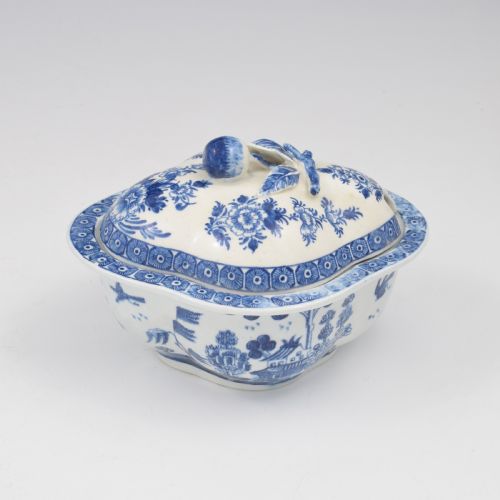
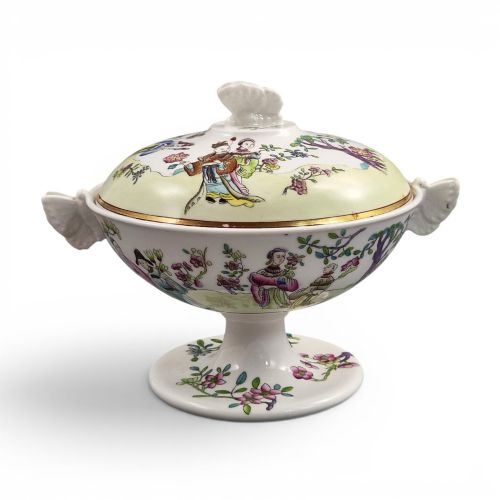
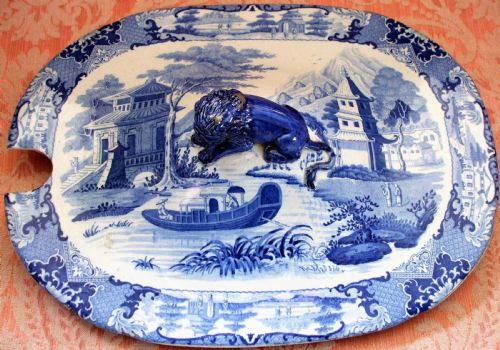
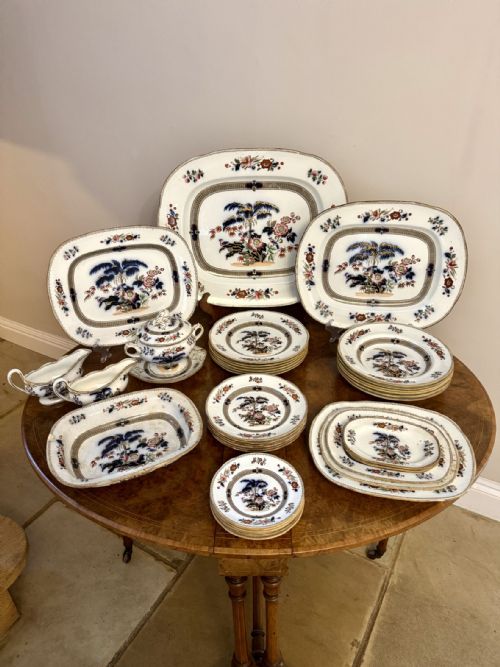
Most examples present blue and white transfer printed scenes or painted enamel decoration such as the Canton River, Mandarin, and bamboo patterns. You will encounter complete soup tureens with lids alongside pedestal bowls, sauce tureens, and matching ladles.
English factories adapted Chinese export designs onto local bodies, resulting in distinct earthenware and porcelain tablewares. Forms range from quatrefoil sauce vessels to large ironstone dinner service centerpieces.
Judging the range
Quality rests in the crispness of the transfer printing or the hand-painted brushwork on the enamel surface. Early porcelain bodies from factories like Derby show finer translucency compared to heavier nineteenth-century ironstone.
The survival of original matching covers and ladles elevates a piece, as does a well-defined form such as a pedestal base or butterfly handles. Sharp detailing in patterns like the Mandarin or Canton River scenes distinguishes superior specimens.
Materials recorded across the inventory include enamel, glaze, earthenware, ceramic, ironstone ceramic, gold leaf, soft-paste porcelain, and porcelain.
Derby Porcelain·Spode·Robert Hamilton·Wedgwood·Mason·Copeland and Garrett
The Chinoiserie Ceramic Tureen Glossary
- Chinoiserie
- European artistic interpretation of Chinese and East Asian motifs, popular in ceramic design throughout the Georgian and Victorian eras.
- Ironstone Ceramic
- A patented heavy earthenware developed in the nineteenth century for durability, frequently used for large serving vessels.
- Soft-Paste Porcelain
- An artificial porcelain composition fired at lower temperatures during the eighteenth century, known for its warm glaze.
- Transfer Printing
- A technique where an engraved copper plate prints an image onto tissue paper, which is then transferred onto the unglazed or bisque ceramic body.
- Quatrefoil
- A symmetrical shape formed of four partially overlapping circles, often seen in the foot or rim of eighteenth-century sauce tureens.
Chinoiserie Ceramic Tureen: Frequently Asked Questions
How do I date a ceramic tureen?
Dating relies on the ceramic body type, glaze characteristics, and factory marks underneath the base. Ironstone generally points to the nineteenth century, while soft-paste porcelain aligns with eighteenth-century production.
Stylistic cues such as Regency forms or specific transfer printed patterns help narrow the decade of manufacture when combined with physical evidence.
Can I use these tureens for serving food?
Most antique pieces function better as decorative display objects due to age, historical glazes, and potential hairline fractures. Historic ceramics absorb liquids over centuries, meaning modern culinary use risks further staining the body.
Gentle dry cleaning preserves the enamel and gold leaf better than washing them in modern dishwashers.
What is the difference between ironstone and porcelain?
Ironstone is a dense, opaque earthenware designed for heavy domestic utility and service durability. Porcelain is vitrified, translucent, and fired at much higher temperatures.
Porcelain feels lighter and more delicate in the hand, whereas ironstone provides a heavy, robust structure for large soup vessels.
Why do some tureens include ladles?
Serving ladles were produced to match specific dinner services for ladling soup or sauce at the dining table. Finding a tureen with its original matching ladle and cover remains uncommon.
Most surviving ladles feature complementary blue and white transfer printing or painted motifs on the bowl and handle.