


Vintage Ceramic Tureen
These vintage ceramic tureen examples range from heavy ironstone soup vessels to delicate porcelain dishes designed to hold stock and sauces at table.
Vintage Ceramic Tureen
When you search for a vintage ceramic tureen, you encounter deep serving vessels intended for soup, sauce, vegetables, or game pies. These pieces originate across the nineteenth and twentieth centuries, spanning Victorian, Regency, Georgian, and Edwardian periods.
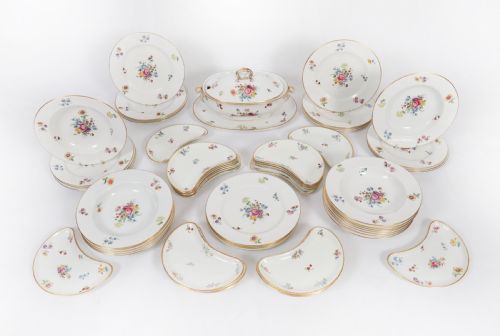
The selection on this page centres on earthenware, ironstone, and porcelain forms. You will find items accompanied by covers, stands, ladles, and part dinner services originating from English potteries, European factories, and Chinese export workshops.
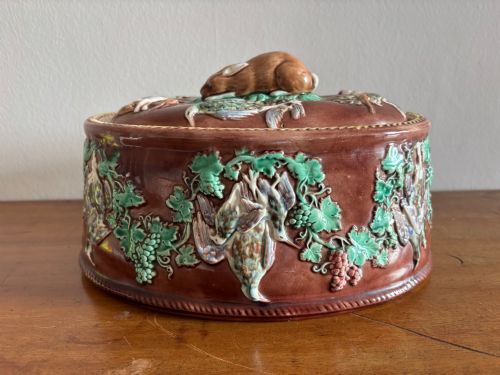
Forms vary from lidded soup vessels and sauce tureens to specialised game pie dishes and novelty chicken egg crocks. Traditional European and French Provincial styles sit alongside blue and white transfer printed wares.
How they were made
Potters shaped earthenware, ironstone, and porcelain bodies either by throwing on a wheel or moulding in sections. These clay bodies received glazes to create smooth, impermeable surfaces suitable for holding liquids.
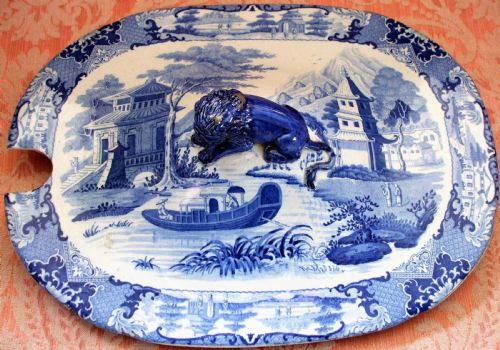
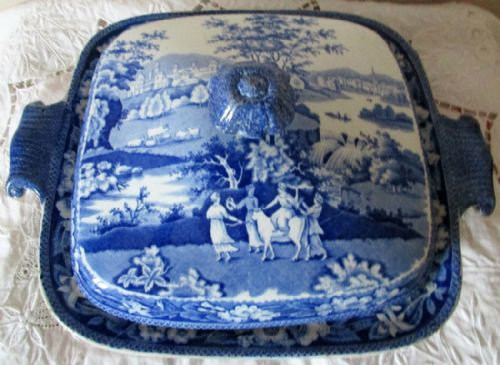
Decoration relied heavily on blue and white transfer printing, applying intricate patterns such as the Canton River Scene or Europa onto the pottery before firing. Hand-painting, enamel colours, and applied gold leaf or gilt accents enriched finer porcelain and ironstone bodies.
Ironstone provided a durable, dense ceramic alternative to porcelain, ideal for heavy domestic use in nineteenth-century dining rooms. Specialised pieces like caneware game pie dishes utilised moulded earthenware designed to withstand oven heat.
Several nesting hens and indignant chicks sit upon Victorian egg crocks, guarding breakfasts past.
What varies in quality
Quality rests upon the crispness of the transfer print and the precision of hand-painted details. Finer examples display sharp lines in blue and white patterns and carefully applied enamel work without smudging.
The weight and density of the ceramic body distinguish utilitarian earthenware from high-grade ironstone and translucent porcelain. Potteries such as Mason's, Copeland and Garrett, and Wedgwood achieved superior durability and refined surface finishes.
Completeness dictates standing, as pieces retaining their original matching covers, stands, and ladles hold greater integrity. Subtle modeling in moulded vegetable motifs, animal handles, and avian finials separates standard production from superior artistic output.
Robert Hamilton·John and Richard Riley·Coalport·Coalbrookdale·Booths·Müller Volkstedt MV Co.·Doulton·Richard Ginori·Ridgways·Copeland and Garrett·Meissen·Wedgwood·Copeland Spode
The Vintage Ceramic Tureen Glossary
- Ironstone
- A patented type of heavy earthenware developed in the nineteenth century for its exceptional durability and resistance to chipping. It served as a robust alternative to true porcelain for dinner services and tureens.
- Transfer print
- A decoration technique where an engraved copper plate transfers a design onto tissue paper, which is then pressed onto the ceramic body before glazing. This method allowed for intricate, repeatable scenes like landscape motifs.
- Game pie dish
- A specialised covered ceramic vessel used for baking and serving meat pies, frequently moulded in naturalistic shapes such as birds or vegetables. These pieces often feature steam holes in the lid.
- Caneware
- A fine, unglazed stoneware developed in the eighteenth and nineteenth centuries, named for its warm, yellowish-buff colour resembling oatmeal or cane. It was frequently utilised for pie dishes and utility wares.
- Sauce tureen
- A miniature version of a soup tureen designed specifically for holding gravies, melted butter, or sauces at the dining table. They frequently appear in pairs and include matching ladles and undertrodden stands.
Vintage Ceramic Tureen: Frequently Asked Questions
What is the difference between ironstone and porcelain tureens?
Ironstone is a dense, opaque, and highly durable ceramic developed to withstand heavy dining room use, whereas porcelain is finer, lighter, and often translucent.
Ironstone pieces like those by Mason's offer robust utility, while porcelain vessels from factories such as Coalport prioritize delicate appearance and refined glaze finishes.
How were sauce tureens used at the table?
Sauce tureens served to hold and keep warm gravies, melted butter, or accompaniments during multicourse meals. They sat on the dining table alongside larger soup tureens and meat platters.
Because sauces cooled quickly, these smaller vessels were designed with close-fitting covers and often rested on matching undertrodden stands with small ladles.
How do I date a blue and white transfer printed tureen?
Dating relies on identifying the pottery mark stamped or printed on the base, alongside stylistic clues in the transfer printed border and central scene. Popular nineteenth-century patterns often reference specific literary or topographical subjects.
Makers such as Wedgwood, Copeland and Garrett, and the Riley firm altered their registry marks and printed ciphers across decades, helping to narrow the manufacturing window.
Can I use an antique ceramic tureen for serving food today?
Many nineteenth-century ironstone and ceramic tureens remain structurally sound for serving dry foods or warmed items. However, older glazes and enamel decorations can be sensitive to modern dishwashers and sudden thermal shock.
Hand washing in warm water preserves the historic glaze, transfer print details, and any applied gold leaf or gilt edging.