
Antique Covered Dish
An antique covered dish brings practical dining history to the table, spanning grand silver tureens and ceramic cheese domes.
Antique Covered Dish
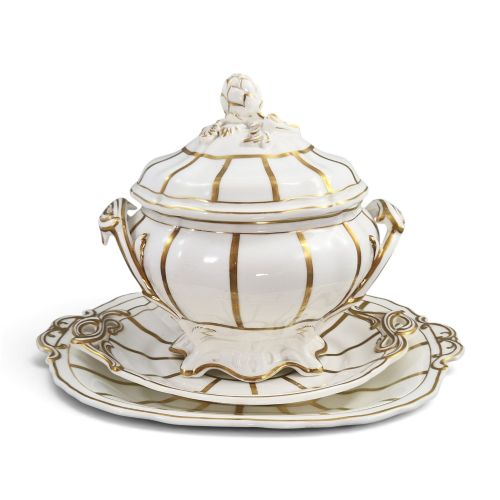
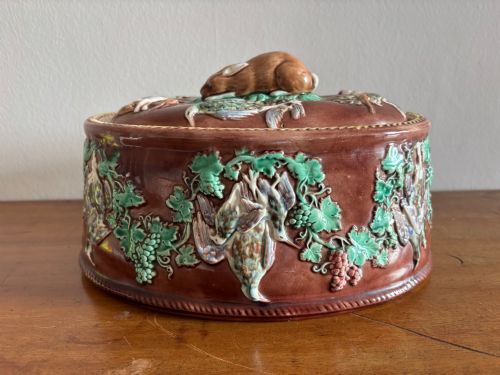
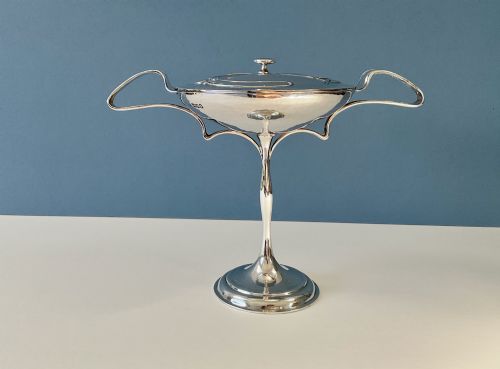
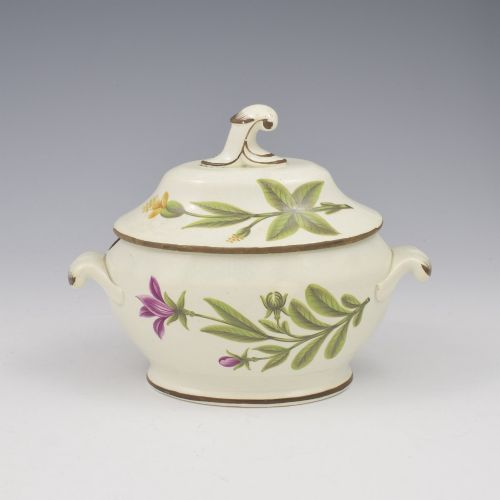
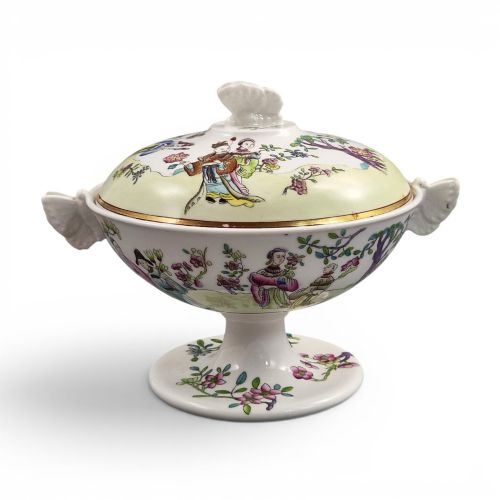
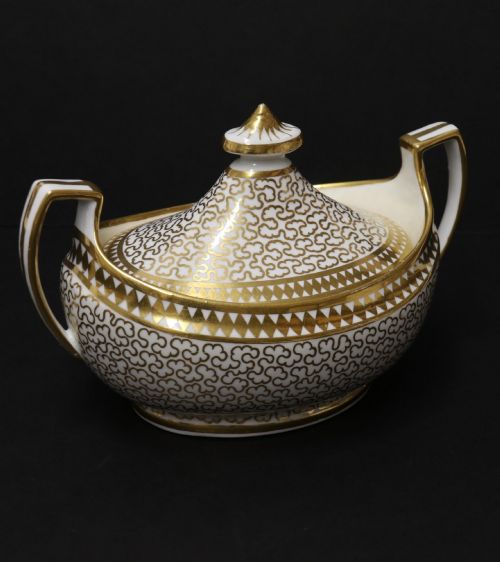
The term antique covered dish encompasses a diverse range of lidded vessels used for serving food, preserving dairy, and adorning dining tables across the eighteenth and nineteenth centuries. Buyers searching this category frequently encounter ceramic tureens, earthenware cheese domes, and silver plated entree dishes dating from the Georgian, Victorian, and Edwardian eras.
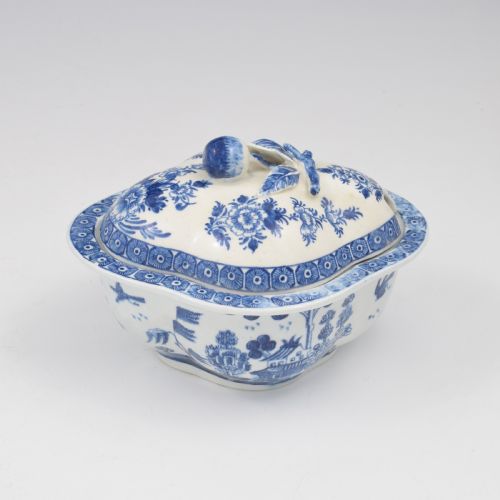
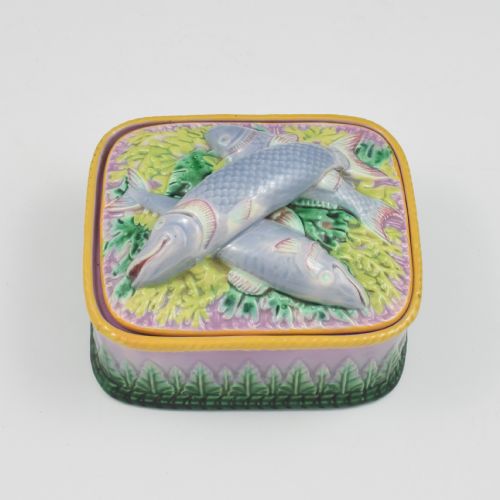
Forms vary considerably depending on the original culinary purpose, ranging from large vegetable tureens and meat covers to small butter dishes and sardine boxes. Examples span standard white ironstone, transfer-printed pottery, bone china, majolica, and cut glass, reflecting both formal dining customs and domestic life.
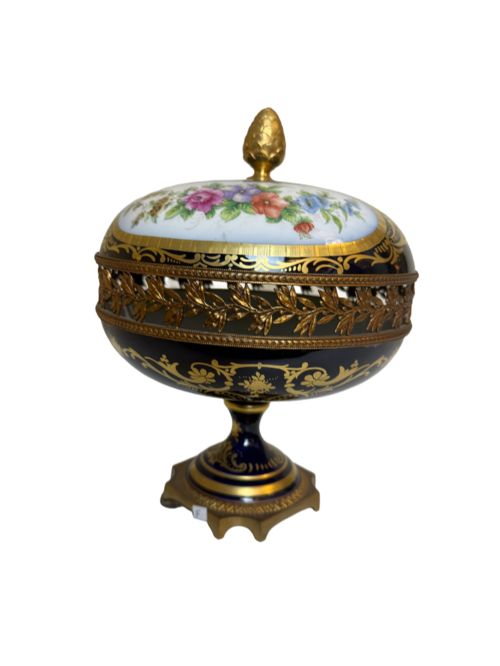
Origins stretch from English potteries to Continental porcelain factories, offering collectors a broad spectrum of historical styles including Rococo Revival, Art Nouveau, and classical Georgian designs. These pieces survive in various configurations, often accompanied by matching stands or original glass liners.
Materials and methods of construction
Ceramic covered dishes rely on traditional earthenware, ironstone, and porcelain bodies shaped through pressing or casting, then finished with coloured glazes, enamel paints, or blue and white transfer prints. Majolica pieces utilise vibrant lead glazes applied over moulded botanical reliefs, while ironstone provides a dense, durable alternative suitable for heavy domestic service.
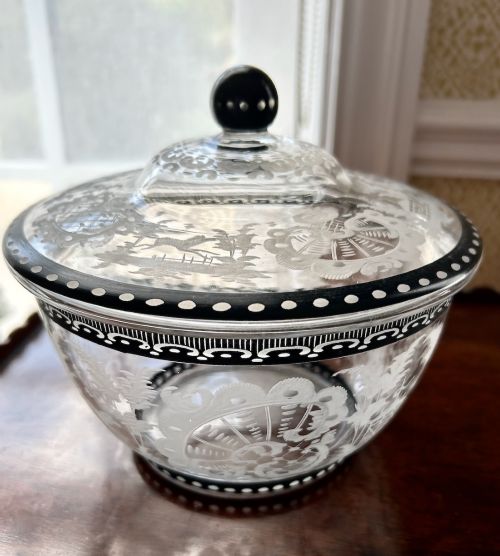
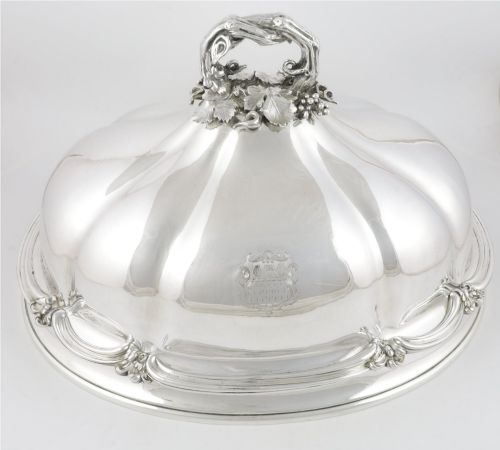
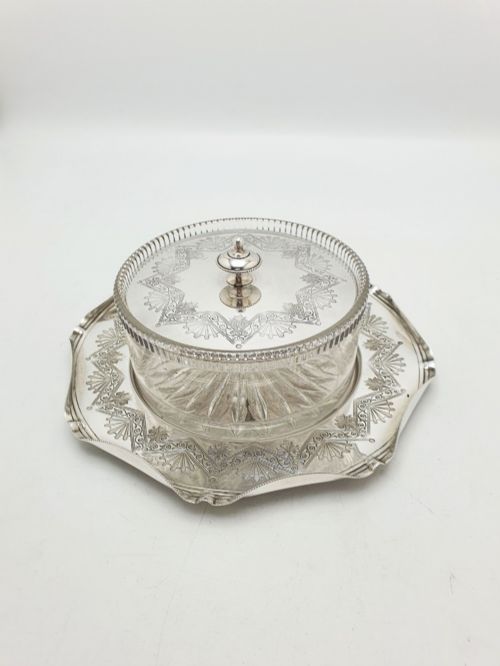
Metal vessels combine base metals with silver plating techniques like Old Sheffield Plate or utilise sterling silver for high-status dining pieces, often featuring hand-engraved decoration, cast handles, and applied borders. Glass versions employ mould-blowing and deep cutting to create textured surfaces on butter dishes and fruit covers.
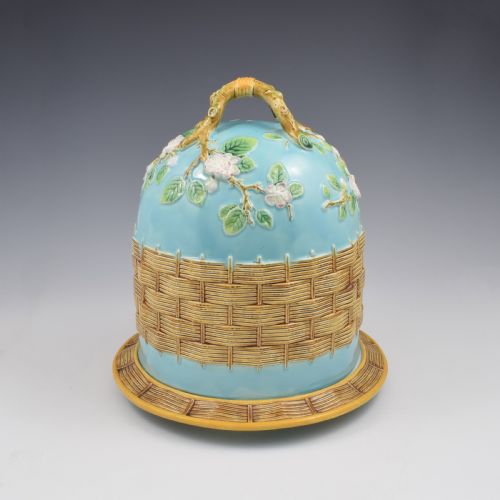
Victorian diners enjoyed decorative lidded dishes modeled specifically as life-sized majolica apples, blossoms, and winding wicker baskets.
Distinctions in manufacture and finish
Quality in these vessels depends on the crispness of the moulding, the precision of transfer printing or hand-painted enamels, and the structural integrity of applied handles and finials. Superior ceramic examples display even glazes without firing blemishes, while finer metal pieces exhibit careful hand-chasing and substantial weight.
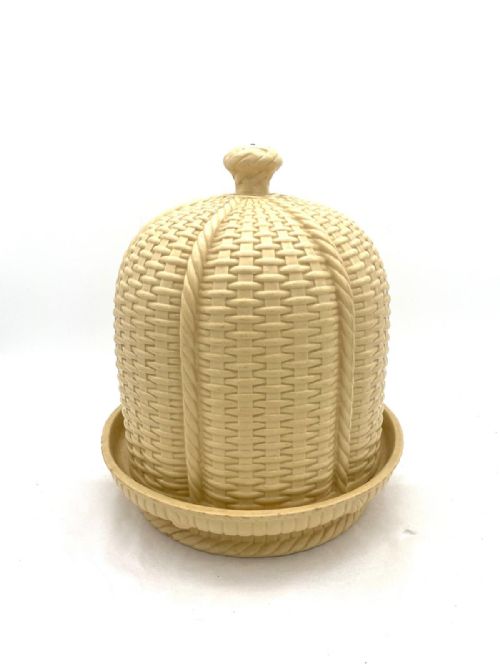
The survival of original matching components, such as underplates, stands, and internal glass liners, elevates the integrity of a piece. Artisanal detail in specialised motifs, such as intricate basket weave textures or delicate pierced silver work, separates standard utility items from higher artistic productions.
Roberts Cadman·Davenport·Wedgwood·Derby Porcelain·Swansea·Spode·Limoges·Chamberlains Worcester·George Jones·James Wallace Co·Desvres Rouen·J R Clews·John Rogers Son·John and Richard Riley·Coalport Coalbrookdale·Crown Derby·Mason·Mintons·Dresden·Royal Crown Derby·William Bennett
The Antique Covered Dish Glossary
- Tureen
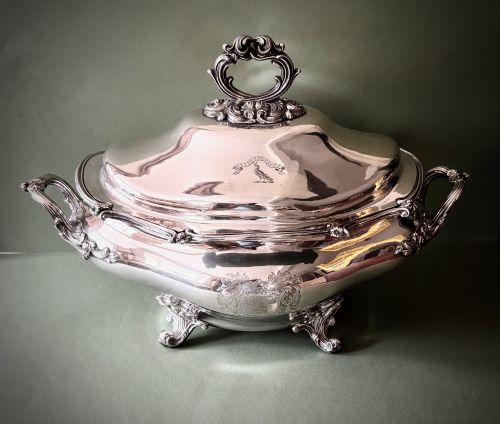
- A deep serving dish with a cover, designed for holding soups, sauces, or vegetables at the dining table. These vessels often sit upon matching ceramic or metal stands.
- Ironstone
- A heavy, durable type of earthenware patented in the nineteenth century to provide a strong alternative to porcelain. It frequently appears in white or decorated with transfer-printed patterns.
- Old Sheffield Plate
- An early composite material made by fusing a thin sheet of sterling silver to a thicker copper base. It represents a precursor to standard electroplating methods.
- Majolica
- A type of earthenware coated with an opaque tin glaze and painted with bright metal oxide colours. This technique gained popularity during the Victorian period for botanical and animal-themed serving pieces.
- Sucrier
- A small covered pot or bowl designed specifically for holding loose sugar. These pieces match larger tea and coffee services from the Georgian and Victorian eras.
Antique Covered Dish: Frequently Asked Questions
How were antique cheese domes used?
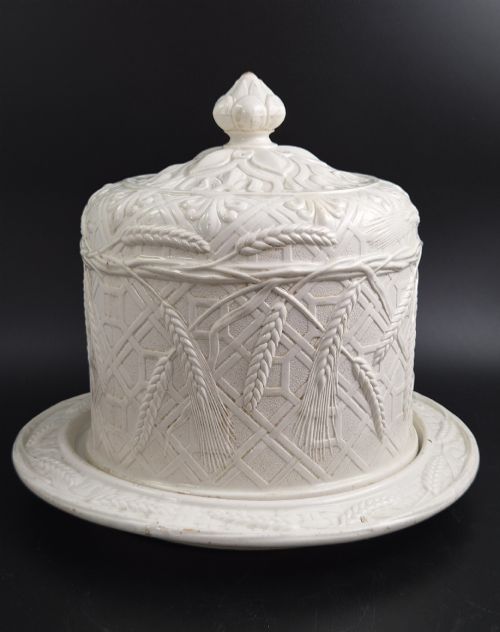
Victorian households utilised heavy ceramic domes to cover and preserve cheeses on the dining table or sideboard. The cover trapped moisture and protected the dairy from insects.
These pieces typically included a matching ceramic base or tray to catch crumbs and support the weight of the domed lid during use.
What is the difference between ironstone and porcelain?
Ironstone is a dense, opaque earthenware developed to resist chipping during daily household service. It offers substantial weight and durability.
Porcelain is a finer, vitrified ceramic material that often exhibits translucency when held to the light, typically reserved for more formal dining sets.
How do I date an antique silver plated dish?
Dating relies on stylistic clues such as the presence of Art Nouveau curves or Georgian neoclassical motifs, alongside manufacturing hallmarks where present. Old Sheffield Plate generally indicates an eighteenth or early nineteenth-century origin.
The inclusion of original blue glass liners or specific maker marks helps narrow the decade of production within the broader Victorian or Edwardian periods.
Can these covered dishes still be used for food?
Most ceramic and glass vessels remain entirely functional for serving dry foods, cheeses, or breads during modern dining. Consideration should be given to older glazes and silver plate preservation.
Pieces with internal metal components or delicate enamel work require careful hand washing rather than immersion in modern dishwashers to maintain their condition.