



Blue Harbour Watercolour
Blue harbour watercolour paintings capture coastal life and maritime scenes through fluid pigments on paper, offering buyers a glimpse into historic ports and seaside communities.
Blue Harbour Watercolour
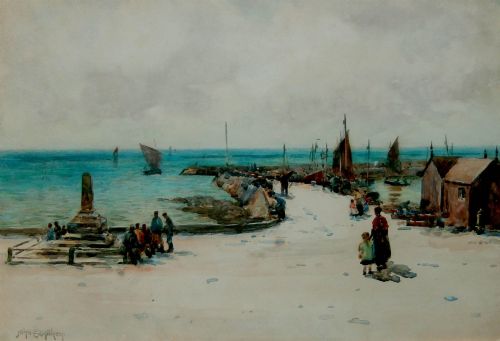
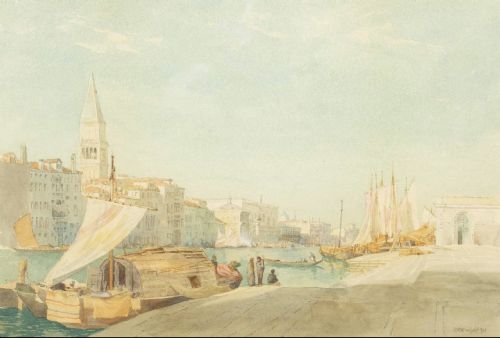
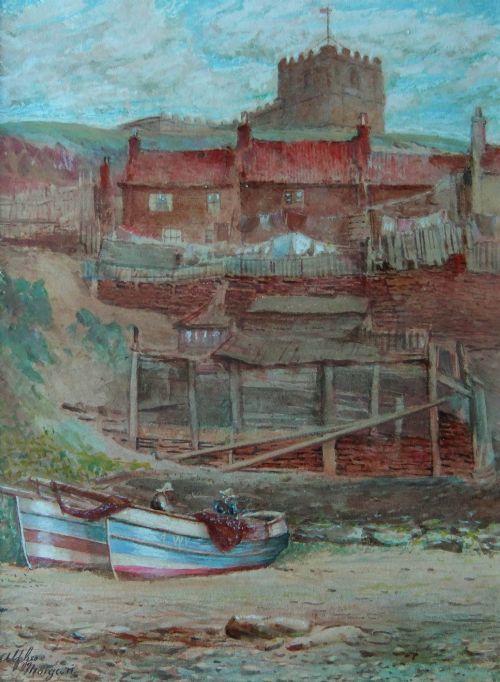
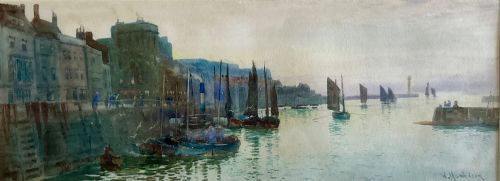
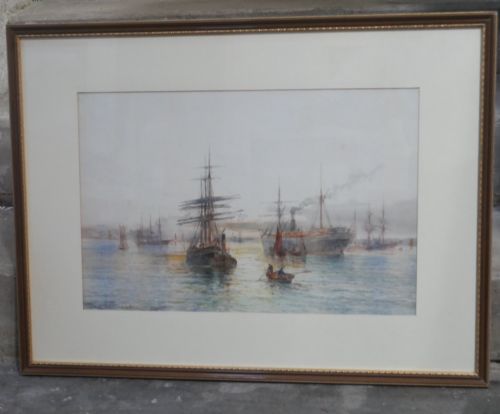
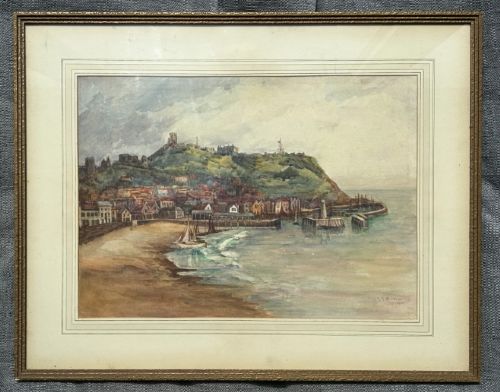
When you search for a blue harbour watercolour, you are looking at maritime and coastal artwork depicting ships, quaysides, and coastal villages. These pieces span the Victorian era, the Edwardian period, and mid-twentieth century British art, recording bustling ports from St Ives and Whitby to international waters.
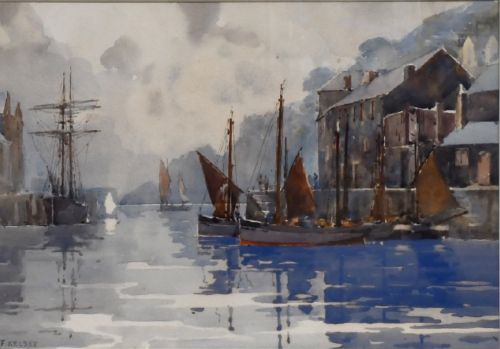
You will most frequently find works on paper created by regional British artists working in the late nineteenth and early twentieth centuries. These paintings often show fishing fleets, harbour walls, and coastal architecture rendered with transparent washes and ink detailing.
The subjects range from calm estuaries to dramatic sea views, frequently framed under glass in wood or gilt wood surrounds. They document maritime history through the changing styles of British Impressionism, Victorian fine art, and early twentieth-century regional schools.
How they were made
Artists painted these scenes using watercolour pigment and ink on paper, applying fluid washes to build up atmospheric skies and deep water tones. The transparency of the medium allowed the white of the paper to shine through as highlights on cresting waves and harbour buildings.
Many works were subsequently preserved behind glass and housed in bespoke wood or gilt wood frames to protect the delicate paper surface from moisture and light damage.
Listings feature works spanning the nineteenth century through to the 1950s, executed on paper using watercolour pigment and ink.
What varies in quality
The distinction between works rests upon the artist's handling of light, atmospheric depth, and the precision of the brushwork in capturing maritime architecture. Stronger examples demonstrate confident draftsmanship in rendering rigging, vessels, and shoreline topography without hesitation.
Condition also plays a part, as works preserved away from excessive sunlight retain the vibrancy of their original pigments without fading or paper discolouration.
John E Aitken·William Banks Fortescue·Richard Henry Wright·Alfred G Morgan·William Matthison·Frank Kelsey·F A Roylance·George F Pennington·Paul Delvaux·Commander Eric Tufnell·William Lee Hankey·Fred Lawson·Ernest Dade·Tom Clough·William Tuck·James Thomas Watts·Samuel Owen·Kate E Booth·Ernest F Hill·Stanley Orchart·Frederick Stuart Richardson·Alfred Robert Quinton·Percy Brooke·William Kay Blacklock·Frank Wasley
The Blue Harbour Watercolour Glossary
- Watercolour pigment
- Ground colour mixed with a water-soluble binder. This medium allows for transparent washes that mimic the movement and translucency of sea water.
- Gilt wood
- Timber framing coated with a thin layer of gold leaf or metallic gilt. It provides a traditional decorative border common in period framing.
- British Impressionism
- An art movement focusing on everyday scenes and natural light. Painters in this style captured transient effects of weather and water along the coast.
- Newlyn School
- An artist colony based in Cornwall during the late nineteenth and early twentieth centuries. Members painted plein air marine and coastal subjects directly from life.
Blue Harbour Watercolour: Frequently Asked Questions
How should I display my watercolour?
Hang your painting away from direct sunlight to prevent the pigments from fading over time. Maintaining a stable indoor environment protects the paper from humidity.
Ensure the frame is properly sealed under glass to keep dust and atmospheric pollutants away from the delicate paper surface.
What subjects appear most often?
Harbour scenes featuring fishing boats, quaysides, and historic Yorkshire or Cornish coastal towns dominate the selection. Artists frequently recorded daily maritime labour such as spreading nets and vessels returning to port.
Views also extend to international destinations including Venetian canals and French coastal resorts.
How do I date these paintings?
Signatures, artist biographical dates, and framing styles provide the primary clues for dating a work. Period inscriptions on the reverse of the paper often record specific locations and years.
Stylistic shifts from Victorian narrative detail toward looser twentieth-century impressionism help narrow the creation period.
Are these works original paintings?
The listings consist of original hand-painted watercolours created directly on paper by individual artists. Each piece is a unique application of pigment rather than a mass-produced print.
Brushstrokes and paper texture confirm the hand-rendered nature of every composition.