



Blue Harbour Scene Painting
When you want a blue harbour scene painting, you are looking at coastal watercolours and oils capturing historic maritime life.
Blue Harbour Scene Painting
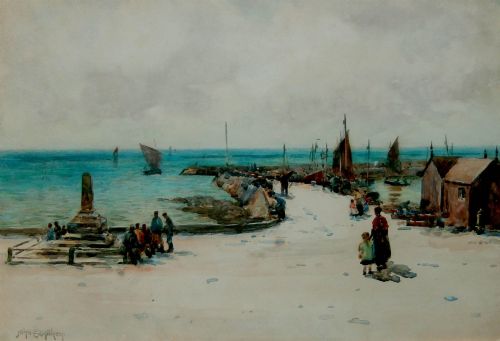
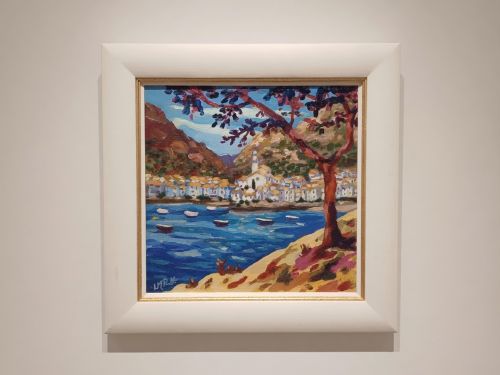
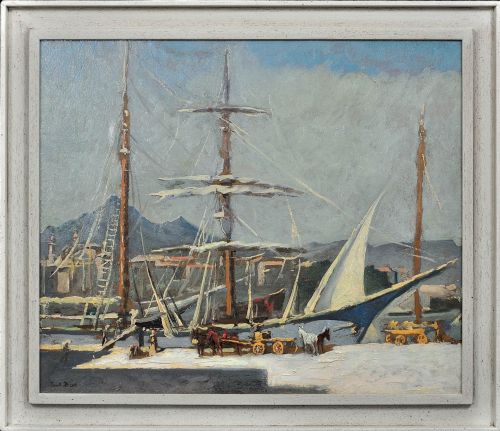
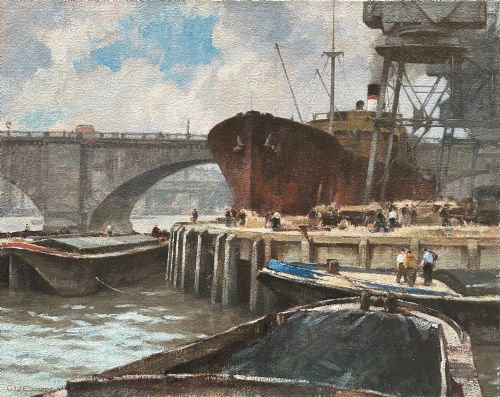
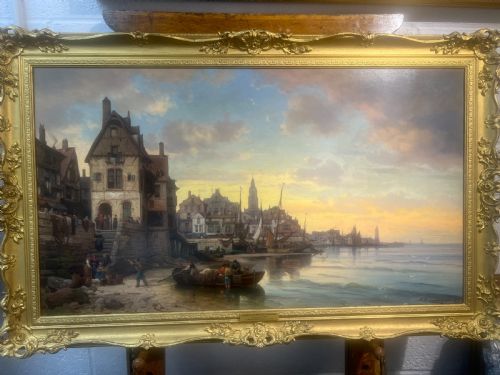
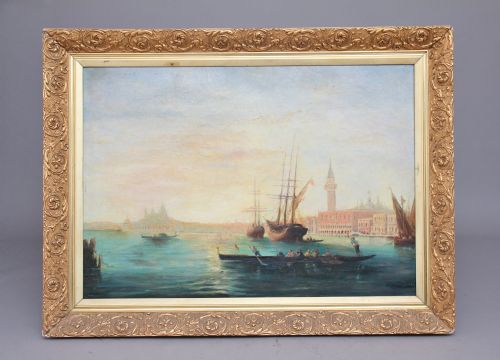
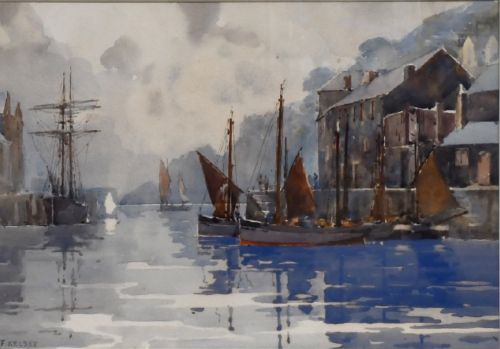
A blue harbour scene painting depicts coastal waters, fishing vessels, and maritime architecture rendered in oil paint or watercolour. These works frequently record specific British and European coastal locations, ranging from Cornish fishing ports to Mediterranean lagoons.
The pieces on this page span the nineteenth century through to the mid-twentieth century, encompassing periods such as the Edwardian era and the interwar years. Buyers regularly encounter works associated with regional schools, such as the St Ives community, capturing local working harbours.
Compositions range in scale from intimate watercolours on paper to large oils on canvas framed behind glass or in wood. The focal points typically include moored boats, stone quaysides, and wide expanses of sea under varying atmospheric conditions.
Materials and technique
Artists painted these coastal subjects primarily using oil paint on canvas or wood panels, alongside watercolours applied to paper supports. Oil paint allowed for layered, textured brushwork that captured the weight of water and the bright reflection of light on the sea.
Watercolour works relied on fluid washes of pigment, often over preliminary pencil lines, to create luminous skies and translucent coastal waters. Pigments were frequently worked directly en plein air or developed in studios from earlier observational sketches.
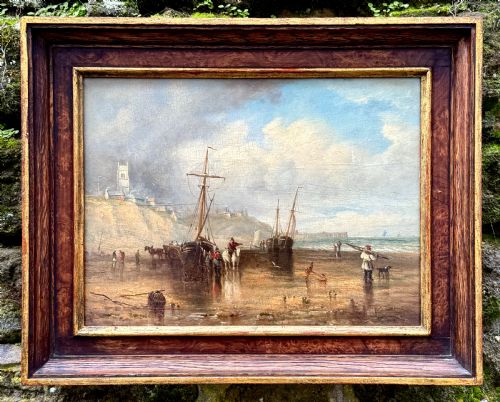
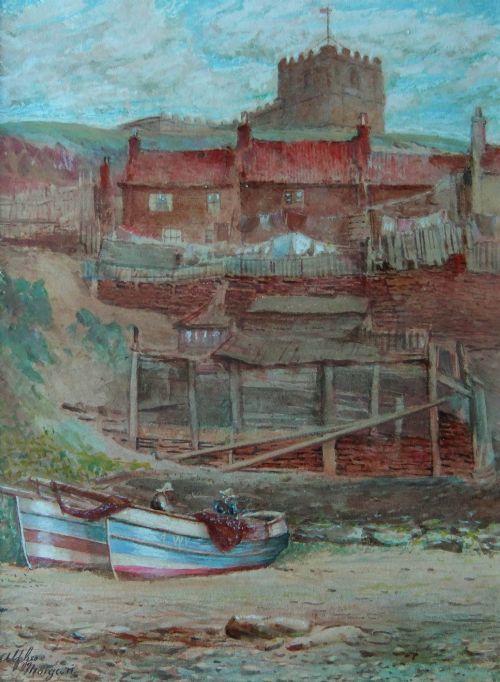
At least one artist clearly found time to paint the harbour while the tide was well out.
Judging quality in maritime art
Quality rests on the confidence of the brushwork and the artist's ability to convey movement in water and light without overworking the surface. Stronger examples demonstrate a sure command of perspective within complex architectural and maritime settings.
The handling of atmosphere and tonal balance distinguishes accomplished works from simpler topographical records. Superior paintings integrate the blue hues of sea and sky cohesively rather than relying on flat, uniform colour.
John E. Aitken·William Banks Fortescue·Paul Bret·Thomas Creswick·Alfred G. Morgan·FRANK KELSEY·Paul Delvaux·Gyrth Russell·William Lee Hankey·Fred Lawson·William Tuck·Donald McIntyre·James Thomas Watts·Kate E Booth·Ernest F. Hill·FREDERICK STUART RICHARDSON·PERCY BROOKE·William Lambert Bell·James Torrington Bell·GUSTAVE DE BREANSKI·Owen Bowen·Jack R Mould·Antonio Godoy·HARRY WANLESS
The Blue Harbour Scene Painting Glossary
- Watercolour
- A painting method where fine pigment is suspended in a water-soluble binder and applied to paper. This medium creates transparent washes that suit coastal light.
- Oil on canvas
- Pigment mixed with drying oil applied to a stretched woven fabric support. This combination permits thick impasto application and rich colour depth.
- Seascape
- A work of art depicting the sea, coastal views, ships, or marine hazards. These subjects form the core of maritime painting traditions.
- Impressionism
- A style of painting emphasising immediate visual impressions through unblended colour strokes and natural light. It influenced many twentieth-century marine artists.
- En plein air
- The act of painting outdoors to capture direct natural light and atmospheric conditions. This practice was essential for recording coastal scenes accurately.
Blue Harbour Scene Painting: Frequently Asked Questions
How do I care for a watercolour painting?
Keep watercolours away from direct sunlight to prevent the pigments from fading over time. Ensure they remain in dry environments to protect the paper and framing materials.
Display them behind UV-filtering glass where possible and avoid hanging them on damp exterior walls.
What subjects appear in these paintings?
These works primarily feature working harbours, fishing trawlers, quaysides, and coastal towns across Britain and Europe. Common landmarks include historic abbeys, piers, and moored vessels.
Artists also focused on everyday maritime activities such as unloading catches and spreading fishing nets.
How can I tell oils from watercolours?
Oil paintings feature textured surfaces with visible brushstrokes on canvas or wood panels. They possess a rich depth of colour and a heavier paint layer.
Watercolours are executed on paper, displaying smooth, flat washes of pigment that reveal the texture of the paper underneath.
Where were these coastal scenes painted?
Many depict renowned fishing ports and coastal inlets in Cornwall, Yorkshire, and Scotland. Others record European destinations including French harbours and Venetian lagoons.
Artists frequently travelled to established coastal artist colonies to paint the local maritime environment.