


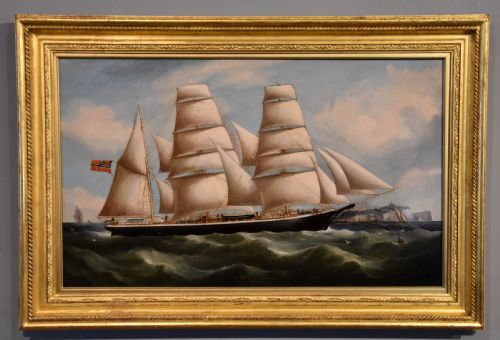


Antique Sailboat Oil Painting
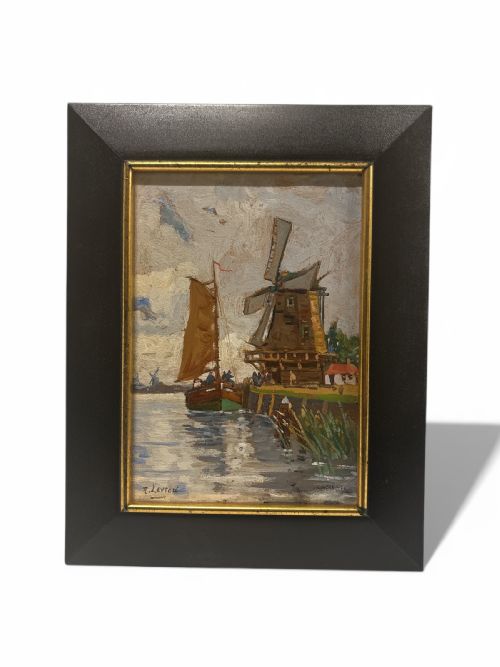
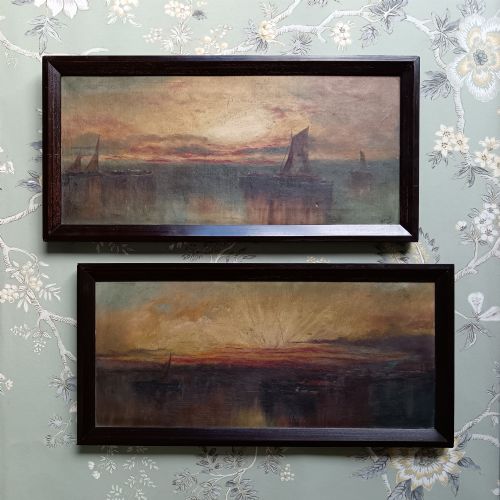
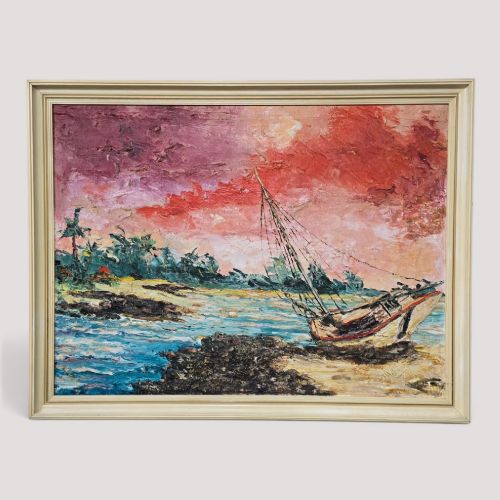
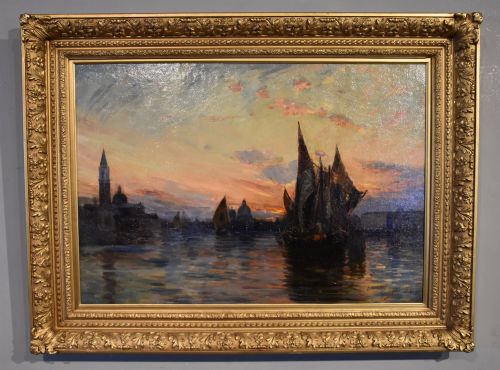
An antique sailboat oil painting captures the movement of wind and water through the layered texture of oil on canvas or board.
Antique Sailboat Oil Painting
An antique sailboat oil painting records maritime life, coastal views, and open water across the nineteenth and twentieth centuries. These works appear in forms ranging from intimate depictions on board to large canvases portraying vessels in heavy seas or quiet harbours.
The pieces on this page span Victorian and Edwardian periods into mid-twentieth-century examples, incorporating British, French, Dutch, and Scandinavian schools. Subjects cover calm river scenes, moonlit nocturnes, and bustling commercial ports populated by fishing boats and tall ships.
How they were made
Artists painted primarily with oil pigments applied to stretched canvas, prepared wooden panels, or board. Support materials often received a layer of gesso to provide a stable, sealed surface for brushwork.
Frames frequently utilise wood with applied gesso and gilt finishes, sometimes retaining period ornamentation that complements the maritime subject matter within.
Several canvases record the exact moment a sunrise breaks over nineteenth-century shipping lanes.
What varies in quality
Quality rests in the handling of light, atmospheric perspective, and the convincing depiction of water and rigging. Superior works demonstrate a confident command of tone that suggests movement and depth without relying on rigid detail.
The strength of the composition and the preservation of the original paint surface define the standing of a piece. Works that retain their textural brushwork and structural integrity without heavy restoration carry greater visual presence.
Thomas Hodgson Liddell·Richard B. Spencer·Louis Suire·Adrian Van Porten·Edward Seago·Hendrik Willebrord Jansen·Jane Vivian·George Henry Knight·John Callow·E Tucker·Gustave De Breanski·Paul Jean Clays·Charles Euphrasie Kuwasseg·Johan Jens Neumann·Bertram Priestman·John William Gilroy·William Edward Webb·James Campbell Noble·Carl Bille·Vilhelm Bille·Justus Lundegard·Alfred Wahlberg·Stanley Montague
The Antique Sailboat Oil Painting Glossary
- Oil on Canvas
- A painting technique utilising pigment suspended in drying oils applied to a woven fabric support stretched over a wooden frame. This combination allows for varied impasto and blending.
- Gesso
- A plaster mixture used as a primer on panels or canvases to prepare the surface for oil paint. It creates a smooth, absorbent base.
- Marine Painting
- Artworks depicting ships, harbours, coastal views, and open seas. This genre encompasses both calm coastal scenes and dramatic maritime storms.
- Impressionism
- An art style focused on capturing the visual impression of a moment, particularly through the shifting effects of light and colour. It influenced many marine painters of the late nineteenth and early twentieth centuries.
- Board
- A rigid flat substrate used instead of canvas for oil paintings. Artists frequently utilised board for smaller plein-air studies.
Antique Sailboat Oil Painting: Frequently Asked Questions
How do I identify the period of a painting?
Dating relies on stylistic clues, the type of canvas or board, and framing techniques characteristic of Victorian, Edwardian, or later twentieth-century production.
Signatures, artist records, and subject details such as ship rigging or clothing styles further narrow the likely decade of creation.
Were these paintings made for exhibition?
Many larger canvases served exhibition purposes in academic salons or galleries, showcasing the artist's technical skill with water and light.
Smaller works on board were often executed outdoors as direct studies of coastal weather and harbour life.
How should I care for an oil painting?
Keep paintings away from direct sunlight, high humidity, and rapid temperature fluctuations that can cause the canvas or wood panel to warp.
Dust the surface gently with a soft, dry brush without applying moisture or cleaning solvents to the paint layer.
What distinguishes marine paintings from general landscapes?
Marine paintings focus primarily on open water, coastal navigation, tides, and vessels rather than terrestrial scenery.
They require a specific understanding of maritime architecture, weather patterns, and the way light reflects off moving water.