


Blue Floral Tray
A blue floral tray brings botanical charm and rich colour to a table, combining practical serving ware with hand-painted artistry from centuries past.
Blue Floral Tray
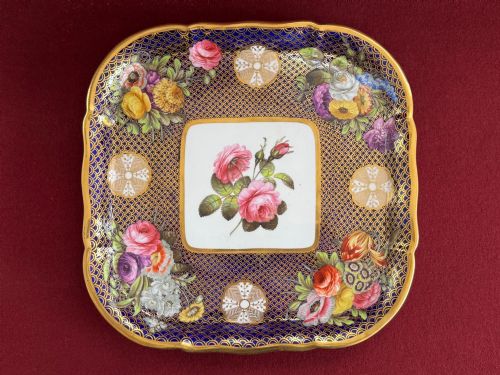
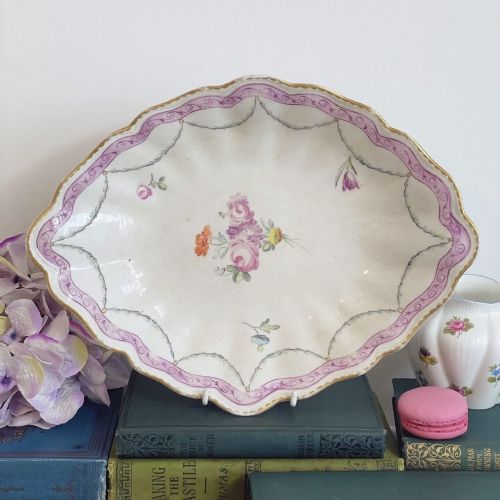
A blue floral tray encompasses an array of serving platters, dishes, and centrepiece trays decorated with botanical motifs in blue. These pieces span several centuries of design, reflecting shifts in taste from Georgian earthenware to Victorian porcelain and early twentieth-century Continental ceramics.
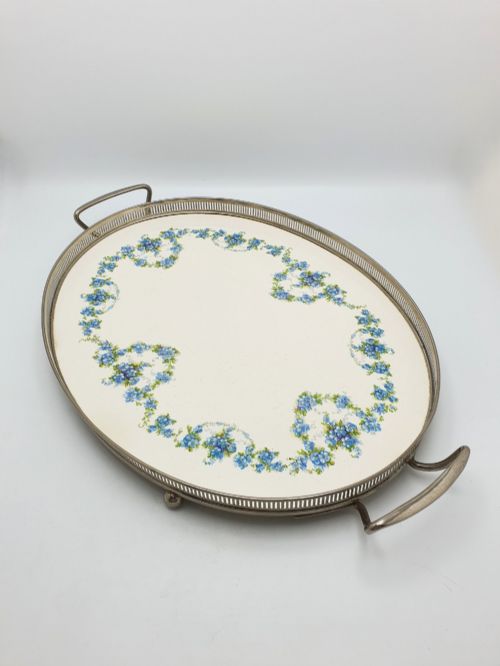
The most common examples on this page are ceramic and porcelain serving platters and dishes featuring hand-painted or transfer-printed blue floral patterns. English factories and Continental workshops dominate the selection, offering versatile shapes ranging from oval meat plates to round serving dishes.
Materials and construction
Potters and porcelain makers utilised clay, earthenware, and fine porcelain bodies, often finishing pieces with a protective glaze. Transfer printing allowed intricate floral designs to be applied mechanically before firing, while hand-painted pieces received individual brushwork in blue pigments.
Some decorative pieces incorporate metal mounts, such as ormolu frames or silver plate, alongside champlevé enamel and onyx. Gilding and gold leaf occasionally accent the rims and handles, adding subtle contrast to the blue and white palette.
Listings feature pieces spanning from the 18th century through the Victorian era and into the early 20th century, utilising porcelain, earthenware, and enamel.
Evaluating quality and execution
Quality rests upon the crispness of the blue pigment and the fineness of the ceramic body. Early porcelain and earthenware show distinct differences in weight and translucency, with finer bodies yielding a more resonant ring when tapped gently.
The precision of the painting or transfer print dictates the visual appeal of the piece. Well-executed examples display balanced compositions and steady brushwork, while the presence of maker marks or registration numbers often indicates a workshop of higher repute.
Derby·Minton·Ridgway·Spode·John Rogers and Son·Elkin Knight and Bridgwood
The Blue Floral Tray Glossary
- Transfer printing
- A decorative technique where an engraved copper plate applies ink onto tissue paper, which is then transferred onto the unglazed ceramic surface.
- Ashet
- A traditional Scottish term for a large serving platter or meat dish used at the centre of the table.
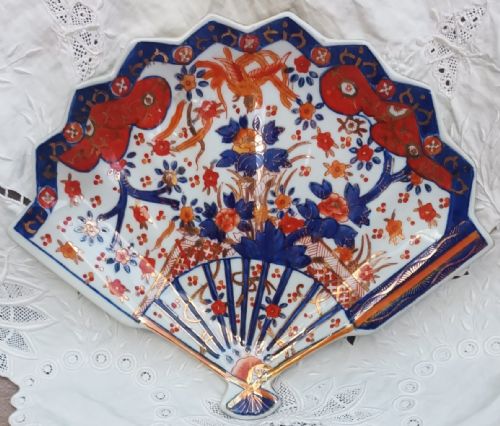
- Imari
- A style of Japanese porcelain featuring a palette of blue, iron red, and gold, which heavily influenced European makers.
- Champlevé
- An enamelling technique where troughs are carved into a metal surface and filled with vitreous enamel before firing.
Blue Floral Tray: Frequently Asked Questions
How do I date a blue floral tray?
Dating relies on identifying maker marks, factory stamps, and the type of ceramic body used. Transfer-printed patterns often carry registration numbers or specific factory c. dates that narrow down the period of manufacture.
Stylistic cues such as moulding, shape, and glaze characteristics also help distinguish eighteenth-century earthenware from later nineteenth-century porcelain and twentieth-century Continental wares.
Can I use these trays for serving food?
Many antique platters and dishes remain robust enough for serving food at the table. However, careful hand washing is essential to preserve the glaze, enamels, and any delicate gilding.
Pieces with extensive wear, fine crazing, or metal mounts like ormolu are better suited for display rather than daily culinary use.
How do I display a ceramic tray?
Serving trays and platters look striking mounted on walls using appropriate plate hangers or displayed upright on sturdy plate stands. Their decorative borders and central floral motifs make them natural focal points on dressers or sideboards.
Centrepiece trays can also sit flat on dining tables or coffee tables to hold smaller decorative objects.
What is the difference between earthenware and porcelain?
Earthenware is a porous, opaque pottery fired at lower temperatures, often thicker in section. Porcelain is a dense, vitrified ceramic fired at higher temperatures that is typically thinner and sometimes translucent.
Both materials were decorated with blue floral designs, but porcelain offers a smoother, whiter surface for fine painting.