



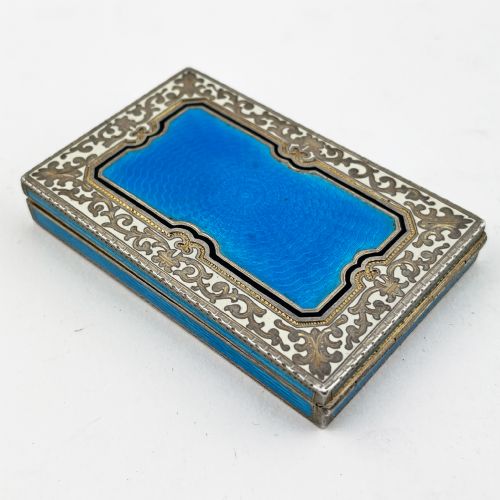


Blue Enamel Silver Box
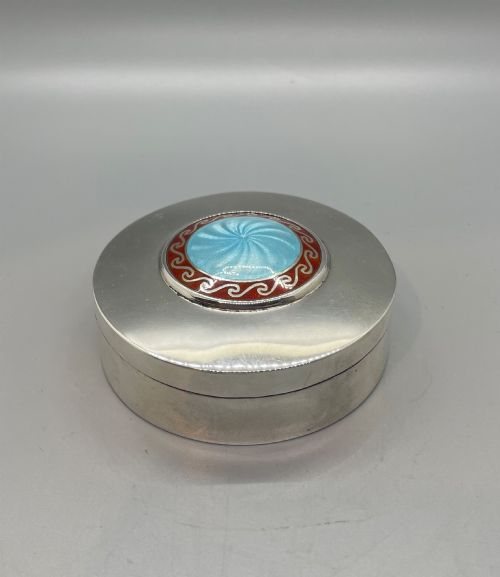
A blue enamel silver box brings together precious metal and translucent vitreous colour in forms designed for the dressing table and pocket.
Blue Enamel Silver Box
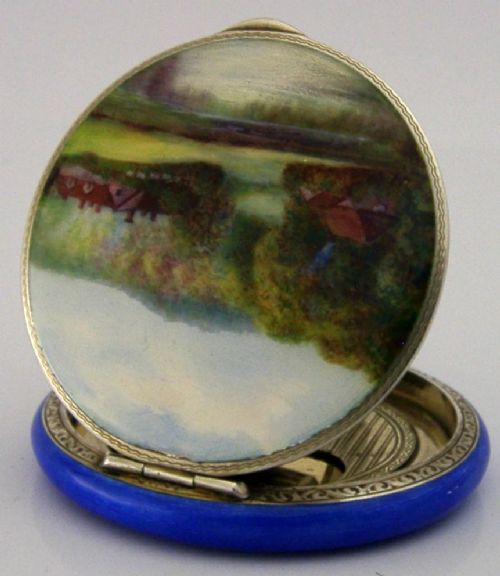
A blue enamel silver box encompasses a range of small receptacles designed to hold pills, trinkets, powder, and cosmetics. The blue enamel silver box most frequently encountered on this page originates from the early twentieth century, spanning Edwardian and Art Deco periods.
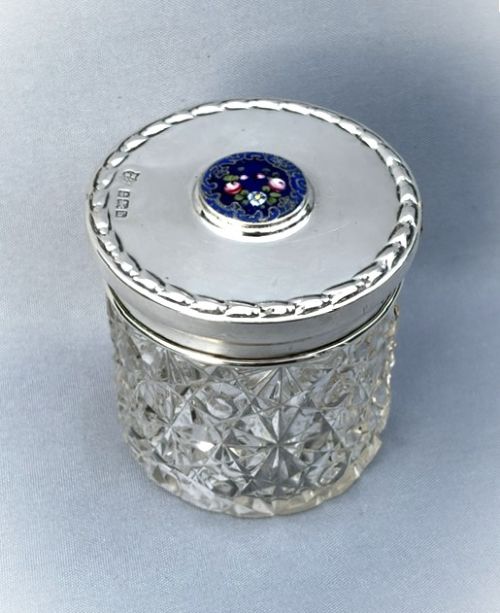
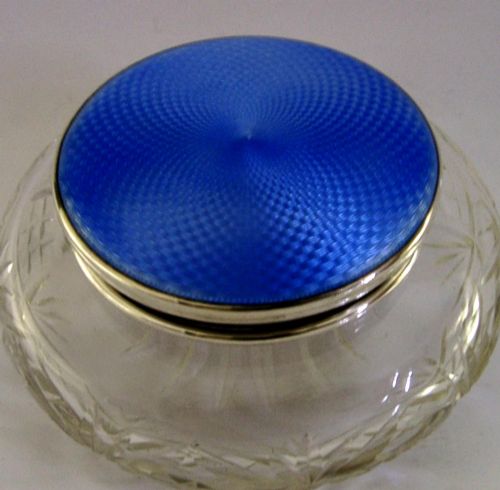
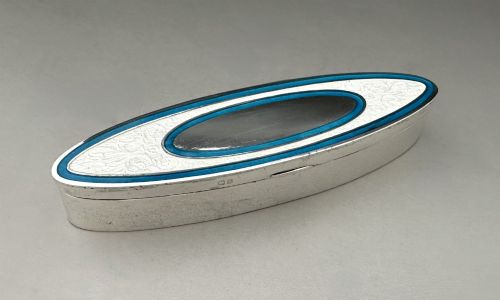
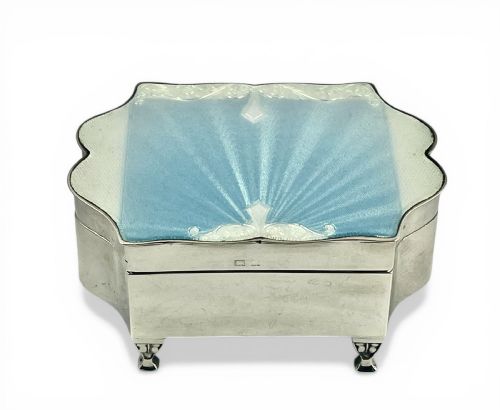
Makers shaped these containers into pill boxes, powder compacts, dressing table jars, and small jewellery boxes. The combination of sterling silver, glass, and cut crystal forms the primary body of these vessels.
Examples stretch from 19th Century Continental and Qing Dynasty pieces through to mid-century Italian and Spanish works. The blue enamel silver box remains a tangible record of changing dressing table fashions across decades.
Materials and Construction
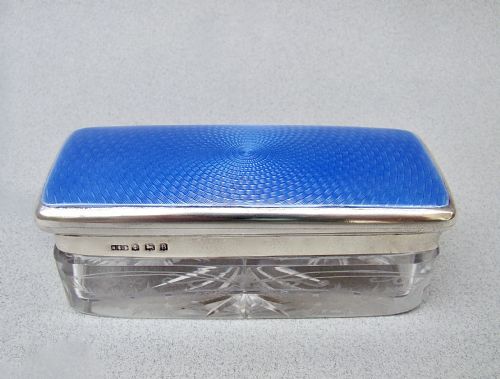
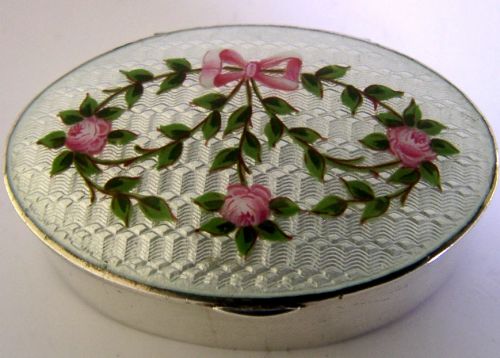
Craftsmen paired sterling silver, 800 silver, and gilt metal with vitreous enamel. Engine-turning, known as guilloche, often underlies the enamel to create geometric patterns that show through the translucent blue surface.
Glass and cut crystal bodies appear frequently in jars and powder boxes, fitted with solid silver lids bearing enamel panels. Artisans also integrated materials like wood and silk linings into the interior compartments of larger boxes.
Among the small containers hide singing bird boxes and mesh compacts designed to hold a lady's secrets.
Assessing Quality and Execution
The precision of the engine-turned guilloche pattern beneath the enamel sets finer pieces apart from simpler production. Crisp hallmarks, indicating specific assay offices such as Birmingham and London alongside maker marks, denote formal British manufacture.
The clarity and even coverage of the vitreous enamel indicate the skill involved in firing the piece. Hand-painted details or complex multi-coloured enamel work elevate the standard beyond plain translucent colour.
Henry Clifford Davis·Henry Matthews·Giuliano Spinelli·Liberty and Co
The Blue Enamel Silver Box Glossary
- Guilloche Enamel
- A decorative technique where metal is engraved with an intricate repetitive pattern or design under a translucent enamel layer.
- Vitreous Enamel
- A material made by fusing powdered glass to a substrate by firing, usually between 750 and 850 degrees Celsius.
- Sterling Silver
- An alloy of silver containing 92.5 percent by mass of silver and 7.5 percent by mass of other metals, usually copper.
- Hallmark
- An official mark struck on items made of precious metals, indicating the standard of purity and the maker.
- Dressing Table Jar
- A small container with a fitted lid used for cosmetics, pins, or hair trinkets on a vanity.
Blue Enamel Silver Box: Frequently Asked Questions
What were small silver and enamel boxes used for?
These small containers served practical purposes on dressing tables and in pockets during the Edwardian and Art Deco eras. Owners stored powder, rouge, pills, stamps, and small trinkets inside them.
The interiors often featured gilt washes, mirrors, or silk linings suited to delicate cosmetics. Their portability made them fashionable everyday accessories for the well-dressed individual.
How can I tell an Art Deco box from an Edwardian one?
Edwardian pieces tend to display softer floral motifs, flowing lines, and traditional proportions typical of the Belle Epoque. They often rely on gentle pastel shades of blue enamel.
Art Deco examples shift toward sharp geometric patterns, sunburst guilloche engraving, and symmetrical layouts. The blue enamel on these later items frequently appears in deeper royal or pale tones with streamlined mountings.
Are these boxes made of solid silver?
Most British items on this page utilise sterling silver for the frames, mounts, and lidded structures. Continental European pieces often employ 800 silver standards.
Some variants combine silver-gilt with enamel, while others pair silver lids with glass, crystal, wood, or mesh bodies. Hallmarks stamped into the metal usually clarify the exact silver standard used.
How do I care for antique enamel and silver?
Enamel is essentially glass fused to metal, meaning it requires protection from sharp impacts and drops that can cause chipping. Gentle cleaning with a soft cloth preserves the glossy surface.
Silver components benefit from occasional polishing with a non-abrasive cloth, taking care to avoid rubbing the enamel directly. Storing the pieces away from direct sunlight prevents fading of the coloured glass layers.