



Blue Delft Style
Blue delft style pieces bring the classic cobalt and white palette of European earthenware into a room.
Blue Delft Style
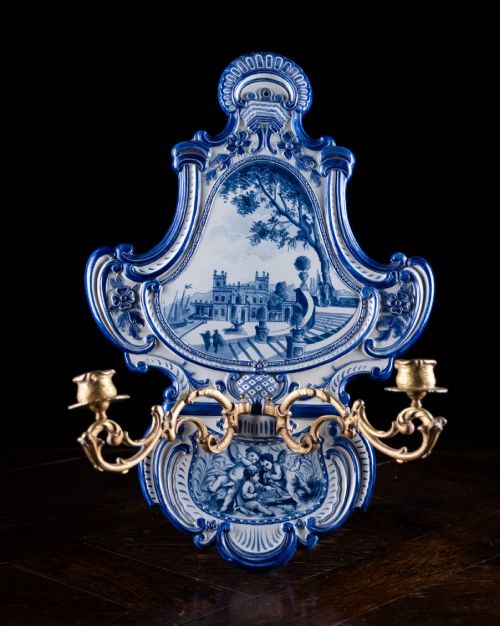
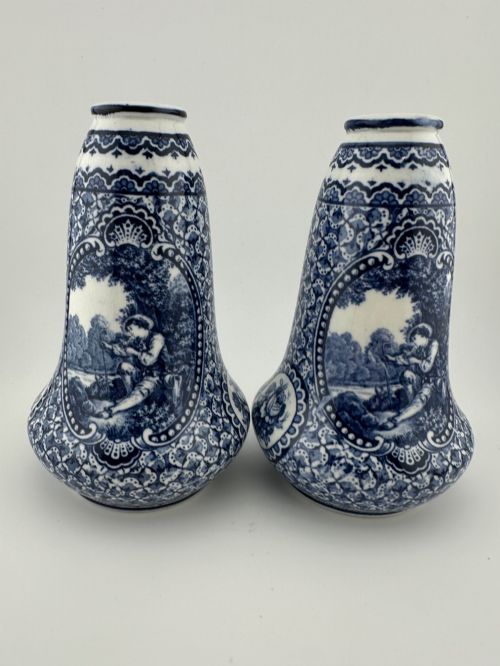
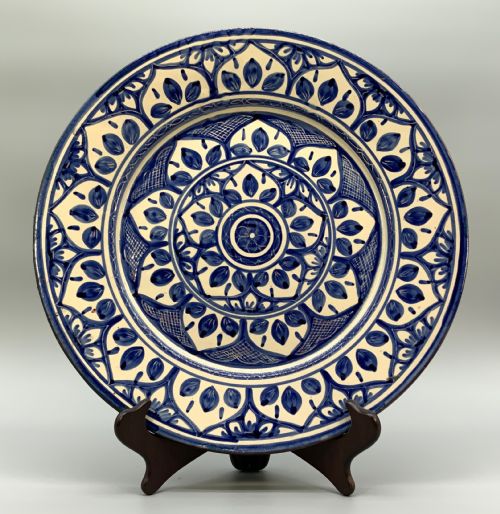
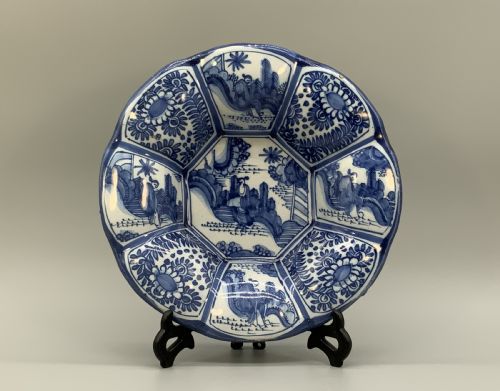
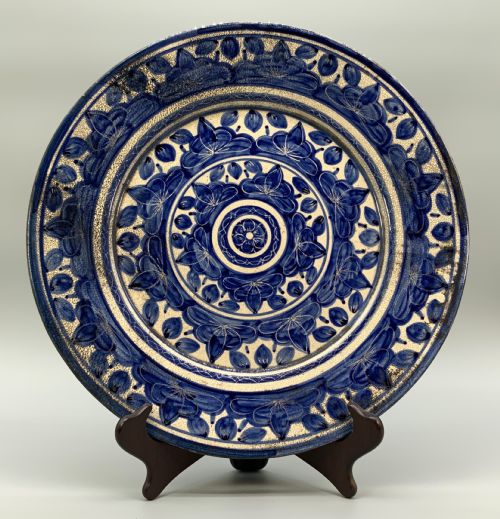
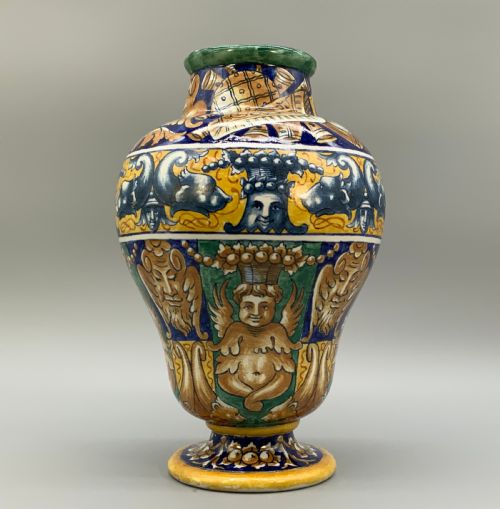
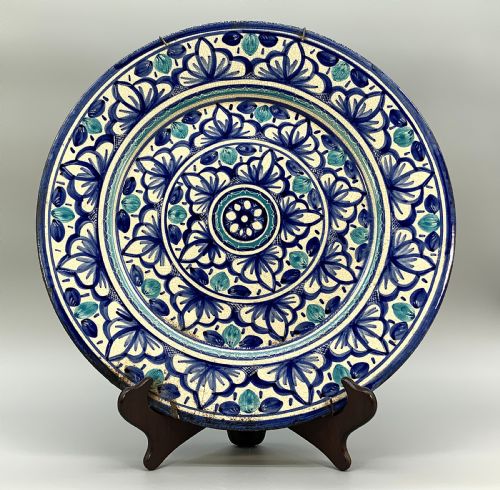
When you search for blue delft style, you are looking at decorative ceramics that emulate the tin-glazed earthenware tradition of the Netherlands and its continental followers. These pieces span centuries, appearing in forms such as decorative plates, wall sconces, chargers, and vases.
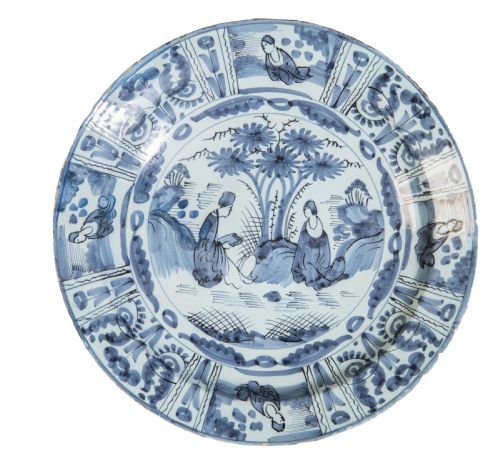
The objects you meet on this page range from early interpretations to later revivals, including French faience, Italian majolica, and German earthenwares. You will find plates and chargers decorated with Chinoiserie and Kraak motifs, alongside substantial vases and wall sconces featuring ormolu mounts.
How they were made
Makers shaped earthenware bodies and coated them in a white tin glaze to create a smooth, opaque canvas for decoration. Artisans then painted designs directly onto this absorbent surface using cobalt pigment, which turned deep blue during the firing process.
Some works incorporate additional metallic fittings, such as ormolu mounts, or utilise polychrome palettes alongside traditional manganese and blue pigments. Firing techniques varied across European centres like Nevers and factories such as Royal Bonn and Villeroy & Boch.
Blue Delft Style Retail Price Guide 2026
Typical asking prices for blue delft style among the pieces listed under this phrase on Sellingantiques today, from the lower quarter to the upper quarter. They describe what is for sale here now, not the wider market.
Listings feature items spanning from the seventeenth century through to 1940, utilising earthenware, ceramic, and tin glaze.
What varies in quality
The distinction between ordinary and superior pieces rests on the crispness of the cobalt brushwork and the depth of the tin glaze. Early examples and fine revival pieces demonstrate precise control over the pigment, avoiding blurred lines and muddy backgrounds.
Quality also shows in the ambition of the form, from simple plates to heavily moulded vases and mounted sconces. The weight of the ceramic body and the integration of auxiliary materials like ormolu separate standard factory output from more accomplished workshop productions.
Royal Bonn Franz Anton Mehlem·Villeroy & Boch
The Blue Delft Style Glossary
- Tin-Glazed Earthenware
- Pottery covered with a lead glaze made opaque by the addition of tin oxide. This technique provides the characteristic white background for blue painted decoration.
- Cobalt Pigment
- A metallic oxide used by ceramic painters to achieve deep blue tones under the glaze. It withstands high kiln temperatures without losing intensity.
- Faience
- European tin-glazed earthenware, particularly associated with French, German, and Italian production centres. It encompasses both utility wares and purely decorative objects.
- Kraak Style
- A decorative scheme originating from Chinese porcelain of the late Ming dynasty, featuring panels of floral and animal motifs. European makers frequently copied these patterns.
- Ormolu
- Gilt bronze mounts applied to furniture, clocks, and ceramic vessels. They add structural presence and decorative enrichment to wall sconces and vases.
Blue Delft Style: Frequently Asked Questions
What is blue delft style?
Blue delft style refers to tin-glazed earthenware decorated in blue and white, inspired by traditional Dutch pottery and wider European faience traditions. These items range from wall plates to vases.
The aesthetic draws heavily on historic motifs, including Chinese porcelain imports and continental revival styles spanning several centuries.
How are these ceramics dated?
Dating relies on stylistic clues, glaze characteristics, and factory marks found on the base or mounts. Early pieces often show distinct potting techniques and hand-mixed pigments.
Revival pieces from later periods frequently adopt historic forms while utilising contemporary manufacturing methods and modern ceramic bodies.
Where were these pieces made?
Production centres spread across Europe, with significant workshops in the Netherlands, France, Germany, and Italy. Each region developed its own interpretation of the tin-glaze technique.
Factories such as Villeroy & Boch and Royal Bonn produced notable variations, incorporating local artistic influences into their blue and white wares.
How do I display chargers and plates?
Chargers and large plates suit wall hanging or placement on plate stands to showcase their painted surfaces. Wall sconces require secure wall fixings to support both the ceramic body and any metal mounts.
Keeping them away from high-traffic areas protects the edges of the tin glaze from accidental chipping.