



Blue Chinoiserie Serving Dish
A blue chinoiserie serving dish brings oriental architectural scenes and garden landscapes to the table in blue and white.
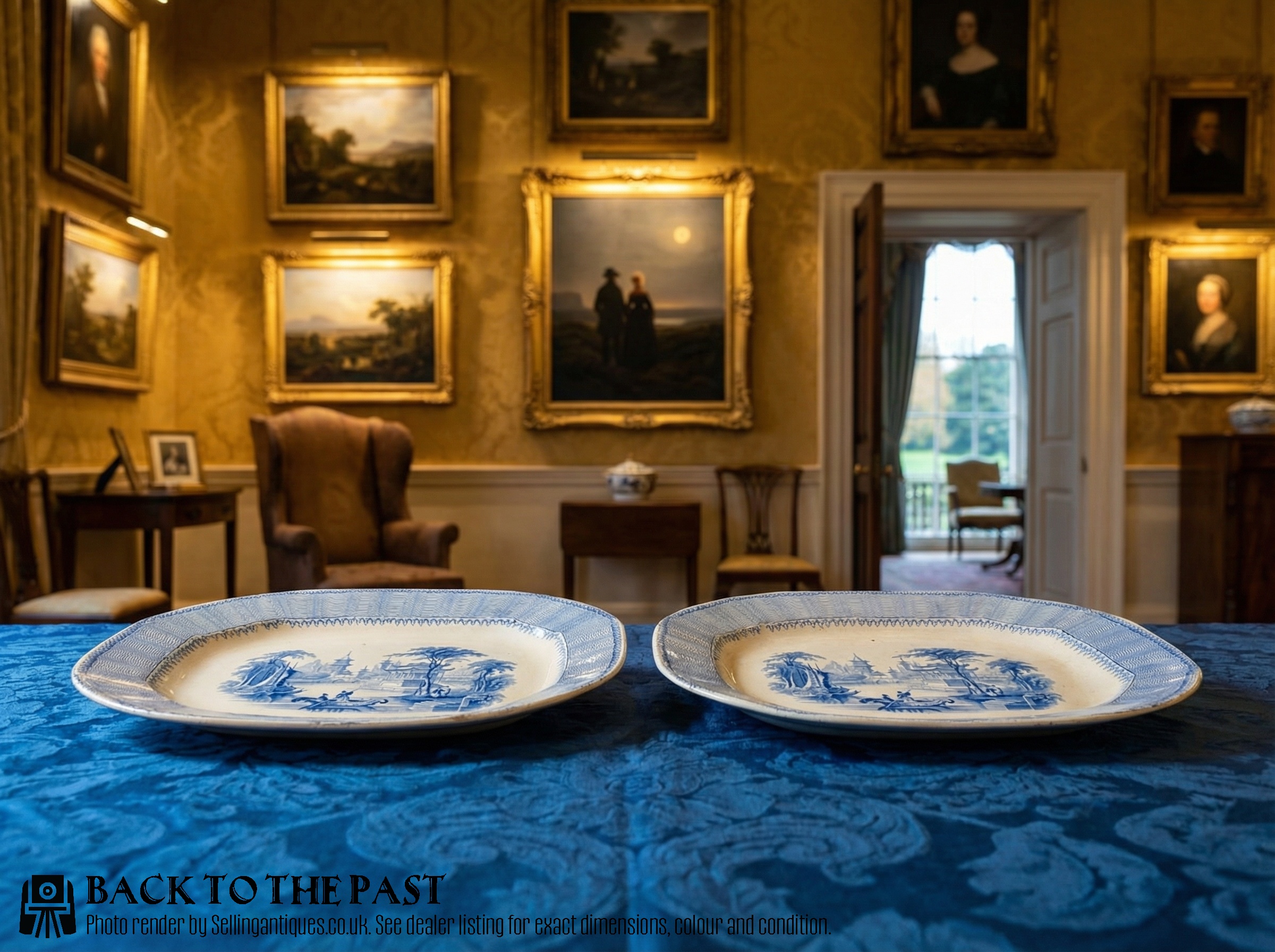
Blue Chinoiserie Serving Dish
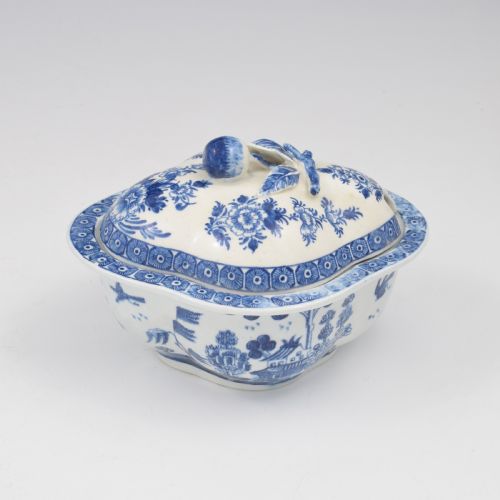
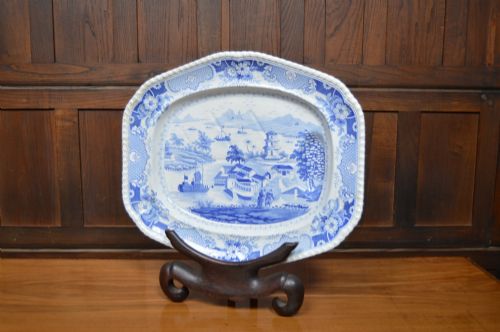
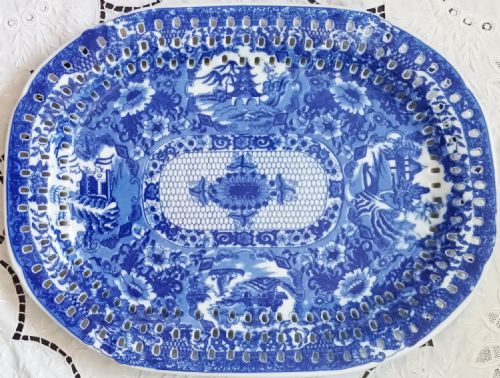
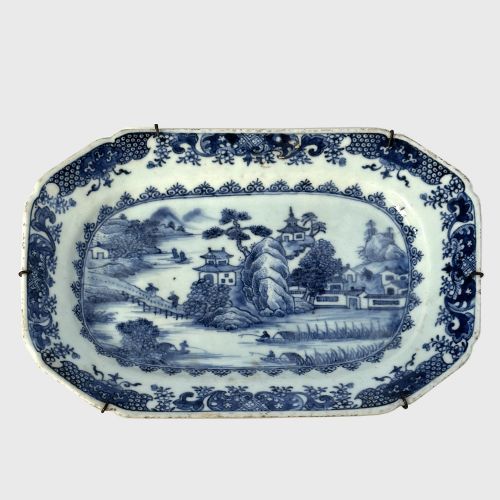
A blue chinoiserie serving dish encompasses large platters, meat dishes, tureens, and chargers designed for presenting food at table. These pieces take forms such as octagonal serving dishes, pierced platters, and handled tureens.
The objects stem from periods including the eighteenth century, the nineteenth century, Georgian, and Victorian eras, alongside styles like Chinese Export and Victorian Chinoiserie. Buyers encounter earthenware, ironstone, and porcelain varieties decorated with cobalt pigment.
Makers recorded in the evidence range from Derby and Bow to Minton, Mason's, and Copeland and Garrett. Transfer-printed patterns such as India Temple, zebra pattern, and pagoda adorn the ceramic surfaces.
How they were made
Potters shaped earthenware, ironstone, pearlware, and porcelain bodies by hand or in moulds to form chargers, meat platters, and tureens. Glaze sealed the ceramic surface before or after decoration.
Cobalt pigment applied under the glaze created deep blue tones, often utilising transfer printing techniques to transfer intricate landscape and architectural motifs onto the clay body.
Listings span earthenware, ironstone, pearlware, and porcelain, decorated with cobalt pigment in Georgian, Victorian, and Chinese Export styles.
What varies in quality
Quality rests in the crispness of the cobalt transfer print and the clarity of the glaze across the ceramic surface. Early porcelain bodies and ironstone show distinct weight and fineness in moulding.
Form complexity differentiates standard meat plates from pierced platters, well and tree platters, and covered tureens with matched stands. The sophistication of the chinoiserie landscape dictates visual appeal.
Derby Porcelain·Bow Porcelain·Copeland and Garrett·Minton·Mason·John Rogers and Son·Coalport·Elkin Knight and Bridgwood
The Blue Chinoiserie Serving Dish Glossary
- Chinoiserie
- European decorative style reflecting Chinese artistic influences, depicting imaginary oriental landscapes, pavilions, and figures. It appears frequently in blue and white transfer printing.
- Transferware
- Pottery decorated by printing a design from an engraved copper plate onto tissue paper and transferring it onto the ceramic body. This method allowed consistent reproduction of complex patterns.
- Ironstone
- A heavy, durable type of earthenware patented in the nineteenth century to imitate porcelain. It provides a robust body for large meat platters and soup tureens.
- Charger
- A large decorative plate or platter used historically for service or display. Examples appear in tin-glazed earthenware and ironstone.
- Tureen
- A deep covered vessel used for serving soups, sauces, or meats at the table. These pieces often include matching covers and stands.
Blue Chinoiserie Serving Dish: Frequently Asked Questions
How were serving dishes used?
Large platters and meat dishes held roasts and poultry for communal dining at the table. Tureens kept soups and sauces warm with fitted covers.
Deep chargers and well and tree platters managed juices during carving and meat service in country houses.
How do I care for antique ceramic dishes?
Wash these fragile earthenware and porcelain pieces gently by hand in warm water using mild soap. Avoid dishwashers and harsh scrubbers to protect the historic glaze and cobalt pigment.
Store them securely on stable surfaces, supporting the weight of large platters and ironstone chargers properly.
How do I identify Georgian pieces?
Georgian serving dishes display specific potting characteristics from the eighteenth and early nineteenth centuries, including pearlware bodies and early transfer patterns. Look for stylistic cues such as lotus and bamboo motifs.
Form names and factory marks from makers like Derby and Bow help narrow down the production period.
What is Chinese export porcelain?
Chinese export porcelain refers to wares made in China specifically for Western markets during the eighteenth century and earlier. These platters feature hand-painted blue and white designs tailored to European tastes.
They exhibit fine porcelain bodies distinct from local British earthenware and ironstone productions.