
Blue Ceramic Urn Vases
When you search for blue ceramic urn vases, you enter a diverse field of earthenware, stoneware, and porcelain vessels spanning multiple centuries and global traditions.
Blue Ceramic Urn Vases
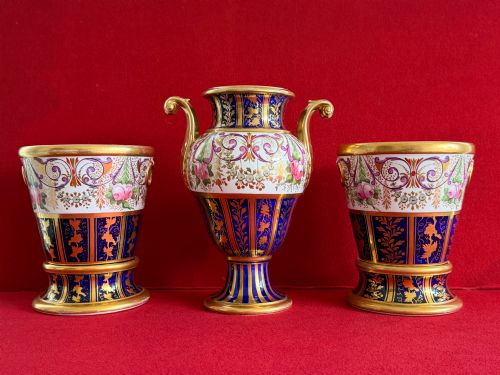
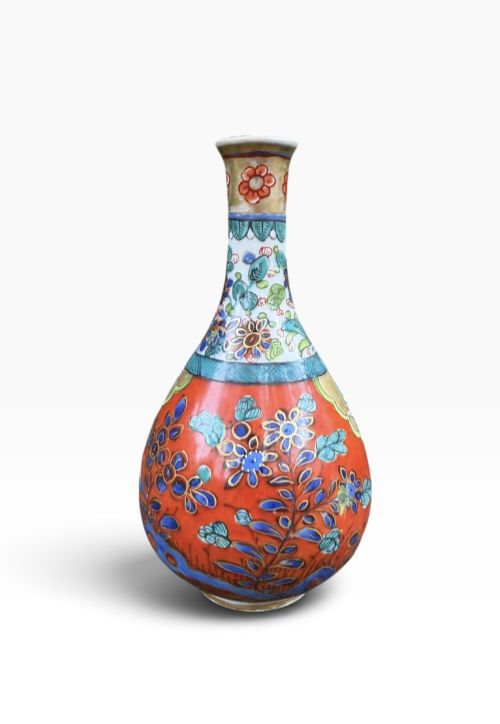
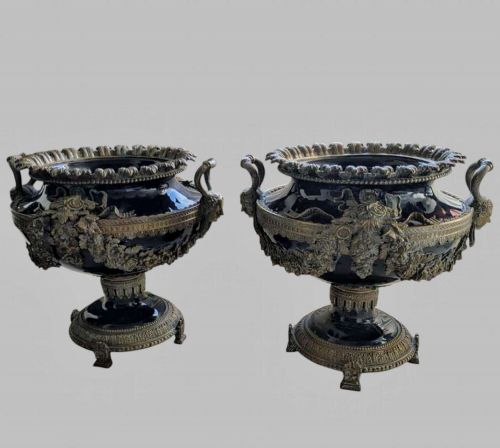
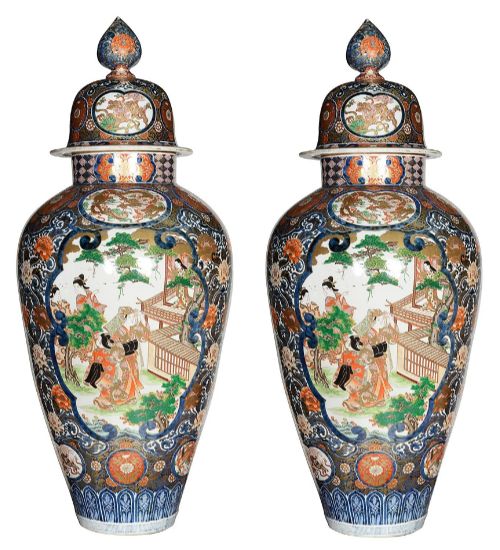
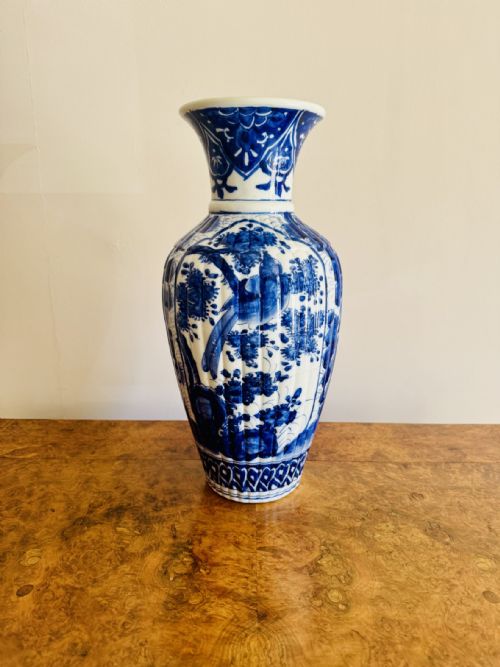
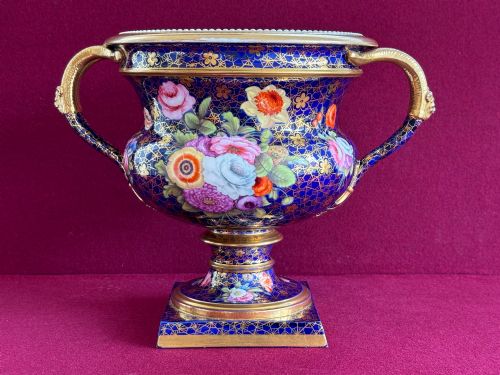
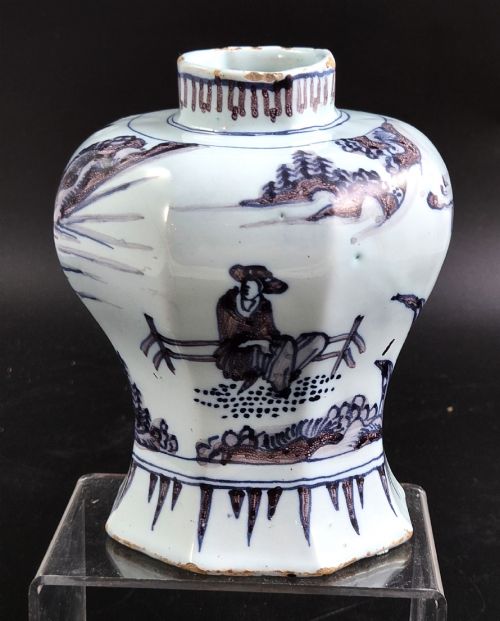
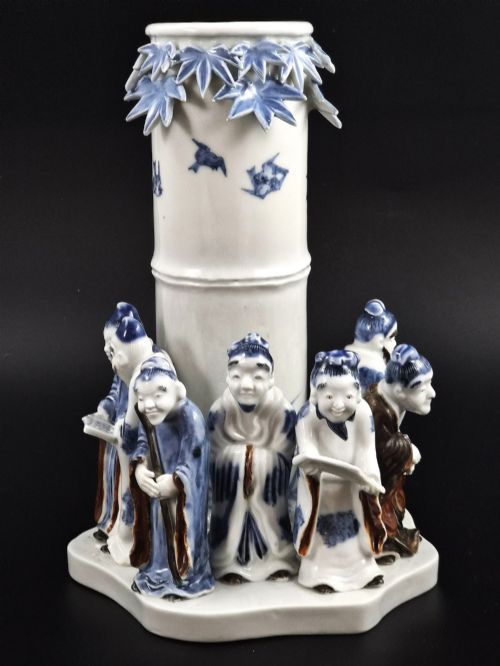
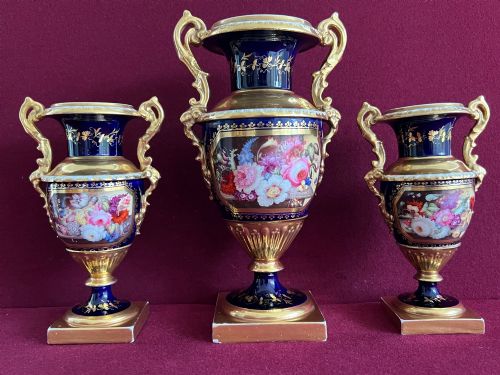
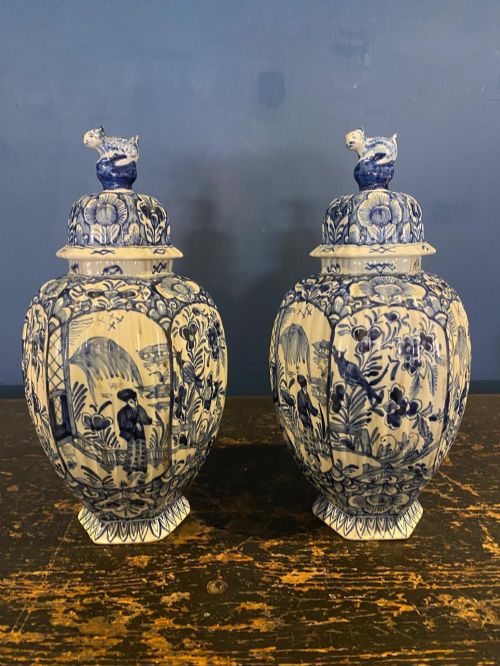
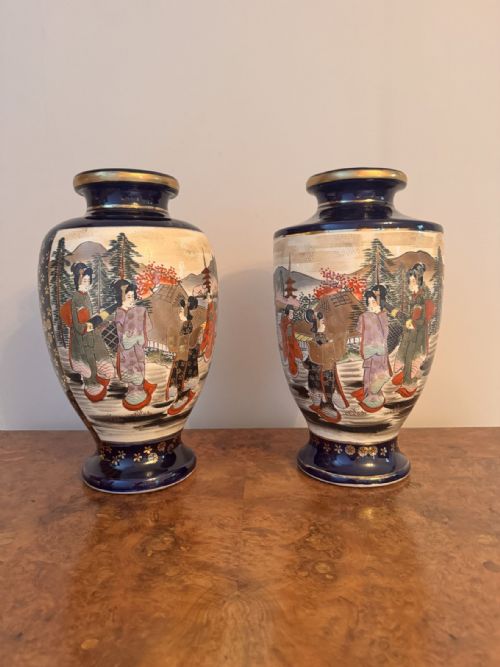
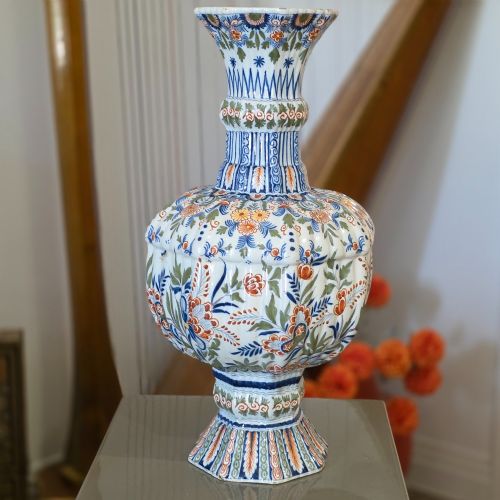
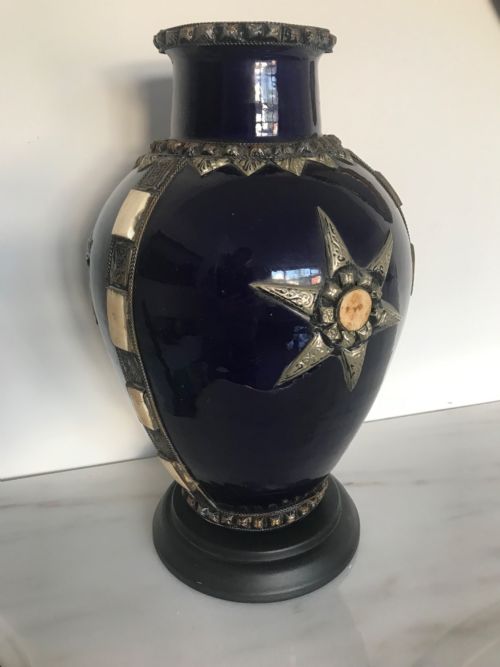
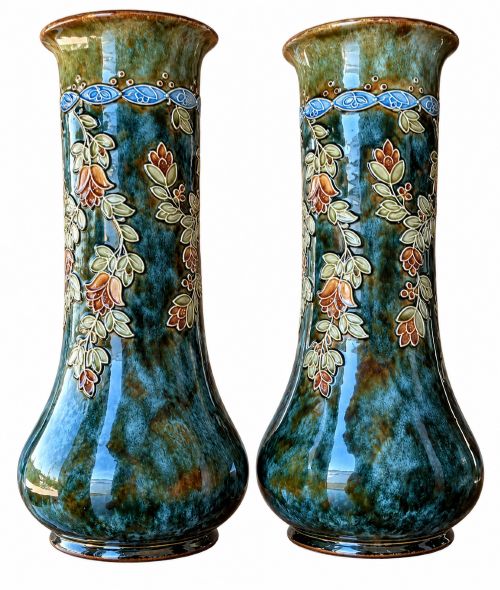
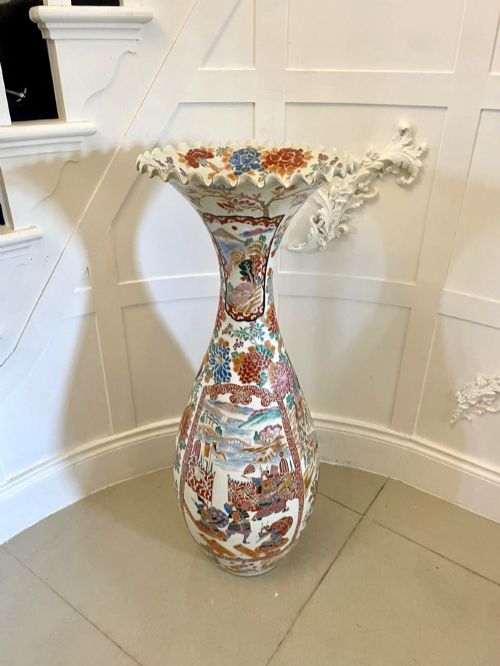
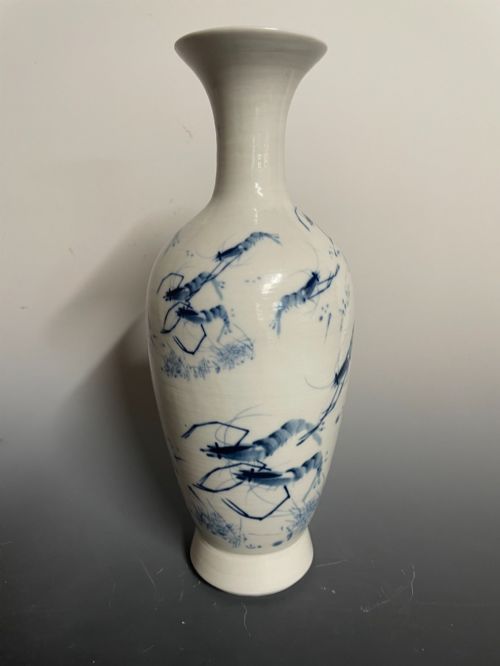
Blue ceramic urn vases encompass a wide gathering of lidded jars, cabinet vessels, floor-standing pieces, and handled urns predominantly rendered in shades of blue. The examples seen here range from seventeenth-century Japanese and eighteenth-century Delftware to nineteenth-century European porcelain and stoneware.
The form stretches across several distinct stylistic movements, incorporating Japanese Imari, Dutch Baroque, Regency, and Art Nouveau designs. Makers from England, France, Italy, China, and Japan contributed to this selection, resulting in varied regional interpretations of the blue ceramic vase format.
Buyers will encounter functional display pieces, garnitures of multiple vessels, and items later adapted into table lamps. The physical scale moves from miniature cabinet items to floor-standing vessels measuring several feet tall.
How they were made
The primary materials recorded in the evidence are porcelain, earthenware, and stoneware, frequently finished with a glaze and decorated with blue pigments. Many pieces incorporate supplementary elements such as gold leaf, gilt, enamel, and bronze or silver mounts.
Techniques varied by region and period, encompassing hand-thrown stoneware, slip-cast earthenware, and finely painted porcelain bodies. Surface decoration often involved underglaze blue painting, transfer printing, or hand-applied polychrome enamels over a blue ground.
Several centuries ago, a maker carefully painted microscopic birds onto a scale blue ground, ensuring that patience outlived the kiln.
What varies in quality
Quality in these vessels is evident in the crispness of the blue pigment application, the balance of the form, and the precision of any gilt or enamel detailing. Maker attribution also influences distinction, particularly when works bear the marks of notable factories or specific studio artists.
The integration of secondary materials such as bronze mounts, silver cabochons, or fitted lids affects the overall resolution of the piece. Superior examples maintain intact glazes and crisp surface decoration across both large floor vases and miniature cabinet pieces.
Royal Doulton·Flight Barr And Barr·Cantagalli·Fourmaintraux Courquin·Fourmaintraux Courquin Desvres·Sèvres·Daisy Makeig Jones·Spode·Derby·Mason·Royal Crown Derby·Chamberlain Worcester·Samson Paris·Alice Euphemia Thatcher·Hicks And Meigh·Booths·Louisa Wakely
The Blue Ceramic Urn Vases Glossary
- Baluster
- A vase shape characterised by a rounded lower body that tapers towards a narrow neck, resembling an architectural baluster. This profile appears frequently in eighteenth and nineteenth-century ceramic design.
- Garniture
- A set of matching vases or jars designed to be displayed together on a mantelpiece or sideboard. These sets typically consist of three to five pieces.
- Maiolica
- Tin-glazed earthenware produced in Italy and other parts of Europe, known for colourful painted decoration over a white opaque glaze. The technique dates back to the Renaissance and saw revivals in the nineteenth century.
- Imari
- A style of Japanese porcelain featuring a palette of underglaze blue, iron red, and gilt. It became widely exported to Europe and inspired numerous Western imitations.
- Faience
- European tin-glazed earthenware similar to majolica or Delftware, often featuring blue and white or polychrome decoration. The term is commonly applied to French and Dutch wares from various periods.
Blue Ceramic Urn Vases: Frequently Asked Questions
What periods do these blue ceramic urn vases cover?
The listings encompass items spanning from the late seventeenth century through the eighteenth and nineteenth centuries into the early twentieth century. Styles range from seventeenth-century Japanese and eighteenth-century Delft to nineteenth-century Regency, Victorian, and Art Nouveau productions.
Makers and regions represented include English porcelain factories, French faience workshops, and Japanese export kilns. Each era brought distinct glazing techniques and decorative motifs to the blue ceramic form.
How were these urn vases used historically?
These vessels served primarily as decorative ornaments within domestic interiors, displayed on mantelpieces, tables, or fitted into architectural niches. Larger floor-standing examples stood directly in hallways or reception rooms.
Some pieces functioned as lidded jars for potpourri or dry goods, while others were created purely as cabinet showpieces to demonstrate wealth and artistic taste. Over time, certain examples were adapted into table lamps.
How do I care for antique ceramic vases?
Dust the surfaces gently with a soft, dry cloth to prevent the accumulation of dirt on glazed or unglazed areas. Avoid using liquid cleaners, abrasive pads, or chemical solvents, which can damage historic glazes, enamels, and gilt highlights.
Keep pieces away from direct sunlight and areas of high humidity to protect the ceramic body and any applied metal mounts. If a vase has been converted to a lamp, ensure the electrical components are periodically inspected by a qualified professional.
How can I tell different regional styles apart?
Distinguishing regional styles relies on observing the clay body, the tone of the blue pigment, and the painting technique. Chinese and Japanese export porcelains often feature specific underglaze blue hues and motifs like Imari palettes or figural scenes, whereas European delftware and faience utilise tin glazes on earthenware bodies.
Factory marks, where present on the base, provide direct evidence of origin. Stylistic markers such as Regency neo-classical symmetry or Art Nouveau organic lines also help identify the cultural context of the piece.