




Blue Ceramic Tureen Lid
These blue ceramic tureen lid examples offer charming table service history, ranging from Georgian earthenware to Victorian ironstone.
Blue Ceramic Tureen Lid
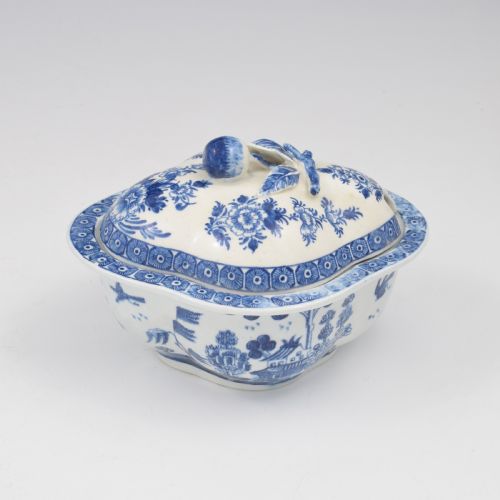
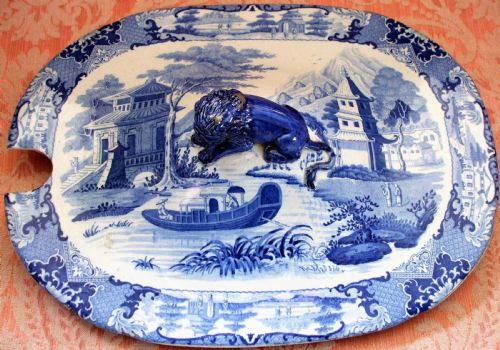
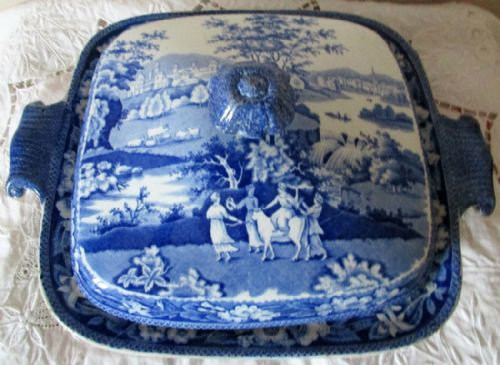
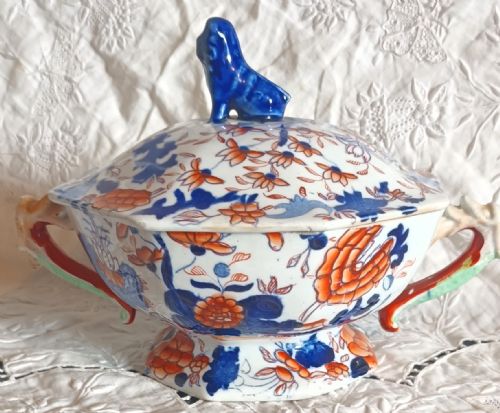
A blue ceramic tureen lid serves as the upper cover for a soup or vegetable serving vessel, originating largely from 18th Century and 19th Century British dining traditions. Buyers seeking a blue ceramic tureen lid encounter components from sauce tureens, vegetable tureens, and supper sets produced by notable potteries.
The versions met most frequently on this page date to the Georgian and Victorian eras, rendered in earthenware, ironstone, and soft-paste porcelain. Many feature blue and white transfer printed scenes, such as the Canton River Scene or the Europa pattern, reflecting popular aesthetic tastes of the period.
These items survive either as part of complete tureen sets or as standalone covers salvaged from historic dining services. Collectors look for matching proportions and clean transfer printing when selecting an individual cover.
How they were made
Potters shaped these objects using earthenware, ironstone, or soft-paste porcelain bodies, forming the lids to fit specific serving vessels. The pieces were then fired in kilns to achieve a durable ceramic base before decoration was applied.
Decoration relied heavily on blue and white transfer printing, a technique where engraved copper plates transferred intricate designs onto tissue paper and then onto the ceramic surface. Some examples also received hand-painted touches or gilt detailing in gold leaf over the glaze.
Blue Ceramic Tureen Lid Retail Price Guide 2026
Typical asking prices for blue ceramic tureen lid among the pieces listed under this phrase on Sellingantiques today, from the lower quarter to the upper quarter. They describe what is for sale here now, not the wider market.
Peacocks and river scenes gaze out from these centuries-old ceramic covers, watching over dining tables long cleared.
What varies in quality
The clarity and crispness of the blue transfer print distinguish finer examples from simpler production pieces, with sharp lines indicating a well-preserved copper plate. Subtle variations in the depth of the glaze and the smoothness of the ceramic body also mark the difference between standard kitchen wares and superior table services.
The distinction between earthenware and dense ironstone or porcelain affects both the weight and the durability of the lid. Potteries known for high artistic output generally achieved more refined forms and more consistent colour saturation in the cobalt blue pigments.
Robert Hamilton·John and Richard Riley·Mason·Ridgways·James Wallace and Co
The Blue Ceramic Tureen Lid Glossary
- Ironstone
- A heavy, durable type of earthenware patented in the 19th Century that mimics porcelain. It resisted chipping better than standard pottery and became standard for domestic dining services.
- Transfer printing
- A decoration method where a design is engraved on a copper plate, inked, and transferred via paper onto unglazed or biscuit pottery. This allowed complex pictorial scenes to be produced efficiently.
- Soft-paste porcelain
- An early ceramic composition fired at lower temperatures than hard-paste porcelain, creating a warm, slightly porous body. It was widely used by 18th Century factories.
- Sauce tureen
- A small lidded serving vessel designed specifically for gravies or sauces at the dining table. They frequently accompanied larger vegetable tureens and meat dishes.
- Quatrefoil
- A symmetrical shape with four lobes resembling a four-leaf clover, often used for the rims and bases of 18th Century porcelain tureens.
Blue Ceramic Tureen Lid: Frequently Asked Questions
What were blue ceramic tureen lids used for?
These lids covered vessels that kept soups, vegetables, or sauces warm during formal dining.
They helped retain heat at the table while completing the presentation of matching ceramic sets.
How do I date an antique tureen lid?
Dating relies on identifying the ceramic body, such as soft-paste porcelain versus ironstone, and the style of the transfer print.
Maker marks and stylistic clues from the Georgian and Victorian periods also provide reliable chronological markers.
Can I use these lids on modern dishes?
These historical components are generally collected for display, study, or to complete antique serving sets rather than for daily modern utility.
Their age and composition require careful handling away from modern kitchen appliances.
What is transfer printing on pottery?
Transfer printing is a 18th and 19th Century technique where an engraved metal plate applies detailed blue designs onto ceramic pieces.
This method allowed potteries to produce consistent pictorial scenes like river landscapes and botanical patterns.