



Staffordshire Blue Transferware Cover
These Staffordshire blue transferware cover pieces are durable earthenware table ceramics featuring rich cobalt printing, prized for completing historical service sets.
Staffordshire Blue Transferware Cover
A Staffordshire blue transferware cover represents the top lid portion of a ceramic tureen, vegetable dish, or sauce vessel designed for nineteenth century dining. Most examples found on this page date from the Georgian and Victorian periods, reflecting early table service traditions.
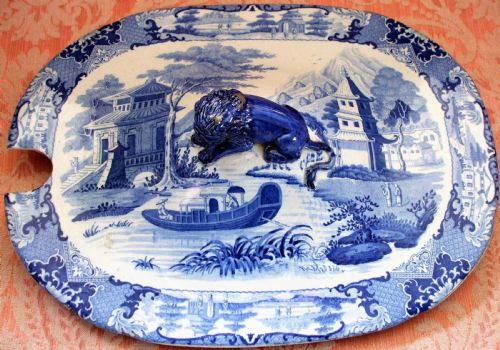
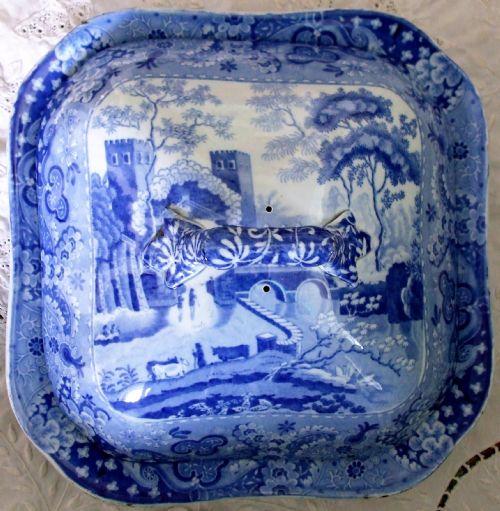
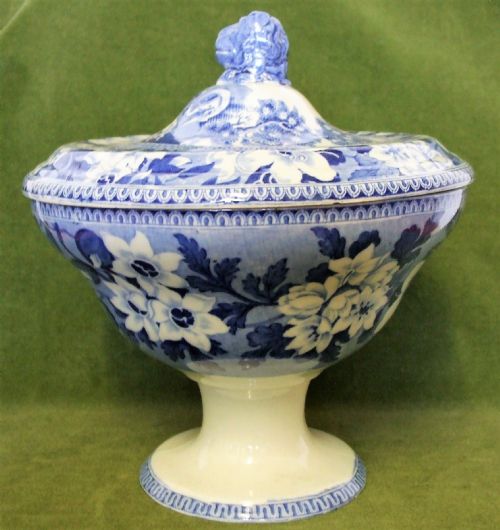
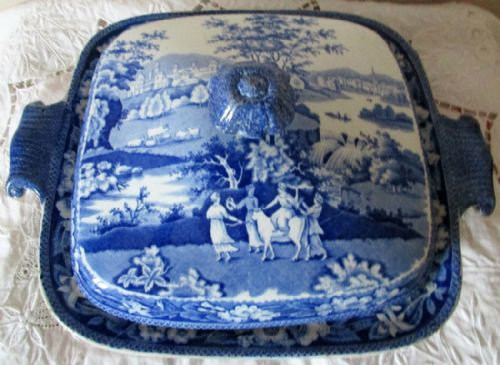
Makers produced these covers in various forms to fit specific serving vessels, including large vegetable tureens and smaller sauce tureens. The items frequently display named topographical scenes, architectural views, or exotic animal motifs.
Collectors encounter these pieces as standalone replacement lids or as parts of complete tureen sets. The surviving items showcase the domestic utility and decorative ambition of British potteries from the 1800s onward.
Materials and Technique
Potters formed these items using ceramic earthenware and pearlware bodies, shaped to fit corresponding serving bases. The foundational clay provided a stable canvas for subsequent surface decoration.
Workers applied cobalt oxide designs onto the ceramic surface using copper plate transfer printing techniques. A transparent lead glaze covered the printed pattern before firing, yielding a glossy finish that protected the pigment.
Staffordshire Blue Transferware Cover Retail Price Guide 2026
Typical asking prices for staffordshire blue transferware cover among the pieces listed under this phrase on Sellingantiques today, from the lower quarter to the upper quarter. They describe what is for sale here now, not the wider market.
Listings feature nineteenth century earthenware and pearlware materials decorated with cobalt oxide transfer prints depicting scenic patterns.
Qualities of the Ware
The clarity and depth of the transfer print dictate much of the visual merit in these ceramics. Sharp registration of intricate scenes, such as castle or river motifs, demonstrates superior workshop execution.
The smoothness of the lead glaze and the precise fit of the cover to its vessel form distinguish better examples. Uniformity in the ceramic body without excessive warping indicates careful kiln management.
Robert Hamilton·J. and R. Clews·John Rogers and Son·John and Richard Riley·James Wallace and Co.·Copeland and Garrett
The Staffordshire Blue Transferware Cover Glossary
- Transferware
- Ceramic decorated by transferring a printed design from an engraved copper plate to tissue paper, which was then pressed onto the unfired or biscuit ware.
- Pearlware
- A refined earthenware body developed in the late eighteenth century featuring a subtle bluish glaze that sat in recesses to mimic Chinese porcelain.
- Earthenware
- Porous pottery fired at lower temperatures than stoneware or porcelain, requiring a vitreous glaze to ensure impermeability for table use.
- Cobalt Oxide
- A metallic oxide pigment utilised in ceramic production to achieve deep blue coloration under high temperature glaze firings.
- Tureen
- A deep covered serving bowl used for soups, sauces, or vegetables at formal dining tables.
Staffordshire Blue Transferware Cover: Frequently Asked Questions
What is a transferware cover?
A transferware cover is the matching lid for a ceramic tureen or serving vessel, decorated with printed blue designs.
These pieces protected food temperature and added decorative continuity to nineteenth century dining tables.
How do I date these covers?
Dating relies on stylistic clues, pottery marks, and the specific ceramic body, such as pearlware versus later earthenware.
Most examples originate from the Georgian and Victorian eras, reflecting popular landscape and animal transfer patterns of those decades.
Can I use these for serving?
While originally designed for functional dining service, antique ceramic covers require careful handling due to age.
Modern usage is generally discouraged to preserve the historical lead glaze and prevent accidental damage to fragile earthenware.
How should I display a cover?
Covers can be displayed alongside matching tureen bases or mounted safely on plate racks to highlight the cobalt printed scenes.
Stable placement away from direct heat and heavy traffic ensures the preservation of the delicate ceramic material.