



Earthenware Soup Tureen Cover
An earthenware soup tureen cover is a ceramic serving piece designed to keep broth warm at table, combining utilitarian function with transfer-printed transferware artistry.
Earthenware Soup Tureen Cover
An earthenware soup tureen cover represents the upper protective component of a lidded vessel used historically for serving table broth. When searching for an earthenware soup tureen cover, buyers encounter examples originating primarily from the nineteenth century, including the Victorian and Georgian periods.
The objects available on this page include distinct regional British wares, spanning Staffordshire productions and named potters. Most items survive as part of complete tureen sets, though individual covers and vegetable tureens also appear.
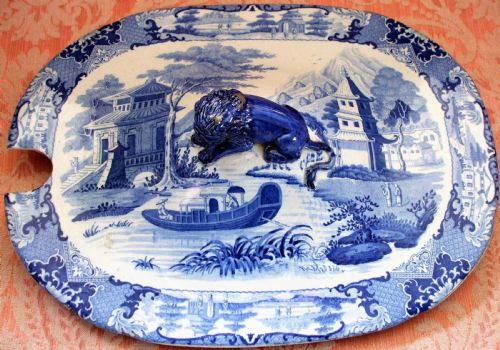
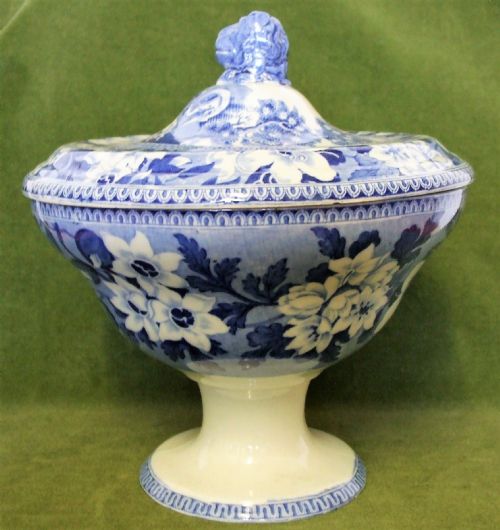
Makers represented in these listings span notable English factories such as Doulton Burslem, Copeland and Garrett, and Ridgways. The decorative schemes heavily feature blue and white transfer printing displaying scenic patterns like the Canton River Scene or architectural castles.
Materials and construction
These pieces are fashioned from ceramic earthenware bodies, which provide a robust substrate for table service vessels. Potters applied an opaque or translucent glaze over the clay base to seal the porous earthenware material against moisture.
Decoration relied on cobalt oxide applied via blue and white transfer printing techniques. This method allowed intricate pictorial scenes such as elephants, castles, and river landscapes to be mechanically transferred onto the ceramic surface before firing.
Earthenware Soup Tureen Cover Retail Price Guide 2026
Typical asking prices for earthenware soup tureen cover among the pieces listed under this phrase on Sellingantiques today, from the lower quarter to the upper quarter. They describe what is for sale here now, not the wider market.
Some nineteenth-century potters boldly transferred exotic elephants onto domestic soup tureens, proving dinner table conversation starters are not a modern invention.
Judging quality in earthenware covers
Quality in these covers is determined by the crispness and clarity of the blue and white transfer print. Smudged cobalt oxide or misaligned pattern registrations distinguish lesser examples from sharply rendered works.
The refinement of the earthenware body and the evenness of the glaze application also separate standard production items from superior pieces. Well-balanced handles and precise fitting to the corresponding tureen base reflect higher manufacturing standards.
Robert Hamilton·John Rogers and Son·Doulton Burslem·J and R Clews·Ridgways·Copeland and Garrett
The Earthenware Soup Tureen Cover Glossary
- Earthenware
- A porous ceramic body fired at lower temperatures than stoneware or porcelain. It requires a vitreous glaze to hold liquids.
- Transfer printing
- A decoration technique where an engraved copper plate prints a design onto tissue paper, which is then transferred onto the unglazed or bisque ceramic surface.
- Cobalt oxide
- A metallic pigment used to achieve the deep blue colour characteristic of nineteenth-century transferware ceramics.
- Staffordshire
- A geographic region in England famous for its dense concentration of pottery and ceramic manufacturing works during the Georgian and Victorian eras.
Earthenware Soup Tureen Cover: Frequently Asked Questions
What is an earthenware soup tureen cover?
An earthenware soup tureen cover is the matching lid designed to seal a ceramic soup tureen. These covers helped retain heat for table broths during nineteenth-century dining.
They frequently feature transfer-printed pictorial decoration in blue and white, matching the body of the serving vessel below.
How do I date an earthenware tureen cover?
Dating relies on stylistic markers, pottery marks, and the specific transfer print patterns recorded in the listings. Nineteenth-century examples often display maker stamps corresponding to Victorian or Georgian periods.
Changes in ceramic bodies and printing techniques across the 1830s to 1890s provide further chronological clues.
How were these covers used originally?
These ceramic lids topped large serving tureens positioned centrally at dining tables during formal meals. They kept soups and stews warm until the host served guests.
Often accompanied by ladles, the complete tureen set formed an essential component of nineteenth-century dining room serviceware.
How do I care for antique earthenware?
Antique earthenware requires gentle handling due to the porous nature of the ceramic body beneath the glaze. Hand washing with mild soap protects the nineteenth-century surface.
Avoid exposing these pieces to sudden temperature changes or harsh mechanical dishwashers to preserve the historic glaze and cobalt transfer print.