





Blue Ceramic Lidded Urns
Blue ceramic lidded urns bring together centuries of global kiln traditions, offering commanding decorative presence and refined storage through historic forms.

Blue Ceramic Lidded Urns
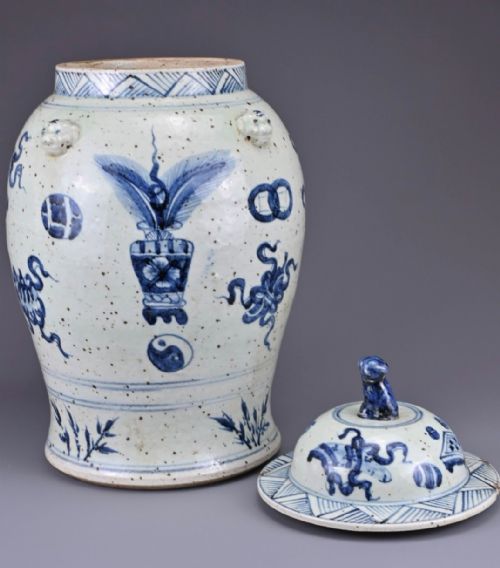
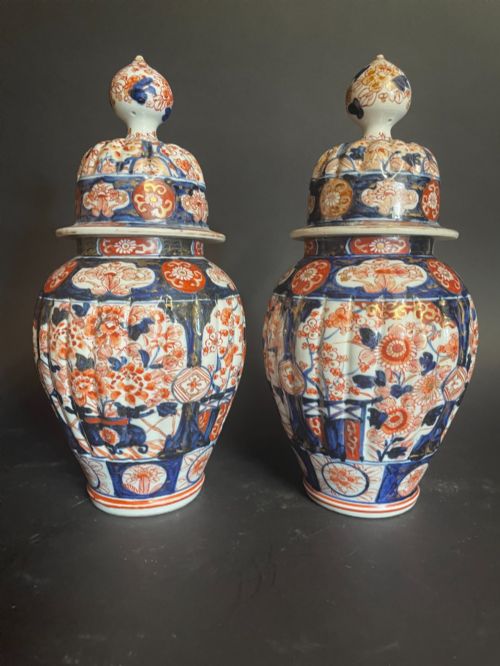
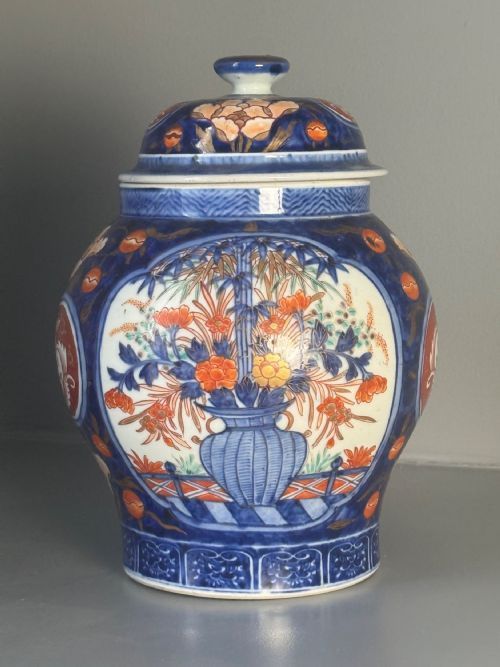
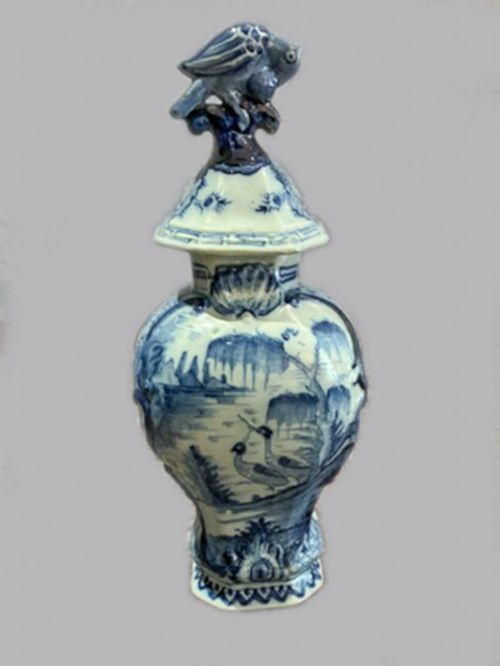
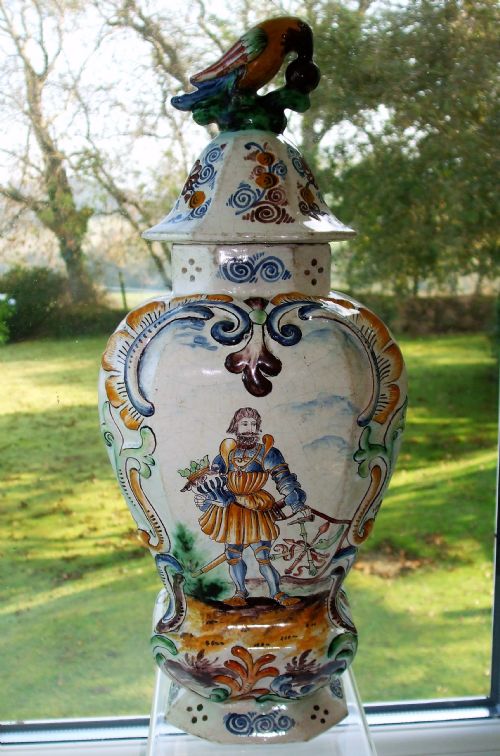
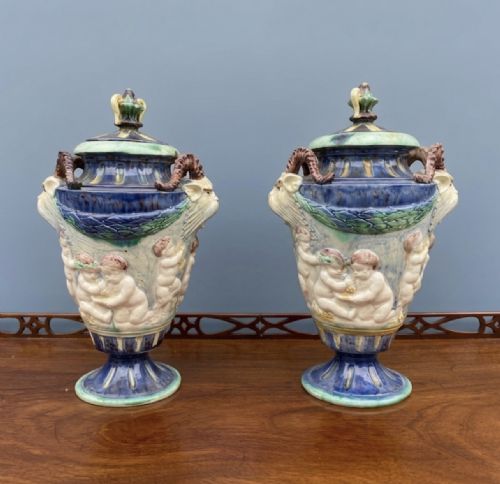
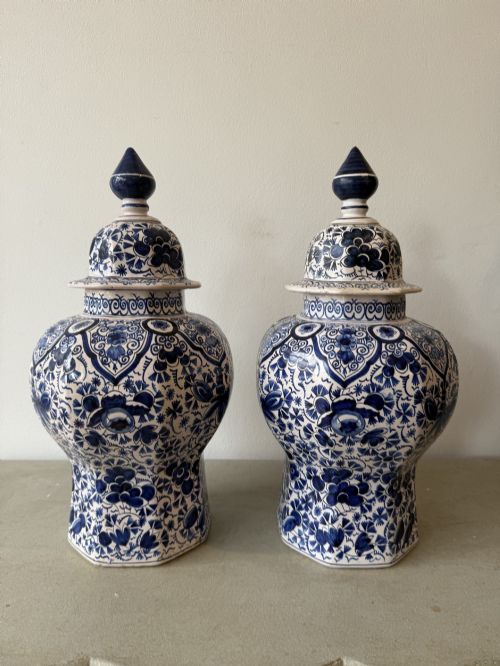
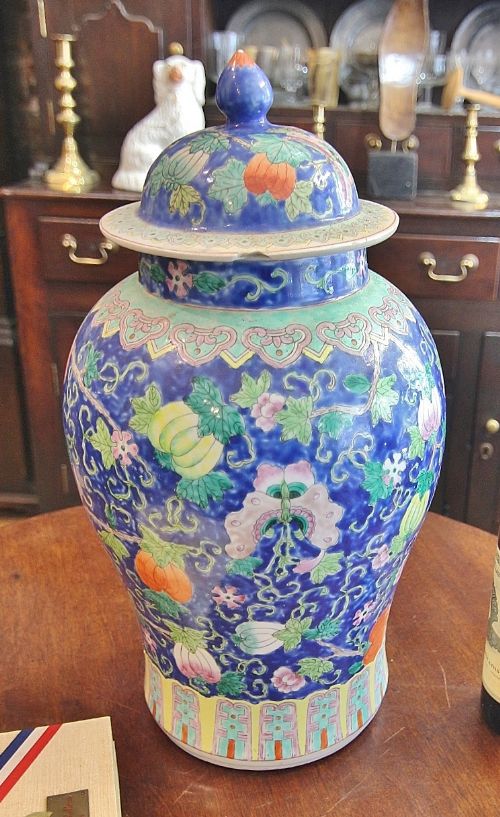
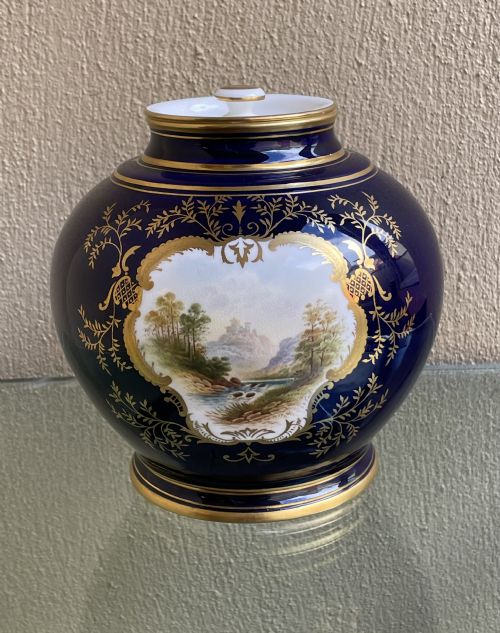
Blue ceramic lidded urns encompass covered vessels, ginger jars, and decorative vases produced across European and Asian potteries from the seventeenth century through the twentieth century. When searching for blue ceramic lidded urns, a buyer encounters everything from seventeenth-century Arita blue and white porcelain to nineteenth-century Japanese Imari wares and European faience. These pieces range from substantial temple jars to delicate table pieces, often featuring cobalt decoration beneath a clear glaze or applied over the surface.
The material vocabulary spans traditional tin-glazed earthenware, ironstone, and fine porcelain, reflecting both domestic European tastes and imported Asian aesthetics. Many examples draw on historical design idioms, including Dutch Delft tobacco jars, French Rococo revival forms, and English Regency ironstone patterns. The integration of matching lids distinguishes these forms, serving both functional storage roles and complete sculptural profiles.
How they were made
Makers shaped these vessels using traditional throwing and moulding techniques before applying complex mineral pigments and glazes. Cobalt oxide served as the primary pigment for blue decoration, fired at high temperatures to achieve deep tonal variation beneath transparent glazes. Tin-glazed earthenwares like Delft required an opaque white enamel layer that accepted hand-painted blue brushwork directly onto the unfired surface.
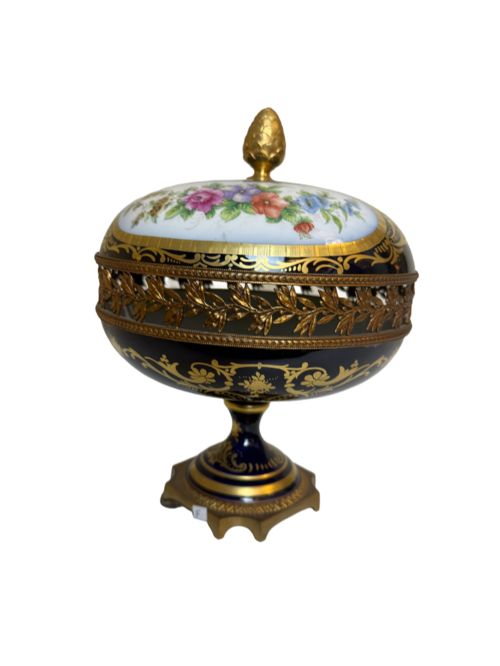
Porcelain bodies utilised refined kaolin and petuntse clays fired in kilns to achieve vitrification and resonant strength. Decorative enhancement frequently involved hand-painting, sometimes augmented with gilt bronze mounts, enamel highlights, or gold leaf applied during secondary low-temperature firings.
Some historic tobacco jars feature inner lids to keep herb mixtures moist, proving that antique storage prioritised proper humidity long before modern humidors.
What varies in quality
The distinction between standard production and masterwork execution rests in the precision of the brushwork and the depth of the cobalt pigment. Superior vessels display confident, fluid hand-painting with crisp botanical or figurative detailing, whereas lesser pieces rely on mechanical transfer printing or hasty execution. The purity of the ceramic body and the uniformity of the glaze surface also separate fine atelier pieces from commercial factory output.
Form and proportion govern the architectural success of each piece, particularly where lids must align precisely with the collar of the vase. Master potters ensured balanced weight distribution and harmonious symmetry across baluster bodies, handles, and covers. The inclusion of documented factory marks or artist signatures further elevates an example through verifiable provenance.
Chamberlain Worcester·Royal Crown Derby·William Moorcroft·Wolfsohn Dresden·Samson of Paris
The Blue Ceramic Lidded Urns Glossary
- Imari
- A style of Japanese porcelain featuring a tripartite palette of underglaze blue, iron red, and gilt, highly popular in European collections from the seventeenth century onwards.
- Delftware
- Tin-glazed earthenware produced in the Netherlands and England, characterised by a white opaque glaze painted primarily in cobalt blue.
- Baluster
- An architectural form featuring a rounded, swelling lower body that tapers towards a narrow neck, frequently utilised for large decorative vases and jars.
- Ironstone
- A durable type of heavy earthenware patented in the nineteenth century, designed to offer the strength of stoneware alongside the refined qualities of porcelain.
- Faience
- European tin-glazed earthenware, particularly associated with French and Italian workshops producing decorative tablewares and ornamental urns.
Blue Ceramic Lidded Urns: Frequently Asked Questions
What were lidded urns used for originally?
These covered vessels served both practical and decorative functions in historic interiors, often containing dry goods, spices, tobacco, or fragrant potpourri mixtures. Their sealed lids preserved the contents while presenting a polished ornamental object on mantelpieces, sideboards, or dedicated display furniture.
Over time, many examples transitioned into purely decorative focal points, prized for their imposing scale and cobalt-painted surface designs. Wealthy households displayed them in matched pairs or garniture sets to demonstrate refined taste and global trade connections.
How do I distinguish Japanese Imari from European copies?
Examine the body paste, weight, and pigment characteristics under magnification to determine the origin of an Imari piece. Japanese export porcelain from Arita typically exhibits a dense, greyish-white body with subtle iron spotting beneath a clear glaze, paired with deep cobalt and iron-red pigments.
European factories like those in England and Germany produced faithful interpretations using softer earthenwares or different porcelain formulas, often revealing distinct kiln-support marks or characteristic factory ciphers. The orange-peel texture of the glaze and the specific hue of the gilding also offer clues to whether a piece originated in Japan or a Western revival workshop.
What is the difference between an urn and a ginger jar?
Ginger jars traditionally feature a broad shoulders tapering smoothly to a flat base, topped with a domed lid that sits flush with the rim without handles or pedestals. Originally designed to transport spices and preserves from East Asia, their stout proportions became a staple of decorative ceramic production.
Urns generally incorporate raised pedestals, distinct necks, and structural handles, drawing inspiration from classical architectural forms used in funerary or commemorative contexts. While both fall under the broader category of covered vessels, urns tend to emphasise verticality and ceremonial dignity compared to the functional origins of ginger jars.