





Pair French Covered Vases
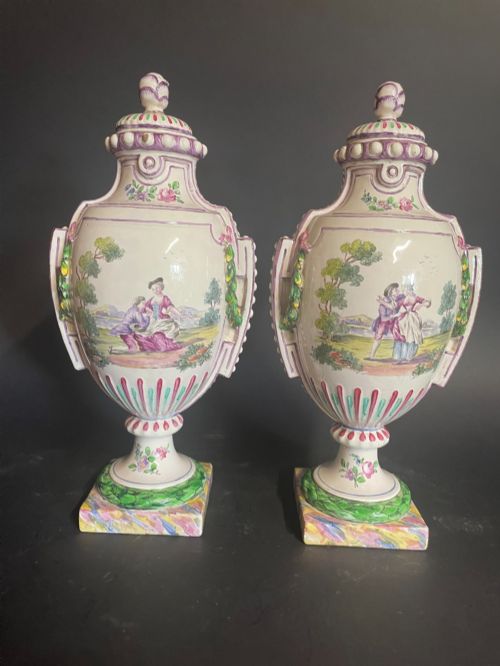
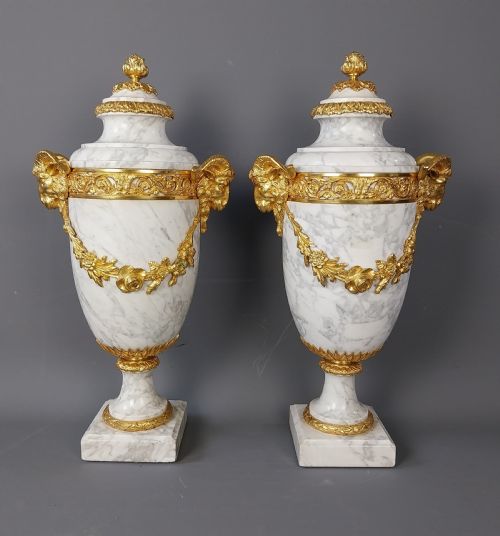
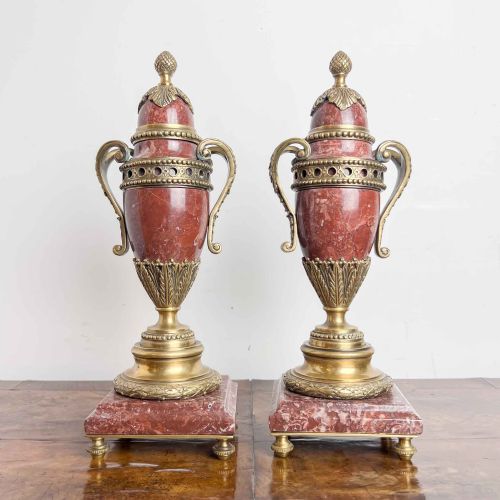
These pair french covered vases bring ornamental splendour to a mantelpiece, fashioned from porcelain and marble with elaborate gilt bronze mounts.

Pair French Covered Vases
A pair french covered vases search uncovers ornamental lidded vessels and cassolettes dating predominantly from the nineteenth century. These decorative urns and vases draw upon French Rococo Revival, Neoclassical and Chinoiserie styles.
The pieces often feature ceramic bodies or marble urns fitted with removable lids and cast metal mounts. Makers working in Paris and regional potteries produced these symmetrical pairs for formal display in nineteenth-century interiors.
The selection frequently includes porcelain vessels painted in imitation of Sevres wares, alongside faience earthenware and mounted Chinese porcelain. Bronze and marble cassolettes complete the range of covered vessels available.
How they were made
Potters shaped clay into porcelain or tin-glazed faience bodies, applying hand-painted decoration and enamel finishes before firing. Stoneworkers turned white marble and rouge marble into solid urns and pedestals.
Foundries cast ormolu, gilt bronze and patinated bronze into mounts, handles and lids using traditional techniques. Artisans then chased the metal surfaces and joined the bronze components to the ceramic or stone bodies.
The inventory records decorative urns, lidded vases, and cassolettes spanning Rococo Revival, Neoclassical, and Chinoiserie styles.
What varies in quality
The crispness of the bronze chasing and the weight of the ormolu mounts dictate the standard of the metalwork. Finely articulated foliage and sharp casting separate superior bronze mounts from softer, simpler work.
Painted porcelain decoration ranges from delicate hand-applied polychrome scenes to simpler monochrome glazes. The precision of the ceramic firing and the artistic execution of the painted panels determine the merit of the vessel.
Jules Moigniez
The Pair French Covered Vases Glossary
- Cassolette
- A dual-purpose decorative vase or urn with a reversible lid that functions as a burner or candle holder. These stone or porcelain vessels typically feature ornate metal mounts.
- Ormolu
- Finely chopped gold leaf amalgamated with mercury and applied to a bronze base, then heated to drive off the mercury. This technique creates a durable golden finish on decorative mounts.
- Faience
- Tin-glazed earthenware produced in European potteries, often decorated with colourful painted motifs. The white glaze provides a smooth ground for detailed brushwork.
- Rococo Revival
- A nineteenth-century design movement resurrecting the asymmetrical scrolls, C-scrolls and naturalistic plant motifs of the eighteenth-century French court. This style heavily influences nineteenth-century ornamental urns.
- Grand Tour Style
- Decorative objects produced in the nineteenth century replicating classical antiquities encountered by travellers on tours of Italy and France. These pieces utilise bronze and marble to evoke classical antiquity.
Pair French Covered Vases: Frequently Asked Questions
What is a cassolette?
A cassolette is a decorative lidded vase featuring a reversible top designed for burning perfumes or holding a candle. These vessels combine marble or porcelain bodies with cast metal mounts.
They served as decorative garnitures on nineteenth-century mantelpieces and console tables, adding architectural interest to formal rooms.
How do I date these vases?
Dating relies on stylistic markers such as nineteenth-century Rococo Revival scrolls and the specific composition of the ceramic body or marble. Examining the construction of the bronze mounts and the style of the hand-painted decoration also helps establish the period.
Most examples date from the nineteenth century, reflecting the revival of classical and eighteenth-century French aesthetics during that era.
How were they displayed?
These lidded vases and urns were created as symmetrical pairs to adorn mantelpieces, sideboards and large furniture garnitures. Their balanced forms suited formal nineteenth-century interior arrangements.
Placed atop marble fireplaces or wooden consoles, they provided decorative focal points within the room.
What materials are used?
The vessels utilise porcelain, tin-glazed faience earthenware, white marble and rouge marble. Metal components are cast in bronze, patinated bronze, or finished with ormolu and gold leaf.
These materials were often combined, mounting ceramic or stone bodies within elaborate gilt bronze frameworks.