


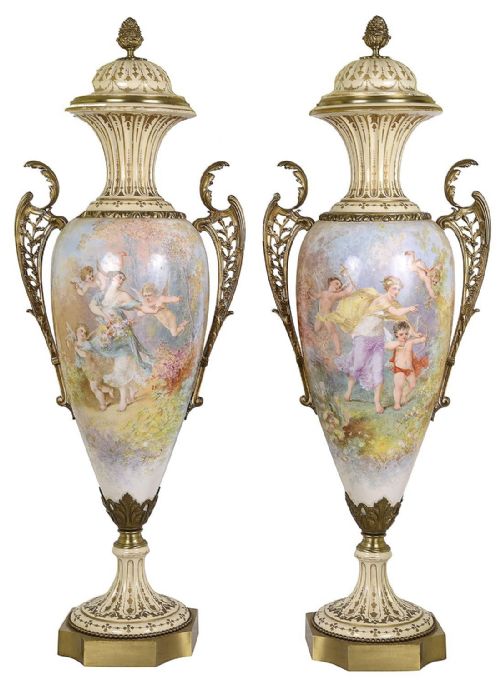


Rococo Revival Lidded Urns
Rococo revival lidded urns are dramatic nineteenth-century porcelain and ormolu ornaments that bring an extravagant decorative presence to a mantelpiece.

Rococo Revival Lidded Urns
Rococo revival lidded urns combine nineteenth-century porcelain manufacture with the flamboyant asymmetry and organic scrolls of the eighteenth-century movement. These decorative objects take the form of lidded vases, ginger jars, and potpourri urns intended purely for display rather than utility.
The pieces on this page are predominantly nineteenth-century works originating from major European ceramic centres including Dresden and factories working in the Sevres style. They span the 1880s and the broader nineteenth century, frequently appearing in matched pairs featuring prominent removable lids.
Forms are defined by swelling ceramic bodies raised on pedestal feet and finished with elaborate covers. Makers utilised traditional vessel shapes and transformed them into ornamental centrepieces through lavish surface decoration and sculptural mountings.
How they were made
Makers fashioned these urns from hard-paste porcelain, shaping the bodies and lids through moulding or throwing before applying painted grounds such as deep blue. Artisans then hand-painted detailed scenes, including Watteau-style figural subjects, onto the ceramic surfaces.
Gilding forms a crucial part of the technique, with gold leaf and applied gilding highlighting the moulded relief work and framing the painted panels. Ormolu and gilt bronze mounts were frequently added to frame the porcelain bodies, secure the lids, and provide ornate handles and feet.
Listings feature porcelain urns and vases predominantly from the nineteenth century, including specific dates such as 1880 and 1885.
What varies in quality
The standard of hand-painted detail separates ordinary production from exceptional pieces. Finely rendered figural scenes and delicate polychrome brushwork indicate a higher tier of factory output than repetitive stencilled motifs.
The weight and precision of the metal mounts contribute significantly to the overall distinction of an urn. Crisp cast ormolu and substantial gilt bronze mountings demonstrate superior craftsmanship compared to lighter gilt metal alternatives.
Helena Wolfsohn Dresden·Sitzendorf Porcelain
The Rococo Revival Lidded Urns Glossary
- Ormolu
- Gilded bronze or brass applied to furniture and ceramics as decorative mounts. This technique involves using a mercury amalgam to adhere gold to a bronze base, creating a rich golden surface.
- Hard-paste porcelain
- A durable ceramic composition made from kaolin and petuntse fired at very high temperatures. It forms the robust white body characteristic of fine European decorative urns.
- Potpourri
- A mixture of dried petals and spices placed inside pierced vessels to fragrance a room. Lidded urns designed for this purpose feature perforated covers to release the scent.
- Gilding
- The application of gold leaf or gold powder to a surface. On these vessels, it highlights raised mouldings and frames painted panels.
- Watteau scenes
- Pastoral paintings depicting figures in theatrical or leisurely outdoor settings. These romantic motifs frequently appear on nineteenth-century porcelain inspired by eighteenth-century French art.
Rococo Revival Lidded Urns: Frequently Asked Questions
How were these urns used historically?
These objects served as high-status interior ornaments rather than utilitarian containers. Placed on mantelpieces, pedestals, or console tables, they demonstrated the refined taste of the owner.
Some variants functioned specifically as potpourri holders, using pierced lids to diffuse pleasant scents through nineteenth-century drawing rooms.
How do I identify a Sevres style urn?
Sevres style pieces typically display rich coloured grounds, such as deep blue, combined with elaborate gilding and detailed figural or landscape paintings. They often emulate the luxury wares produced by the famous French royal manufactory.
Many of these pieces were actually made in nineteenth-century Germany and England, adopting the distinctive aesthetic rather than originating from the Sevres factory itself.
What is the difference between a vase and an urn?
In nineteenth-century decorative arts, the terms often overlap, but an urn generally denotes a vessel with a distinct pedestal base and a secure lid. Vases can take simpler open-topped forms without covers.
Lidded examples designed for display on large surfaces frequently bridge both categories, functioning as monumental ornamental centerpieces.
How do I care for antique porcelain urns?
Keep these fragile items away from direct sunlight to prevent fading on the painted porcelain and gilt surfaces. Dust them gently with a soft, dry brush.
Avoid using liquid cleaners or abrasive cloths, as moisture can damage delicate hand-painted details and tarnish the ormolu mounts.