


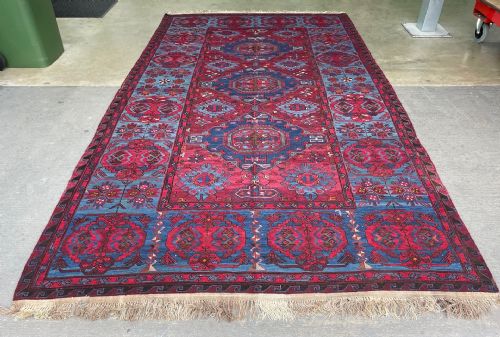


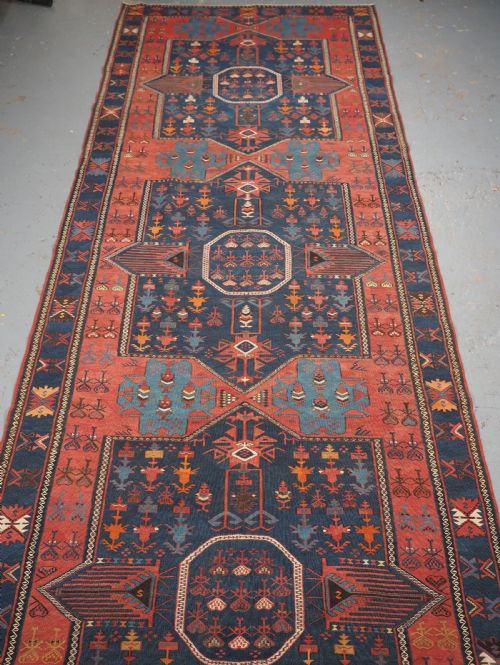


Blue Caucasian Flatweave Carpet
A blue caucasian flatweave carpet brings geometric tribal patterns and rich natural dyes directly into a room.
Blue Caucasian Flatweave Carpet
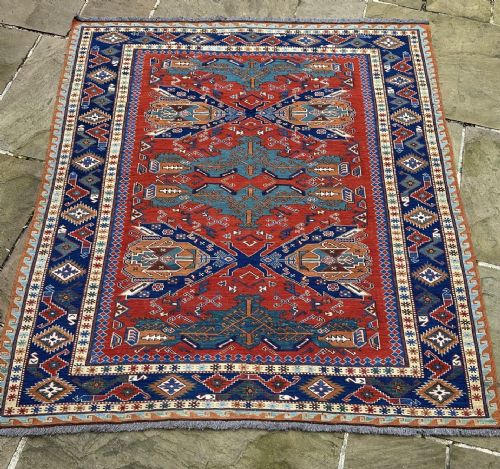
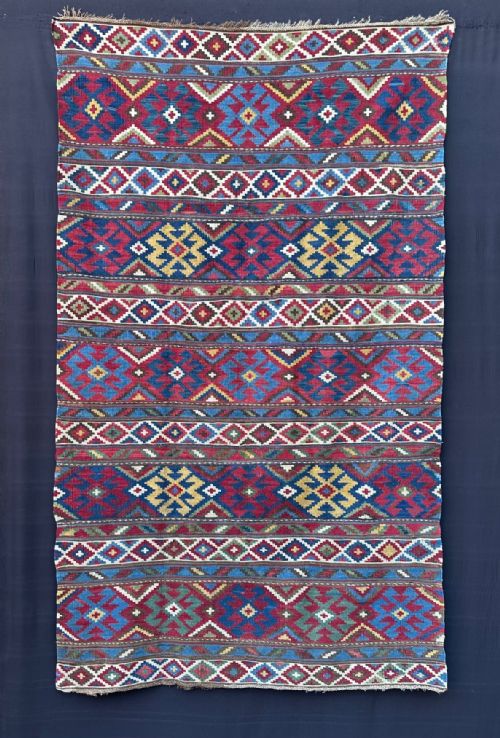
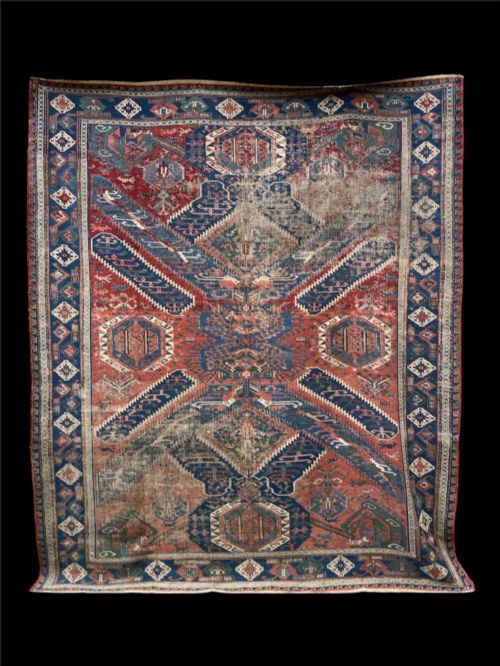
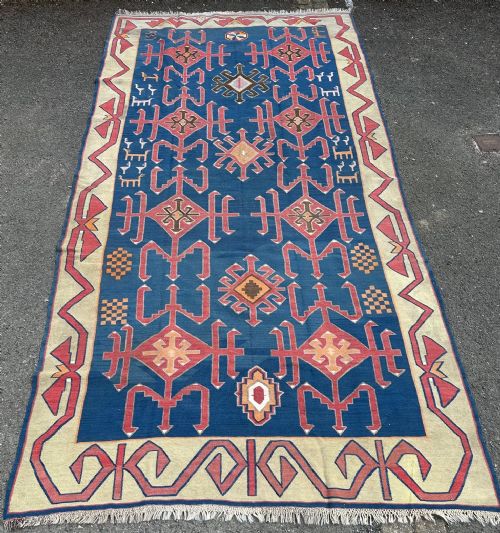
A blue caucasian flatweave carpet encompasses kilims, soumaks, and storage bags woven by tribal groups across the Caucasus region. These flat-woven textiles display distinctive regional designs, including banded patterns, large shields, and triple medallions.
The pieces on this page span from the late nineteenth century to the mid-twentieth century, originating from weaving centres such as Shirvan, Daghestan, and Kuba. Buyers frequently encounter smaller kilim rugs, runner formats, and complete storage bags rather than room-sized carpets.
Attributions often point toward specific tribal groups like the Shahsavan, Avar, and Kurds, reflecting the varied nomadic heritages of the Caucasus. Each rug reveals the distinct weaving traditions of its particular mountain or valley origin.
Judging the weave and design
Quality rests upon the fineness of the weave and the clarity of the geometric motifs executed across the surface. Tighter structure and precise handling of traditional symbols distinguish finer village and tribal pieces from standard utility items.
The handling of natural dyes dictates the visual success of each piece, where harmonious palettes and well-preserved blue grounds elevate the overall aesthetic. Intricate design layouts, such as complex dragon or shield motifs, signal greater technical ambition by the weaver.
Object types include runner rugs, kilims, storage bags, and soumak carpets originating from regional Caucasian tribes.
The Blue Caucasian Flatweave Carpet Glossary
- Kilim
- A flat-woven carpet or rug produced without a pile by tightly interlacing warp and weft threads. This technique results in a lightweight textile suitable for floors or wall hanging.
- Soumak
- A sturdy flat-weave technique utilising wrap-sewing methods that leave trailing threads on the reverse side. It creates a textured, ribbed surface on the front of the carpet.
- Mafrash
- A large rectangular storage bag used by nomadic tribes for bedding and household goods. These pieces are frequently found as complete items or individual bag faces.
- Warp
- The vertical threads stretched tightly on a loom before weaving begins. They form the structural skeleton of the carpet and often appear as fringed ends.
- Natural Dyes
- Colourants derived from plants, roots, and insects rather than synthetic compounds. They produce organic tones that mature with subtle variations in shade.
Blue Caucasian Flatweave Carpet: Frequently Asked Questions
How do I care for a flatweave carpet?
Vacuum gently using suction only without a rotating brush roll to protect the flat-woven structure and delicate wool fibres. Rotate the textile occasionally to ensure even wear from foot traffic and sunlight exposure.
Professional cleaning should be handled by specialists experienced in antique tribal wools and natural dyes. Avoid harsh chemical treatments that can strip the characteristic soft hues from the wool.
Where were these carpets made?
These textiles originate from the Caucasus region, spanning areas such as Shirvan, Daghestan, Kuba, and regions associated with Shahsavan and Kurdish weavers. Mountain communities and nomadic groups produced these rugs for domestic use and local trade.
Each weaving district developed distinct geometric vocabularies and colour preferences, allowing specialists to trace specific pieces back to regional workshops or tribal groups.
Can I use these rugs on the floor?
These flatweave carpets function well on floors when paired with a quality underlay to prevent slipping and reduce friction against the fibres. Their durable wool and cotton construction suits moderate traffic areas.
Lighter runner formats and smaller bag faces also lend themselves to wall display or placement in low-traffic spaces to preserve their historic textile structure.
What is the difference between a kilim and a soumak?
A kilim is woven flat by interlocking weft threads through the warp, creating a smooth surface with identical patterns visible on both sides. This technique produces a thinner, pliable textile.
A soumak incorporates wrapping wefts around the warp threads in a continuous motion, leaving loose floats of yarn on the reverse and providing a thicker, ribbed texture on the display side.