

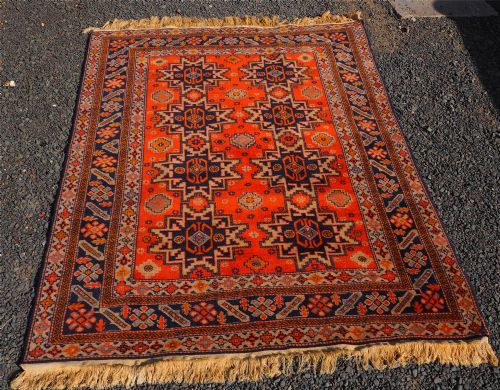
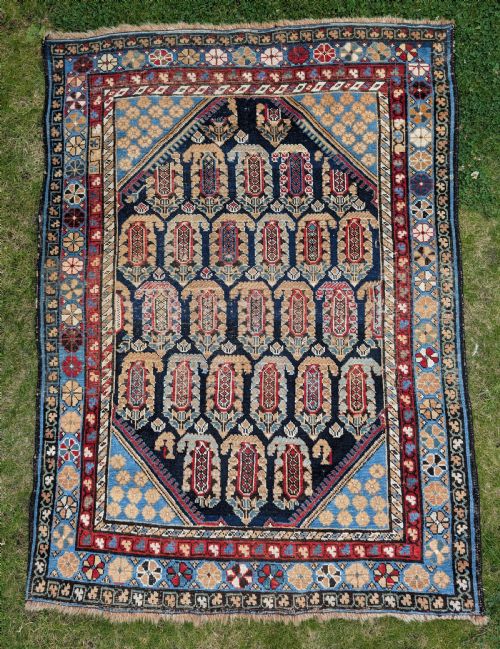
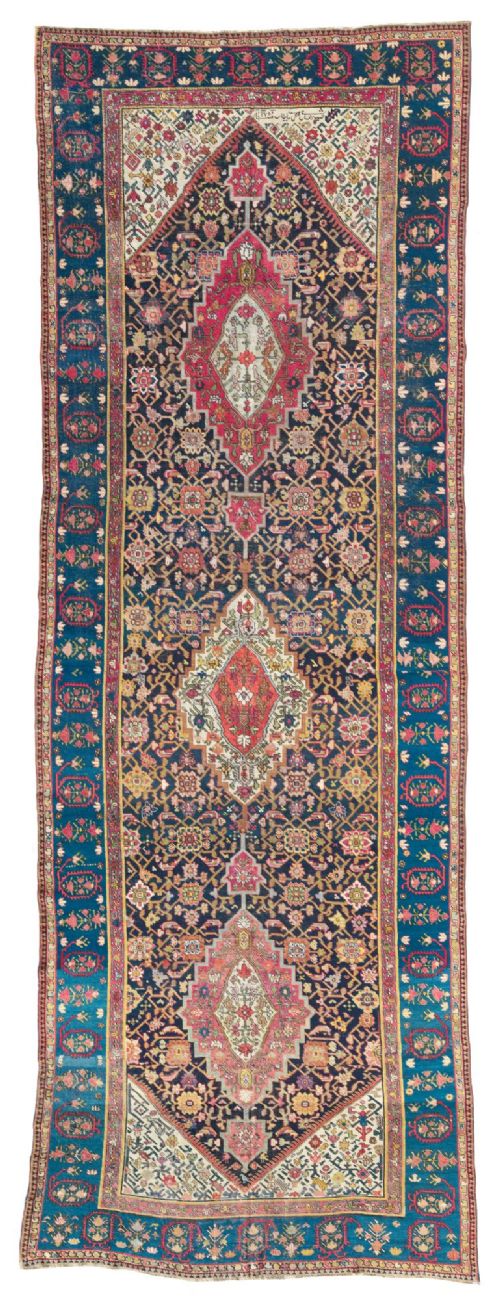
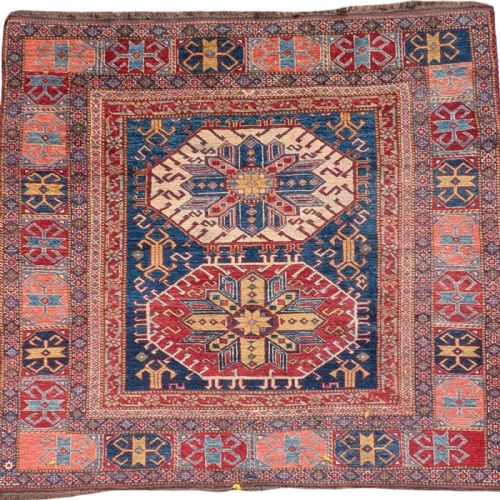
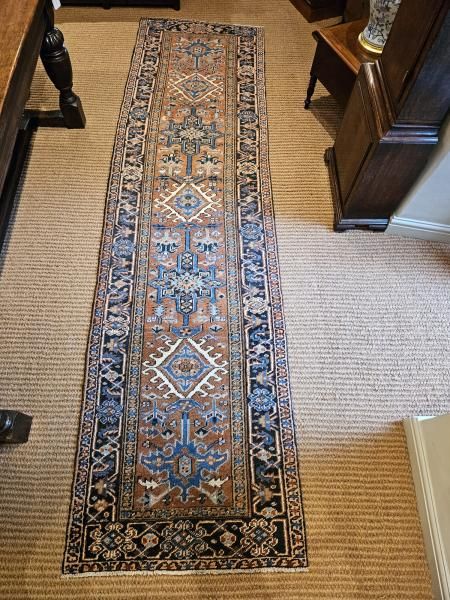
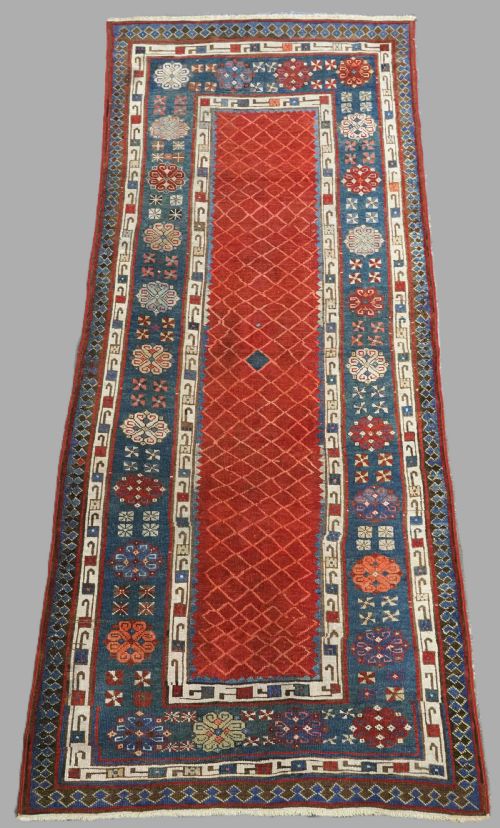
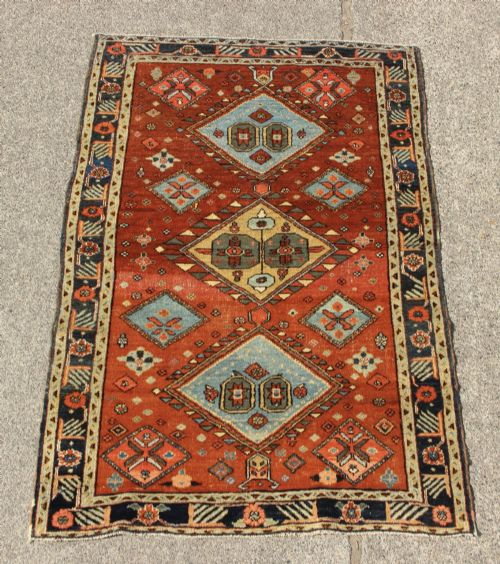
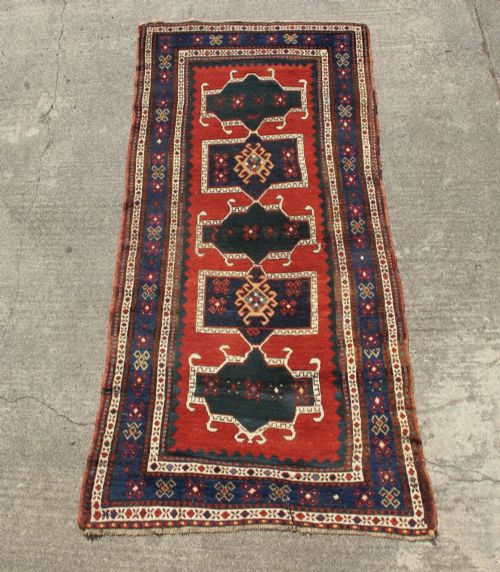
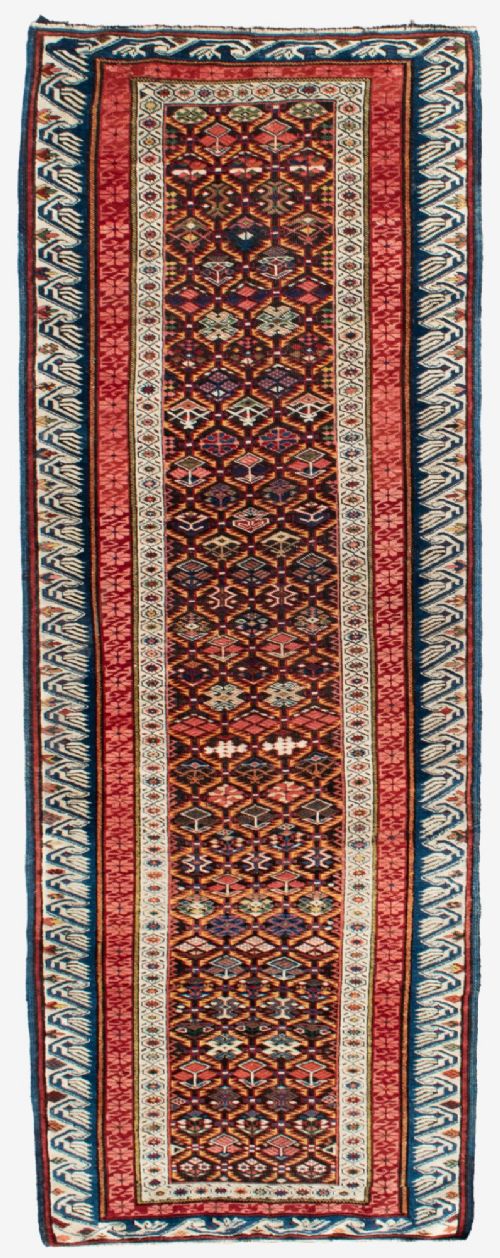
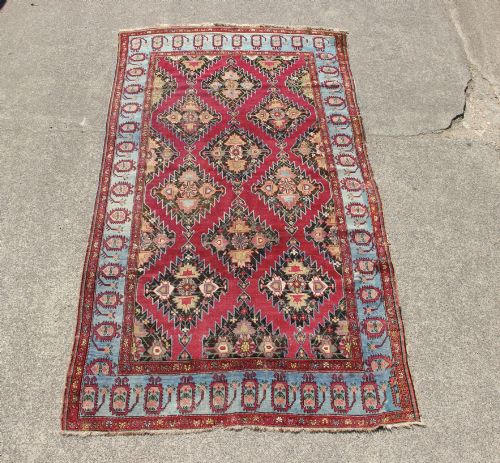
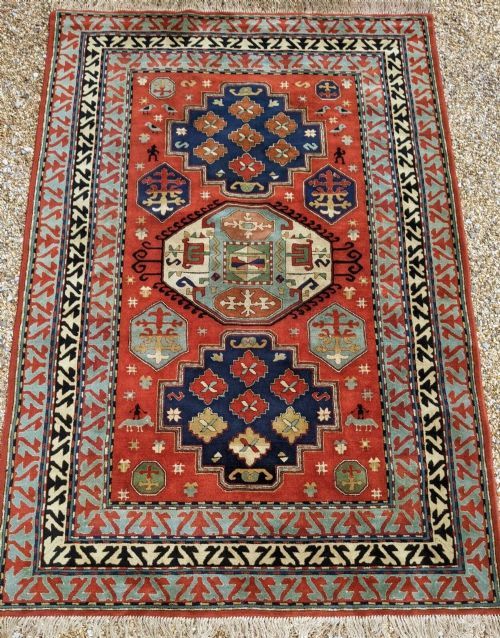
Blue Caucasian Carpet
A blue caucasian carpet brings the geometric boldness of tribal weaving into a room.
Blue Caucasian Carpet
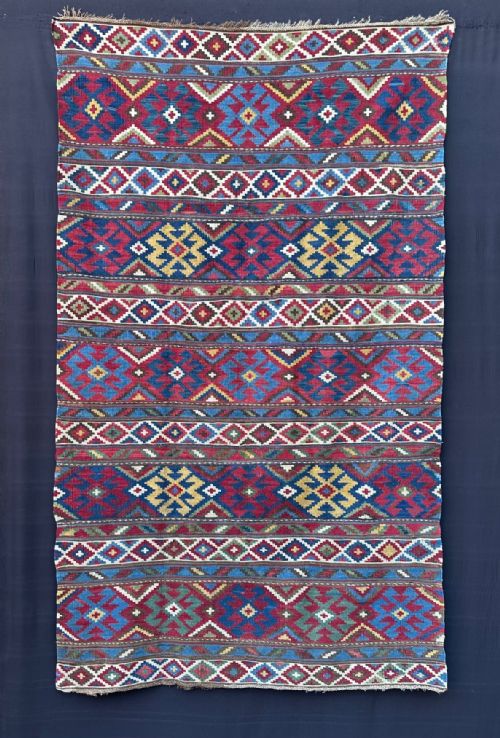
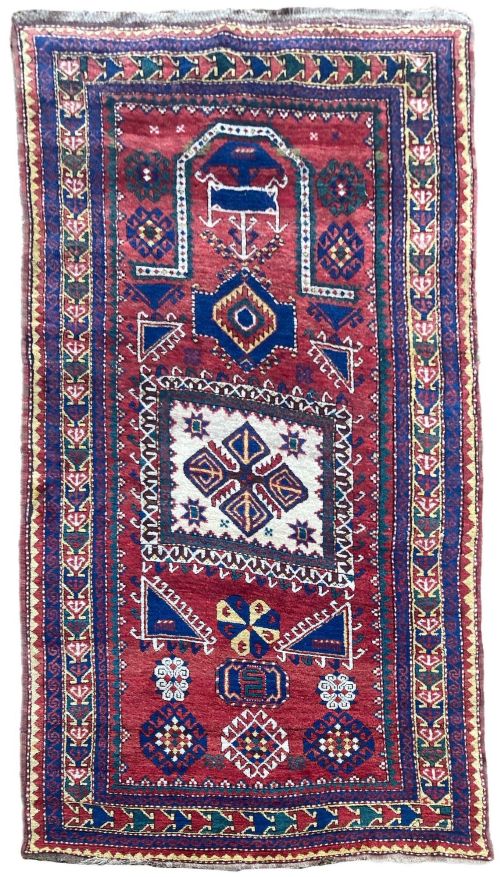
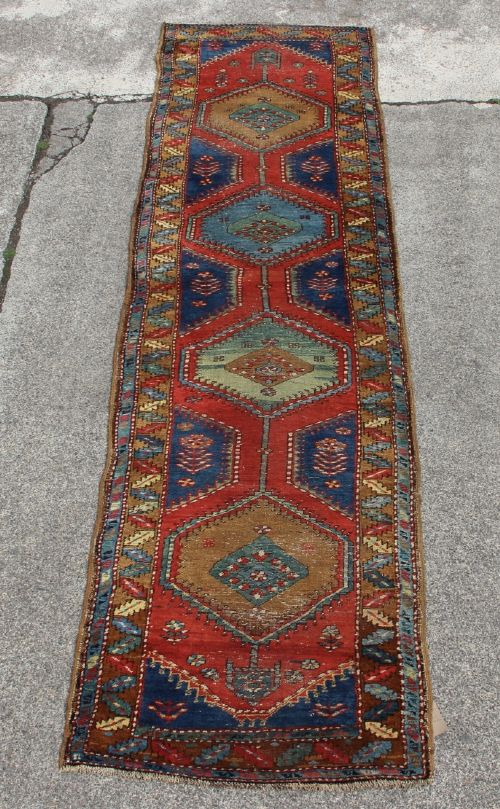
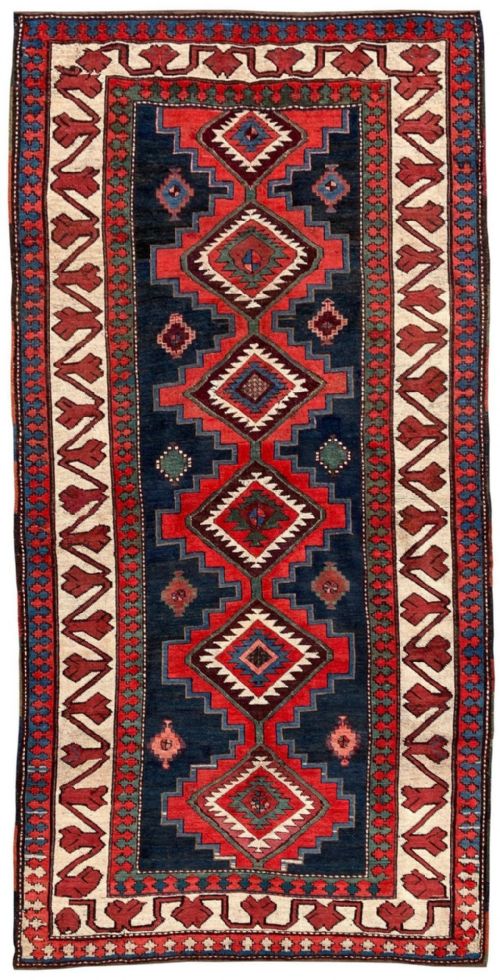
When you search for a blue caucasian carpet, you are looking at hand-knotted and flat-woven floor coverings originating from the Caucasus region during the nineteenth and early twentieth centuries. These textile works encompass specific regional forms such as Kazak, Shirvan, Sumak, and Moghan rugs, created by tribal and village weavers.
On this page, the pieces you are most likely to meet date from the Victorian era up to the nineteen-twenties. They arrive in various formats, including triple medallion Kazaks, prayer rugs, and village Kilims, utilising distinct regional designs like the Memling gul.
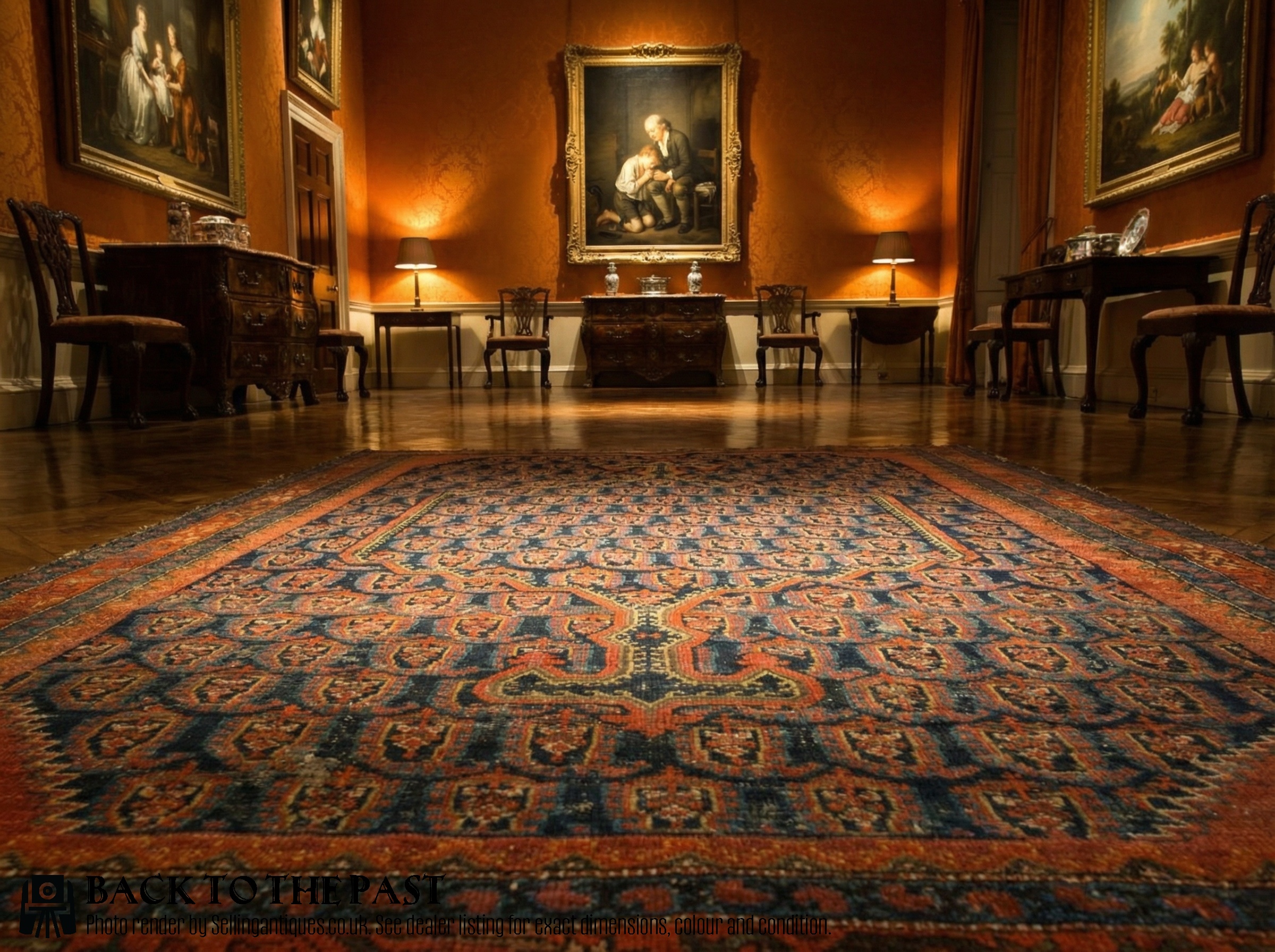
Each blue caucasian carpet reflects the traditional motifs and cultural patterns passed down through generations of Caucasian weavers. They function as both historical artefacts and durable floor coverings that anchor a room with saturated indigo and blue tones.
How they were made
Every blue caucasian carpet listed here is constructed from wool, employing traditional hand-knotting and flat-weaving techniques native to the Caucasus. Weavers utilised locally sourced wool for both foundation warps and wefts, ensuring structural resilience.
The construction methods vary between pile rugs, such as Kazak and Moghan types, and flat-woven textiles like Sumaks and Kilims. These techniques require precise hand placement of coloured wool yarns to form the characteristic geometric layouts.
Blue Caucasian Carpet Retail Price Guide 2026
Typical asking prices for blue caucasian carpet among the pieces listed under this phrase on Sellingantiques today, from the lower quarter to the upper quarter. They describe what is for sale here now, not the wider market.
Some nineteenth-century weavers carefully encrypted their completion years directly into the rug borders using numeric ciphers.
What varies in quality
Quality in a blue caucasian carpet rests upon the precision of the geometric drawing and the saturation of the dye work. Tightly packed wool knots and clear, sharply defined medallions separate the finer village productions from standard utility pieces.
The complexity of the design layout, such as multi-tiered medallion systems and intricate border guards, dictates the upper tier of the range. Additionally, the depth and vibrancy of the blue and indigo shades achieved through traditional dyeing methods elevate the visual merit of the rug.
The Blue Caucasian Carpet Glossary
- Kazak
- A type of rug produced by tribal weavers in the southern Caucasus, known for bold geometric medallions and primary colours.
- Sumak
- A flat-weave technique where the coloured weft yarns are wrapped around the warp threads, creating a textured surface without a cut pile.
- Kilim
- A tapestry-woven carpet or rug with no pile, featuring flat surfaces and sharp geometric pattern boundaries.
- Gul
- An octagonal or medallion-like motif frequently repeated across tribal carpets from Central Asia and the Caucasus.
- Prayer rug
- A small rug featuring a mihrab or niche design, historically used for individual daily prayers.
Blue Caucasian Carpet: Frequently Asked Questions
What is a blue caucasian carpet?
A blue caucasian carpet is a hand-woven textile originating from the Caucasus region, featuring indigo and blue dominant colourways.
These pieces typically display the geometric motifs, medallions, and tribal patterns characteristic of nineteenth and early twentieth-century village production.
Where were these carpets made?
These carpets were produced across the Caucasus region, spanning areas associated with specific tribal groups and weaving centres.
Villages in the Shirvan, Kazak, and Moghan regions each developed distinct stylistic traits and structural methods.
How do I date a caucasian carpet?
Dating relies on stylistic analysis, material evaluation, and structural characteristics recorded in the weaving.
Pieces on this page generally date from the Victorian era through the early twentieth century, occasionally bearing inscribed dates in the weave.
How should I clean a antique wool rug?
Antique wool rugs require gentle maintenance, typically limited to careful vacuuming without a beater bar.
Professional textile conservators should handle any deep cleaning to preserve the natural wool fibres and historic dyes.
Can I use these rugs on the floor?
Yes, these wool rugs were originally constructed as durable floor coverings for domestic use.
Placing a suitable underlay beneath the carpet prevents slippage and reduces friction against modern flooring.