
Blue Art Glass
Blue art glass brings vibrant colour and sculptural form to domestic interiors, spanning decorative vessels and desk accessories.
Blue Art Glass
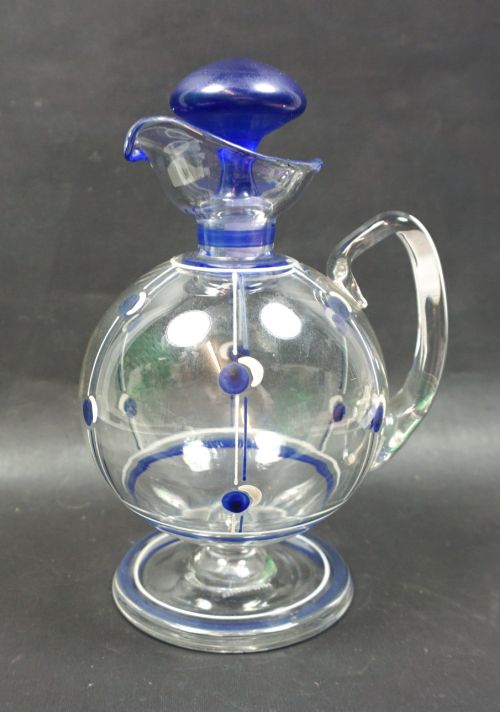
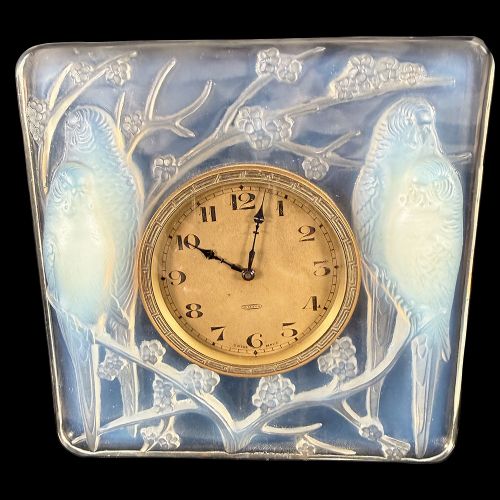
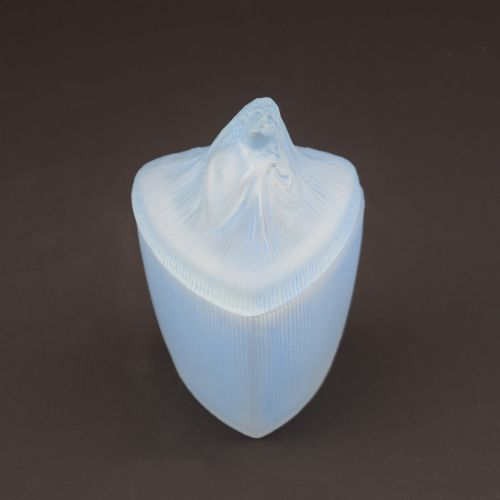
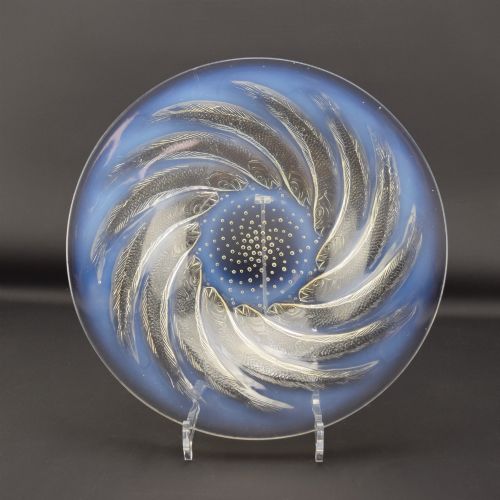
Blue art glass encompasses a striking variety of decorative objects, ranging from scent bottles and vanity jars to large vases, chargers, and mantel clocks. Many pieces combine moulded or blown glass with metal mounts, chrome, or sterling silver, reflecting the aesthetic priorities of their period.
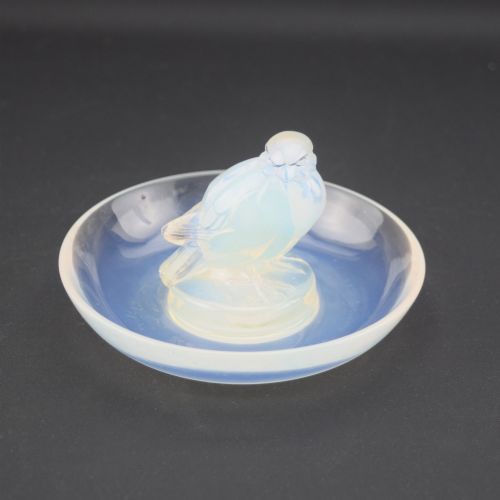
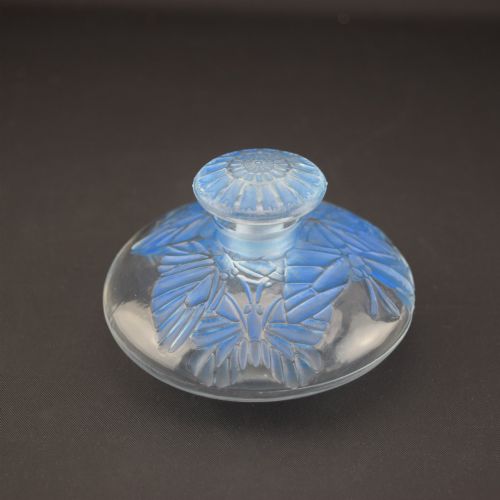
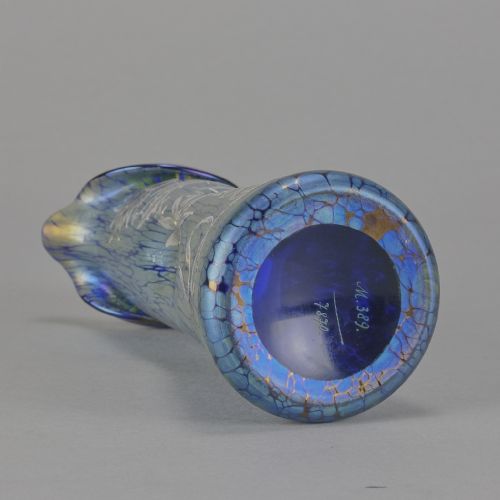
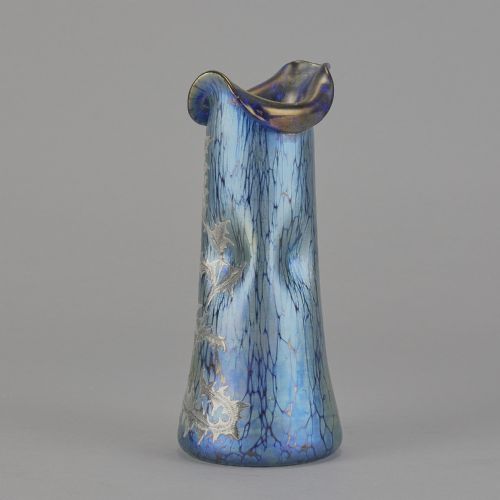
The selection on this page leans heavily into the twentieth century, with strong representation from the Art Deco and Art Nouveau eras. Alongside French opalescent and cameo works, buyers encounter Bohemian production, British glasshouses, and Austrian vessels featuring distinct iridescent finishes.
Vessels and ornaments serve both functional and purely decorative roles on dressing tables, sideboards, and desks. Whether a moulded bowl, a decanter set, or a desk lamp, each item demonstrates the versatility of coloured glass across distinct manufacturing traditions.
How they were made
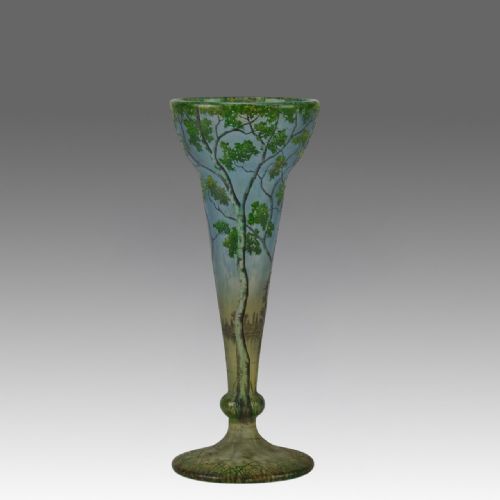
Makers utilised techniques such as mould-blowing, acid-etching, and cameo carving to achieve depth and texture within the glass body. Overlay methods allowed artisans to fuse contrasting layers of glass before cutting away the surface to reveal intricate patterns.
Surface treatments frequently involved enamelling, gilding, or the application of metal overlays in copper and silver. Opalescent effects were created by introducing chemical agents that caused the glass to scatter light, shifting between milky white and deep blue tones depending on illumination.
Listings span the Victorian period through the 1930s, featuring glass, sterling silver, enamel, and wood.
What varies in quality
Quality rests upon the crispness of the moulding, the depth of the colour, and the finesse of any secondary metalwork or enamel decoration. Superior examples display precise control over translucency and texture, where chemical reactions in the glass create subtle variations in tone rather than flat colour.
The integration of mounts, silver closures, or chrome fittings distinguishes standard production from exceptional studio and factory output. Maker attribution and the preservation of original surfaces, labels, or stoppers further elevate an individual piece.
Rene Lalique·Loetz Witwe·Daum Freres·Emile Galle·Karl Palda·Stuart and Son
The Blue Art Glass Glossary
- Opalescent glass
- Glass containing ingredients that cause it to appear milky or bluish when viewed by reflected light, while turning amber or warm tones against transmitted light.
- Cameo glass
- A vessel formed of two or more fused layers of contrasting colours, where the outer layer is carved or acid-etched away to leave a raised design.
- Pate de verre
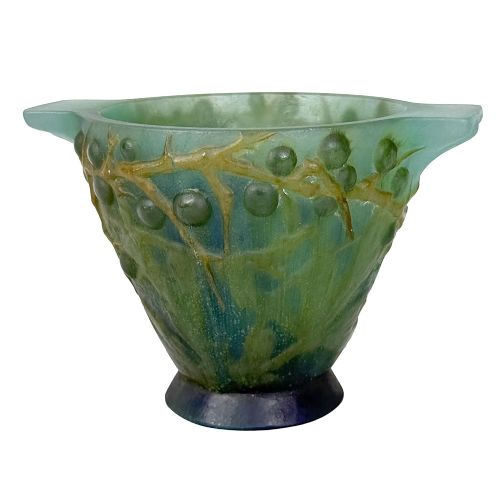
- A form of kiln-cast glass created by packing finely crushed glass into a mould with a binder and firing it until the particles fuse.
- Guilloche enamel
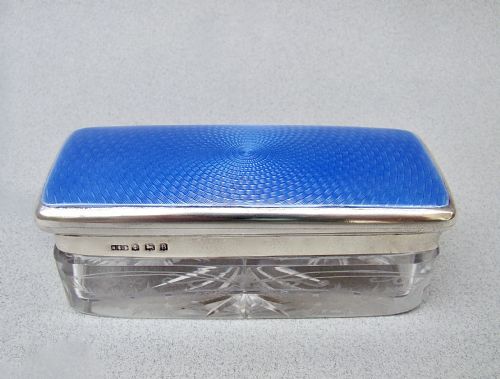
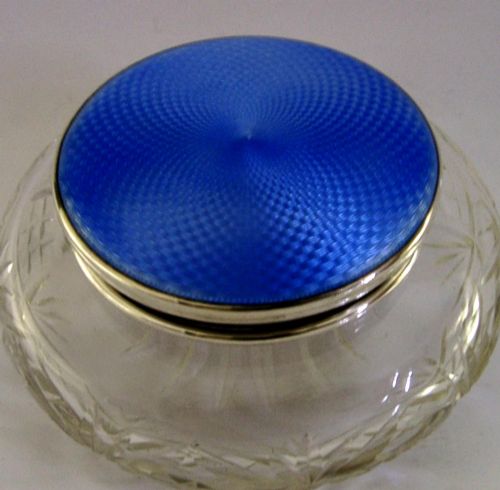
- A decorative technique where a precise geometric pattern is engine-turned into metal beneath a translucent layer of coloured enamel.
- Millefiori
- A glasswork technique producing distinctive patterned mosaics, often incorporated into paperweights, using multicoloured glass canes sliced across.
Blue Art Glass: Frequently Asked Questions
How do I identify Art Deco blue glass?
Art Deco blue glass is typically characterised by geometric forms, stylised motifs, and integration with chrome, silver, or contrasting black enamel. Pieces often feature clean architectural lines and moulded reliefs that capture light sharply.
Items from this movement frequently include vanity items, clocks, and decanter sets made in France, Czechoslovakia, and England during the interwar years.
What is opalescent glass?
Opalescent glass exhibits a milky, semi-translucent quality that scatters light across the surface. This optical effect shifts depending on how the piece is illuminated.
Makers utilised this technique to accentuate moulded reliefs of flora, fauna, and figures, giving depth and shadow to the design.
How do I care for antique glass?
Antique glass requires gentle cleaning with lukewarm water and mild soap, avoiding harsh chemicals or abrasive sponges. Items with silver mounts, enamel, or metal overlays should be dried promptly to protect vulnerable surfaces.
Display pieces safely away from direct sunlight and temperature extremes to prevent stress on historic materials.
Are signatures common on these pieces?
Signatures, monograms, or factory marks appear on many studio and designer pieces, often etched, moulded, or enamelled directly onto the base. Unsigned items remain common, particularly in mass-produced or regional table and decorative wares.
Examining the pontil mark, wear patterns, and manufacturing quality helps determine authenticity when marks are absent.