




Blue and Red Porcelain
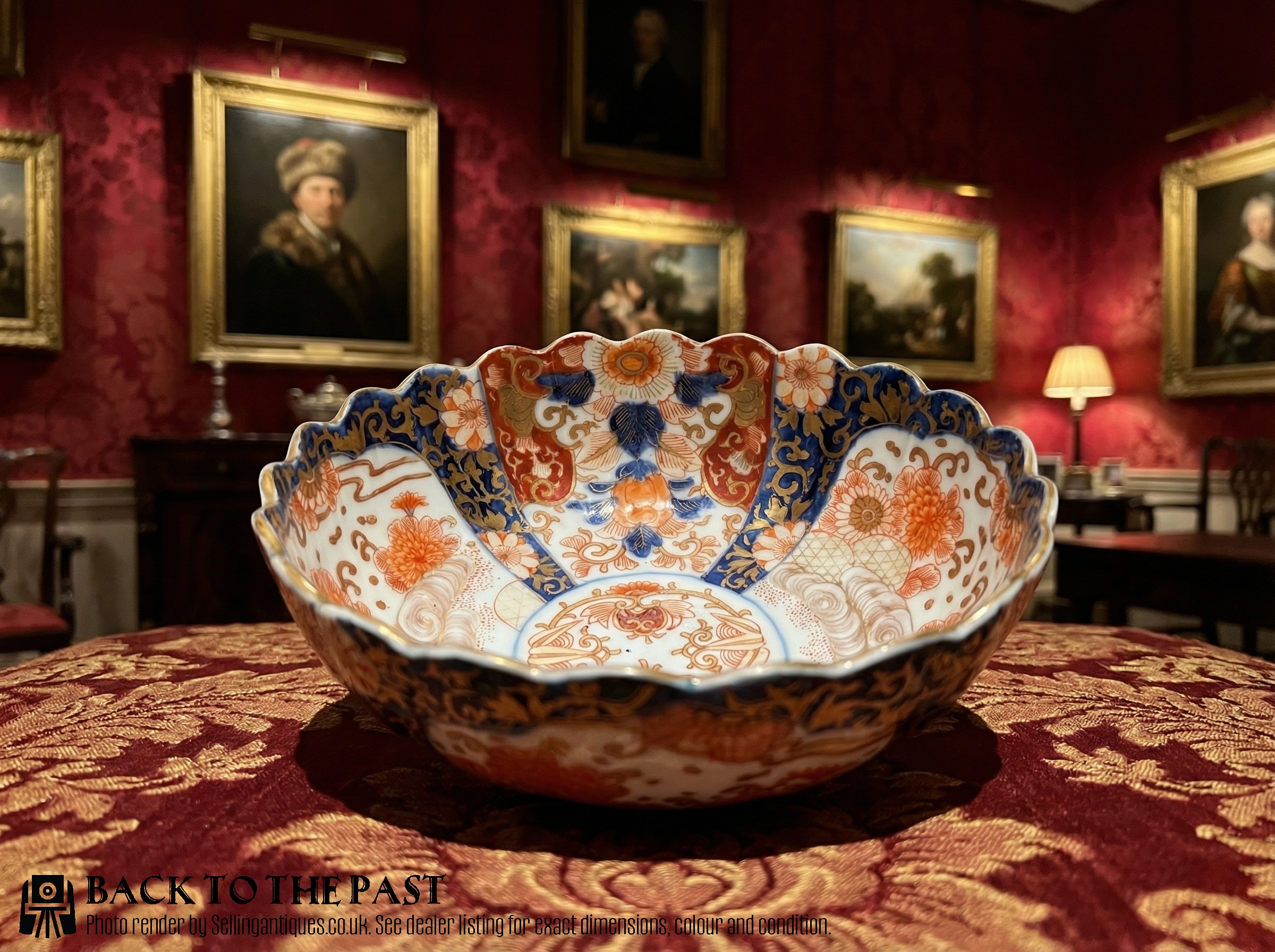
Blue and red porcelain brings together cobalt washes and iron red pigments on white ceramic, offering a vibrant palette developed across centuries.
Blue and Red Porcelain
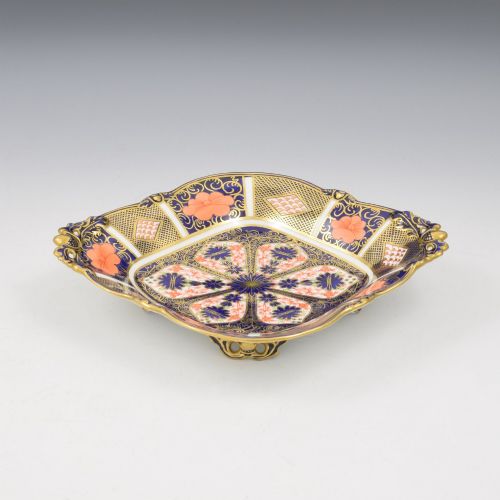
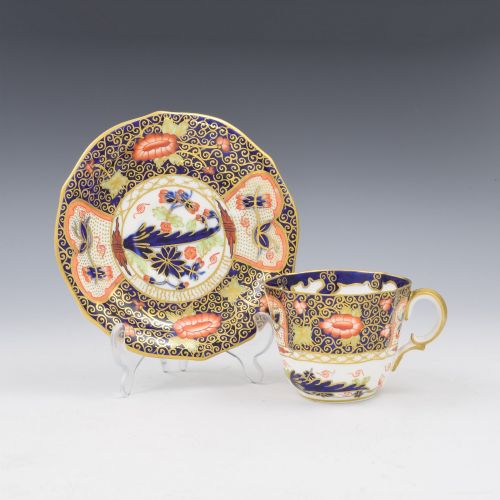
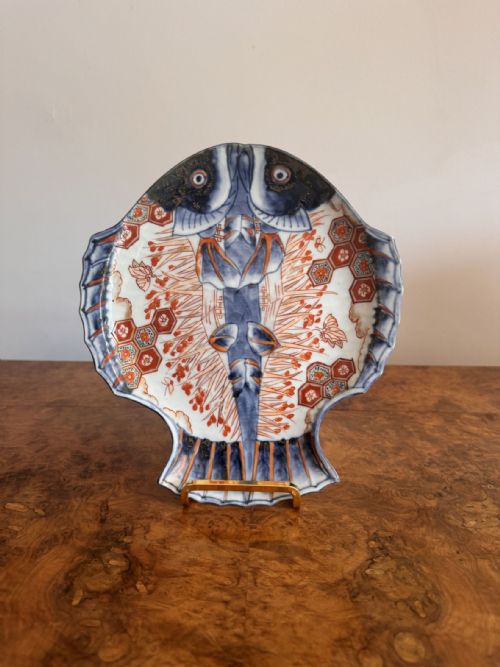
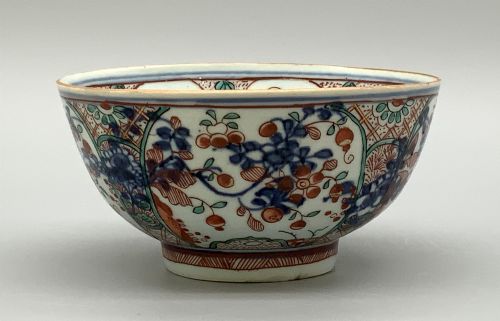
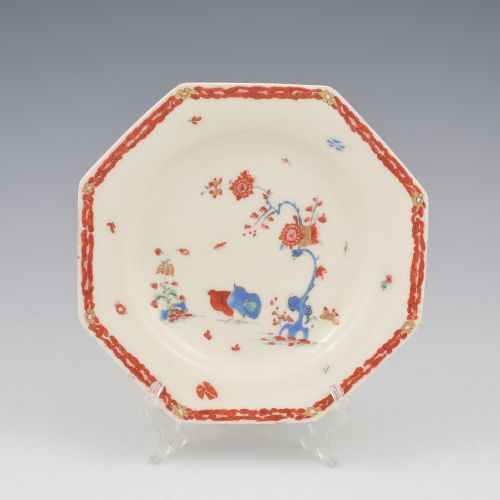
Blue and red porcelain encompasses decorative plates, bowls, dishes, vases, and floor standing vessels created across the eighteenth, nineteenth, and twentieth centuries. These objects display distinct stylistic influences ranging from Chinese Kangxi and Qing periods to Japanese Meiji Imari and English adaptations.
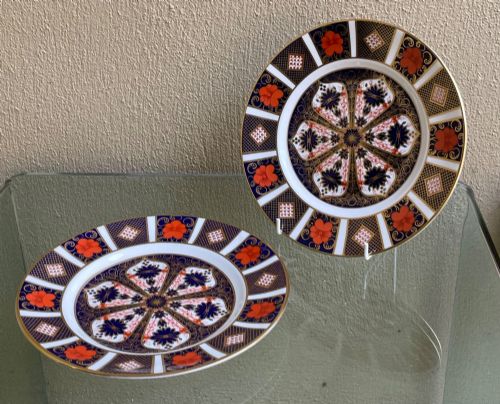
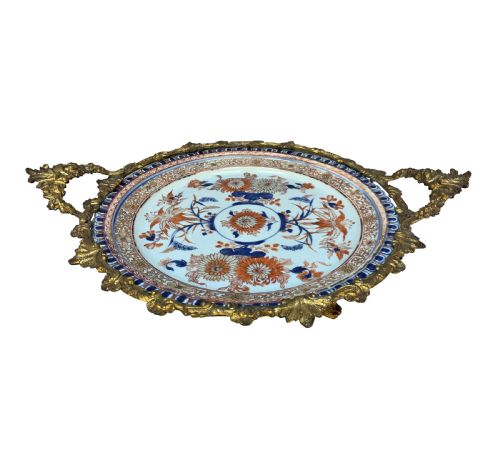
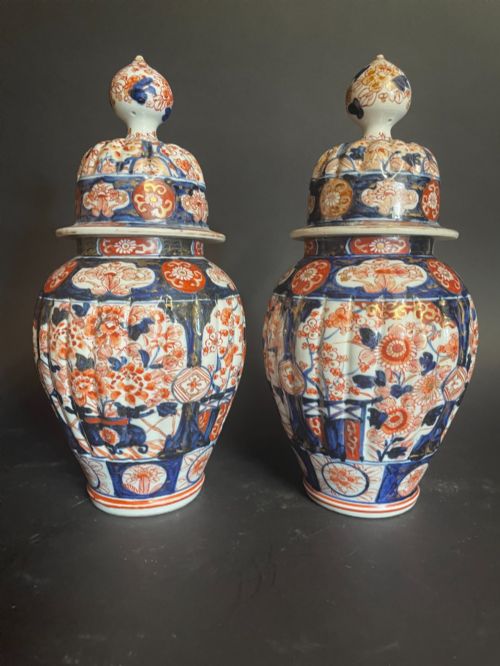
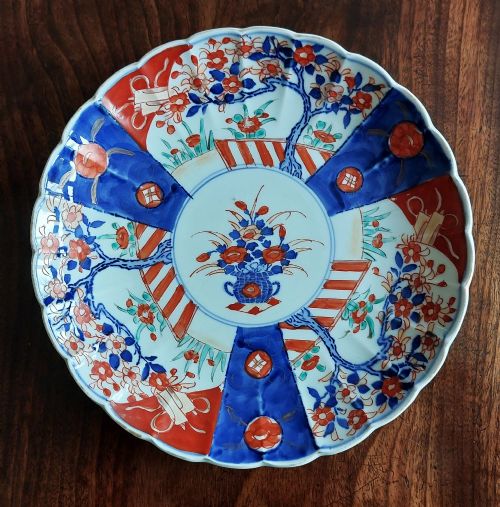
The most common forms on this page are Japanese Imari plates, chargers, and bowls originating from the Meiji period around nineteen hundred. Alongside these are Chinese porcelain pieces, English bone china and ironstone tea wares, and occasional French rococo or ormolu mounted items.
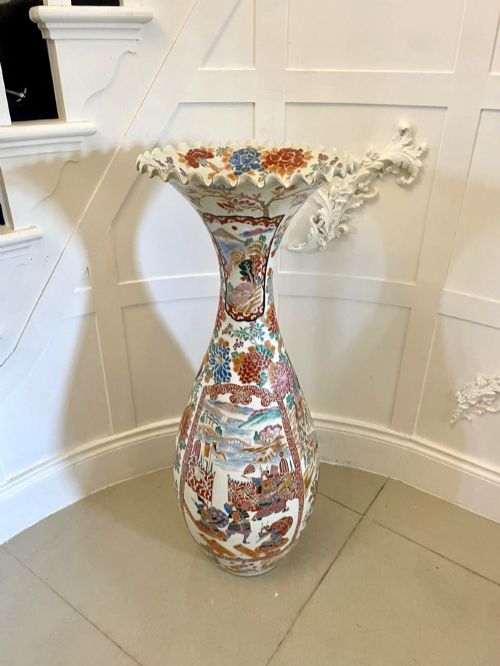
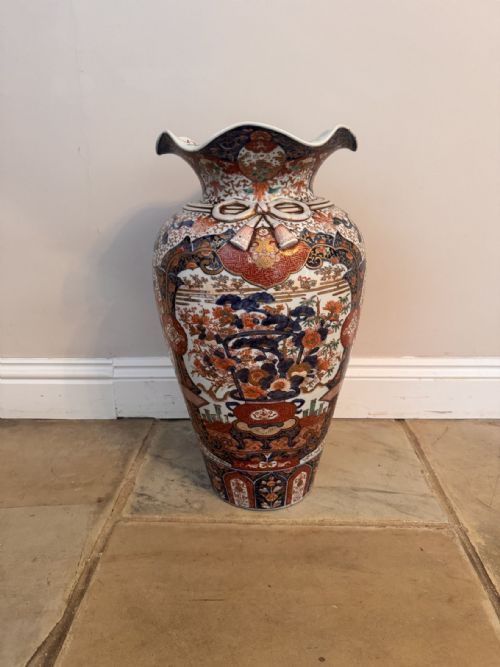
Buyers encounter functional and display pieces spanning Edwardian coffee cups, Georgian square bowls, and large nineteenth century floor vases. The diverse origins reflect global trade routes and the widespread European emulation of Eastern ceramic traditions.
Materials and technique
Potters shaped porcelain, bone china, and earthenware bodies before applying underglaze cobalt blue and iron red pigments, often supplemented by enamel colours and gold leaf gilding. Kiln firing fused these mineral oxides into the glaze to create permanent, glossy surface designs.
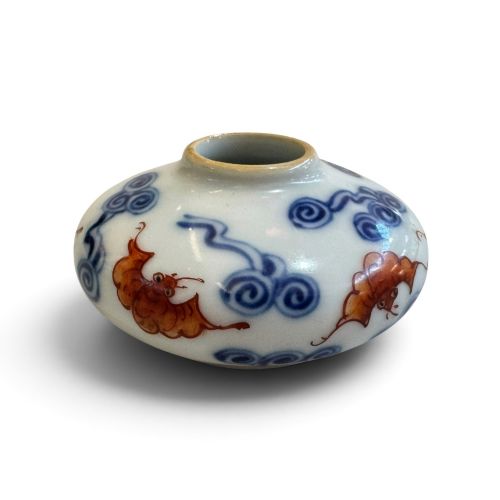
Certain examples incorporate metal fittings such as ormolu mounts to secure or elevate the ceramic body. Specialist techniques include underglaze copper-red painting used for detailed motifs like mythical beasts and bats.
Listings feature porcelain, bone china, and earthenware spanning the eighteenth, nineteenth, and twentieth centuries.
Assessing quality and execution
Quality rests on the precision of the brushwork and the clarity of the cobalt blue and iron red pigments against the white porcelain ground. Finer examples display crisp underglaze painting, intricate gilt detailing, and well-balanced forms without distortion.
The sophistication of the design execution separates standard production wares from superior objects, particularly in the density of the pattern and the stability of the glaze during high-temperature firing.
Royal Crown Derby·Davenport·Wedgwood·Bow
The Blue and Red Porcelain Glossary
- Imari style
- A decorative scheme originating in Japan utilising deep underglaze blue, iron red, and gilt highlights. It became widely imitated in European factories during the eighteenth and nineteenth centuries.
- Underglaze red
- A copper-based pigment applied beneath the transparent glaze before firing. It requires precise kiln temperature control to achieve a clear red tone rather than grey or brown.
- Charger
- A large decorative plate primarily used for display on a sideboard or wall rather than for serving food. These pieces often feature complex central medallions and bordered panels.
- Comport
- A raised footed dish or bowl used historically for serving fruit or sweets at the table. They frequently appear in nineteenth century English ironstone and porcelain services.
- Meiji period
- The era of Japanese history lasting from eighteen sixty-eight to nineteen twelve, noted for prolific porcelain production exported to Western markets.
Blue and Red Porcelain: Frequently Asked Questions
How do I identify Imari porcelain?
Imari pieces typically feature a distinct palette of underglaze cobalt blue, iron red, and supplementary gold leaf or gilt details. The patterns often combine floral arrangements with brocade panels.
Many examples originate from the Meiji period in Japan or nineteenth century English potteries copying the style.
Are these pieces safe for daily use?
Most antique plates, chargers, and decorative vases are intended for display rather than functional dining. Older glazes and gilt surfaces can wear down with frequent washing.
Gentle hand cleaning preserves the delicate enamel and underglaze red pigments on older porcelain.
What is the difference between Chinese and Japanese pieces?
Chinese porcelain often dates to the Kangxi or Qing dynasties, displaying fine underglaze blue and copper-red motifs like bats and clouds. Japanese Imari focuses on denser geometric and floral panel layouts.
Examining the foot ring and paste helps distinguish the regional production methods.
How should I display a large charger?
Large chargers and floor vases require sturdy mounting brackets or dedicated stands to support their weight safely. Placement away from direct sunlight protects the enamel colours from fading.
Wall-hung chargers need secure fixings designed specifically for heavy antique ceramics.