


Blonde Wood Chest
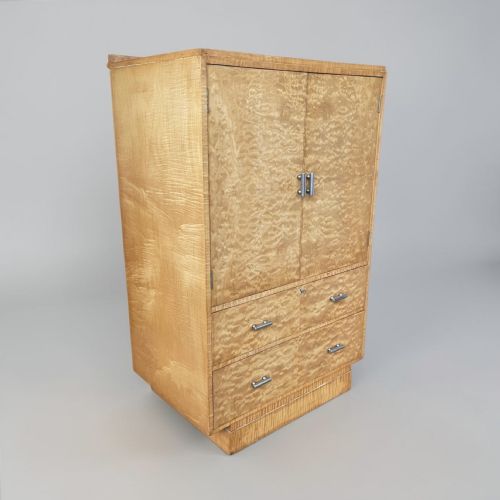
A blonde wood chest brings warmth and lighter tones to a room, ranging from pale Biedermeier grain to sleek Art Deco maple.
Blonde Wood Chest
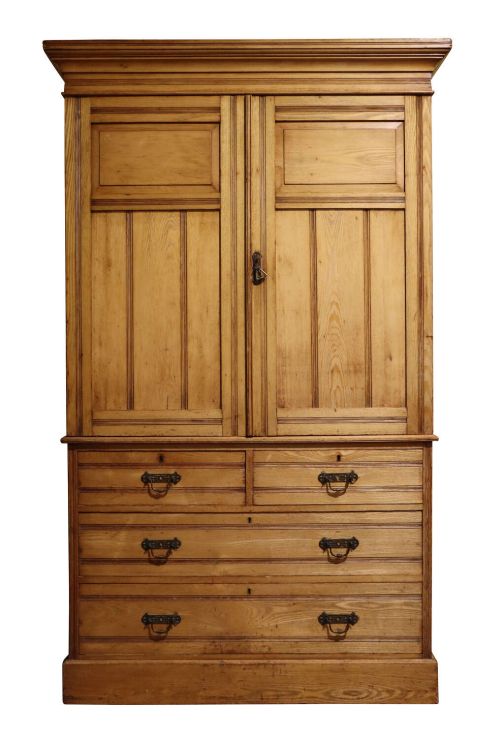
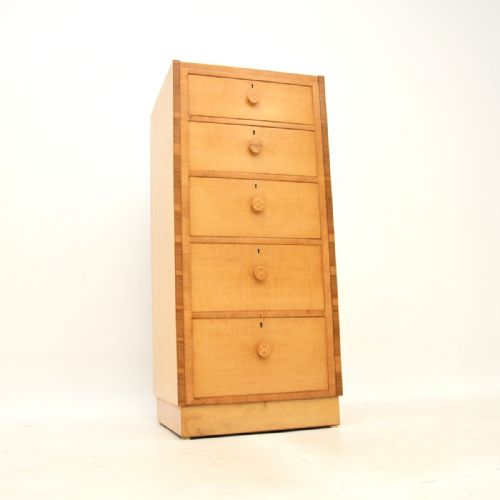
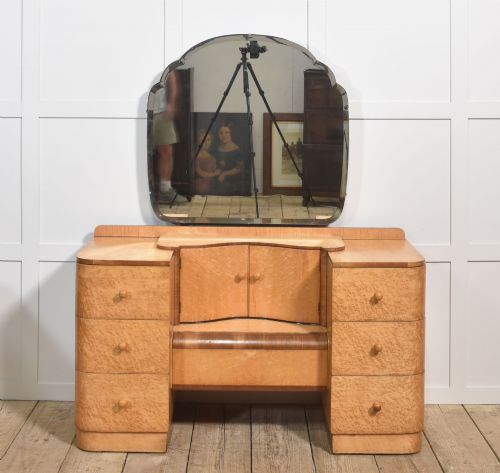
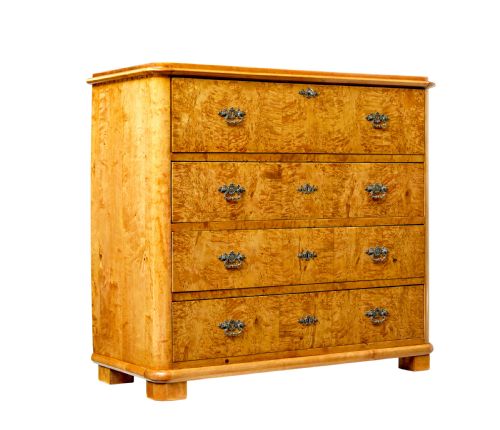
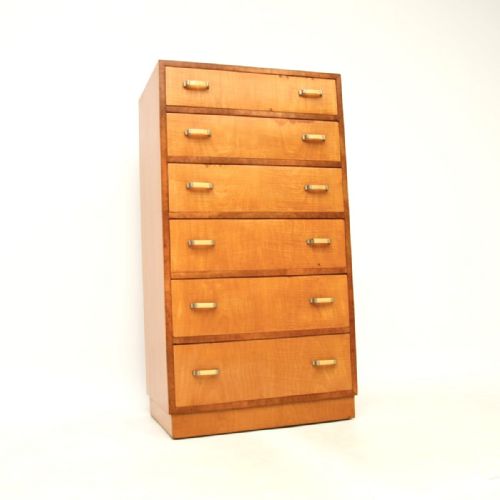
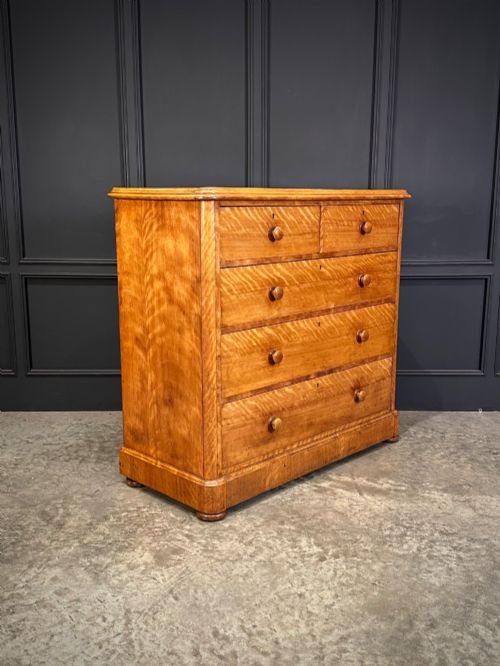
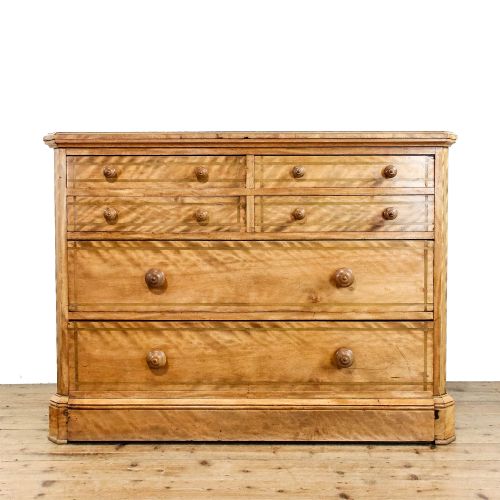
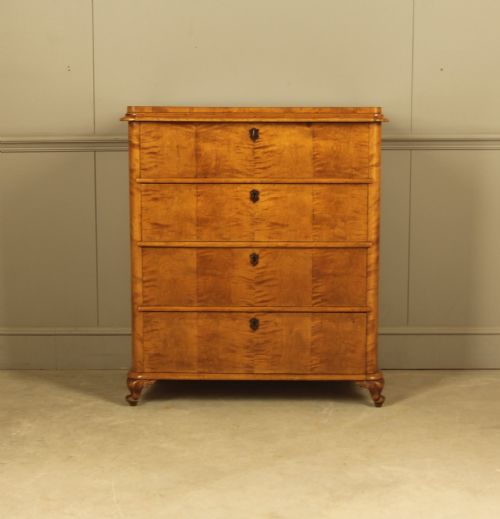
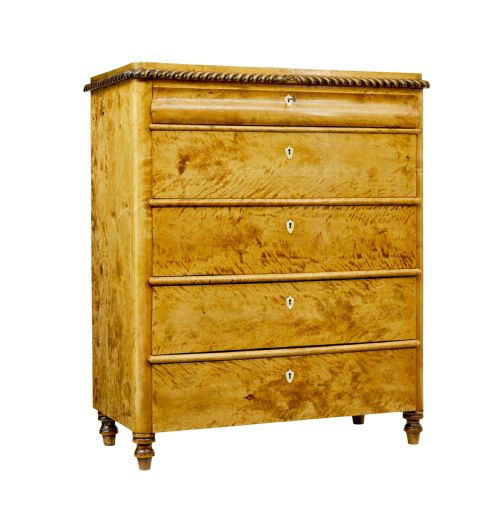
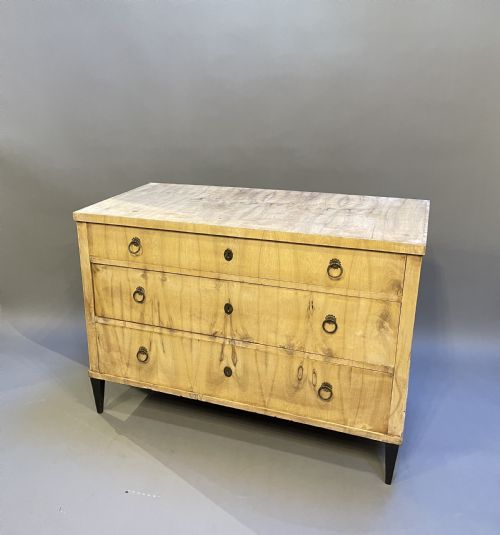
A blonde wood chest encompasses various forms of storage furniture, most frequently seen here as chests of drawers, tallboys, and dressing tables. These items originate predominantly from the nineteenth century and the early twentieth century, spanning periods such as the Victorian era and the 1930s. Continental examples, particularly Swedish Biedermeier and Scandinavian pieces, appear alongside English craftsmanship.
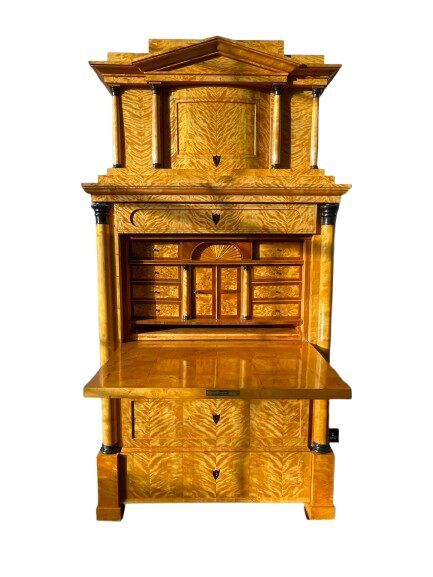
Buyers seeking a blonde wood chest will encounter numerous variations in timber and style, including Art Deco designs and nineteenth-century commodes. The selection includes compact bedside tables as well as larger linen presses and secretaire chests of drawers. Each piece highlights the natural grain and lighter hues characteristic of these specific woods.
What varies in quality
Quality rests upon the selection and matching of wood veneers, where symmetrical grain alignment elevates a piece. The depth and movement within figured timbers like flame birch or birds eye maple separate standard items from finer examples. Cabinetmaking precision in drawer construction and overall proportions define the standard of the piece.
The sophistication of decorative details, such as inlaid work or the integration of brass fittings, marks the distinction between workshops. Maker attribution also influences standing, with pieces associated with established firms reflecting higher execution standards in both structure and finish.
Listings feature nineteen-century Swedish pieces alongside Art Deco furniture from the 1920s and 1930s.
Maple and Co·Hille·Gemla Fabrikers·Betty Joel·Holland and Sons·John Taylor of Edinburgh
The Blonde Wood Chest Glossary
- Biedermeier
- A Central European style dating from the nineteenth century known for clean lines and emphasis on wood grain.
- Secretaire chest of drawers
- A chest featuring a fitted writing drawer that drops down to reveal small compartments and a writing surface.
- Tallboy
- A tall chest of drawers, often constructed as a cabinet on a chest to maximise vertical storage space.
- Masur birch
- A decorative timber variant displaying distinctive dark swirls and flecks across the pale grain.
- Linen press
- A tall piece of furniture featuring upper doors enclosing shelves and lower drawers for storage.
Blonde Wood Chest: Frequently Asked Questions
What is a blonde wood chest?
A blonde wood chest is a storage piece constructed from lighter-coloured timbers like birch, maple, satinwood, or ash. These items include tallboys, commodes, and chests of drawers from various nineteenth and twentieth-century periods.
The category spans multiple design movements, notably Biedermeier, Victorian, and Art Deco. The shared characteristic across these pieces is the pale, natural tone of the wood surface.
How do I date a birch chest?
Dating a birch chest involves examining the construction methods, hardware, and stylistic indicators present in the piece. Nineteenth-century examples often feature traditional Scandinavian or Victorian joinery, whilst 1930s pieces align with Art Deco aesthetics.
Cabinetry details such as drawer linings and backboards provide further clues regarding age. Swedish pieces from the nineteenth century frequently display distinctive flame or masur birch veneers typical of that era.
Where were Biedermeier chests made?
Biedermeier chests originated primarily in Central Europe and Scandinavia during the nineteenth century. Swedish workshops produced notable variations utilising native birch and other pale timbers.
These pieces reflect a regional preference for unadorned surfaces that highlighted the natural figure of the wood. Craftsmen focused on proportion and grain pattern rather than heavy ornamentation.
How do I care for satinwood?
Caring for satinwood requires keeping the timber away from direct sunlight and excessive heat sources to prevent fading and drying. Regular dusting with a soft, dry cloth maintains the surface without the need for heavy polishes.
Maintaining a stable room temperature helps protect the veneers and structural joints. Gentle cleaning preserves the natural sheen of the pale wood.