

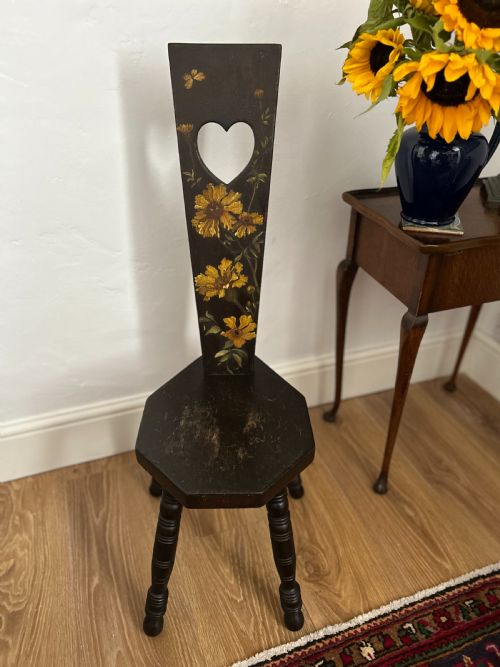


Black Wooden Side Chair
A black wooden side chair offers a striking silhouette and brings dark, grounded presence to a room.
Black Wooden Side Chair
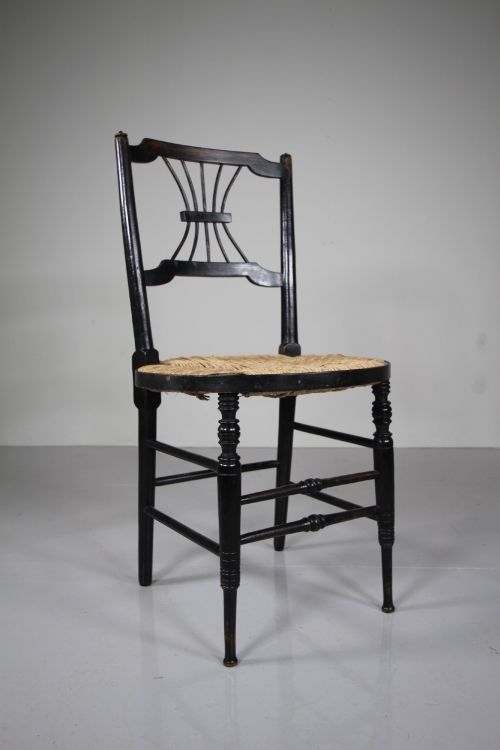
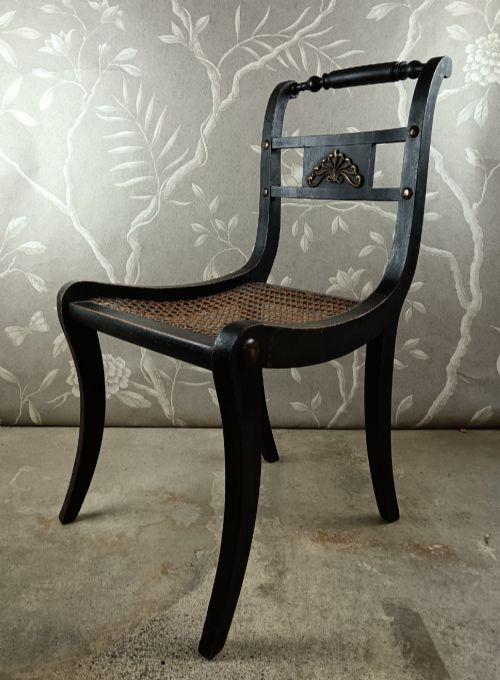
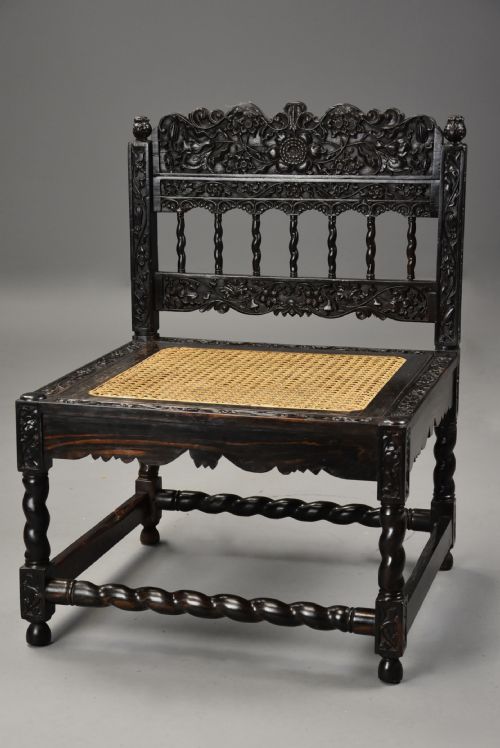
When you search for a black wooden side chair, you encounter a diverse range of forms spanning multiple centuries, from austere 17th century carvings to sleek Regency models and decorative Victorian designs. These versatile seats function primarily as occasional seating in halls, parlours, and dining spaces where a strong visual accent is required.
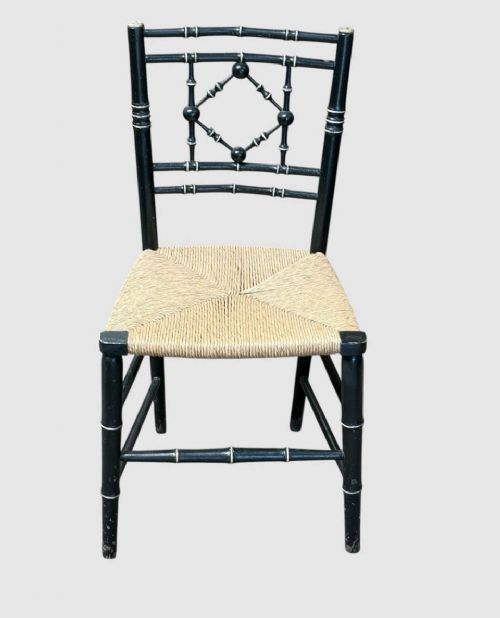
The versions you are most likely to meet on this page utilise ebonised finishes, solid ebony, or dark stained oak and walnut. They appear in styles such as the Aesthetic Movement, Regency, and Arts and Crafts, often featuring cane, rush, or upholstered seats.
How they were made
Cabinetmakers and regional artisans constructed these chairs using dense timbers such as oak, walnut, and exotic hardwoods, frequently applying an ebonised finish to imitate expensive ebony. Surface ornamentation relied on hand carving, marquetry inlay, and gilding to accentuate structural lines and motifs.
Seating areas incorporated traditional methods including woven cane, rush, or padded upholstery secured with brass tacks, reflecting the domestic requirements and workshop practices of their respective periods.
One chair bears a carved back showing a dancing bear, capturing a distinctly playful Black Forest motif.
What varies in quality
The distinction between standard utility seating and exceptional pieces rests on the crispness of the hand carving and the integrity of the timber joints. Superior examples display thoughtful proportion, careful joinery, and well-preserved original surfaces.
The refinement of decorative details, such as gilt highlights on ebonised wood or intricate marquetry inlay, separates ordinary production pieces from high-status workshop creations.
William Morris·Rossetti·Collier and Plucknett·Bruce J. Talbert·Hitchcock
The Black Wooden Side Chair Glossary
- Ebonised Wood
- Timber treated with stain, dye, or paint to simulate the dark, dense appearance of solid ebony. This technique gained widespread popularity during the 19th century across various revival styles.
- Sabre Leg
- A concave, outwardly curving furniture leg that tapers toward the foot, commonly seen on neoclassical and Regency chairs. It derives its name from the distinctive curved profile of a cavalry sabre.
- Caning
- A seating material woven from split rattan or cane strips, providing a lightweight yet resilient support. It appears frequently on light side chairs and dining seats.
- Cockpen Chair
- A chair style featuring an open lattice back, inspired by Chinese Chippendale designs. These pieces often incorporate straight legs and simple geometric woodwork.
- Marquetry
- The art of applying thin veneers of wood and other materials to form decorative patterns and pictures on a furniture surface. It requires precise cutting and fitting by skilled hands.
Black Wooden Side Chair: Frequently Asked Questions
What periods do these chairs come from?
The selection includes pieces originating from the 17th century onwards, encompassing Regency, Victorian, Arts and Crafts, and early 20th century eras.
Each period imparts distinct stylistic markers, from neoclassical sabre legs to ornate Victorian carving and Aesthetic Movement simplicity.
How were black wooden chairs finished?
Many examples achieve their dark appearance through ebonising, a chemical or pigment process applied to common timbers like oak and beech to mimic solid ebony.
Other pieces utilise naturally dark woods such as solid ebony, walnut, or stained oak without additional surface darkening.
Where should I place a side chair?
Side chairs function well in hallways, entryways, bedrooms, and around dining tables where floor space is limited.
Their upright proportions and lack of arms allow them to sit flush against walls or tuck neatly under tables when not in use.
Are cane seats durable?
Woven cane provides a flexible and supportive surface that withstands normal daily use when kept in proper humidity conditions.
Original cane dating back to the 18th or 19th century requires gentle treatment, whereas professional re-caning restores full structural resilience.
How do I identify an Aesthetic Movement chair?
Aesthetic Movement pieces often feature ebonised surfaces, simple geometric forms, and incised gilt detailing reflecting Japanese design influences.
Designers of this era prioritized artistic craftsmanship and clean structural lines over excessive ornamentation.