

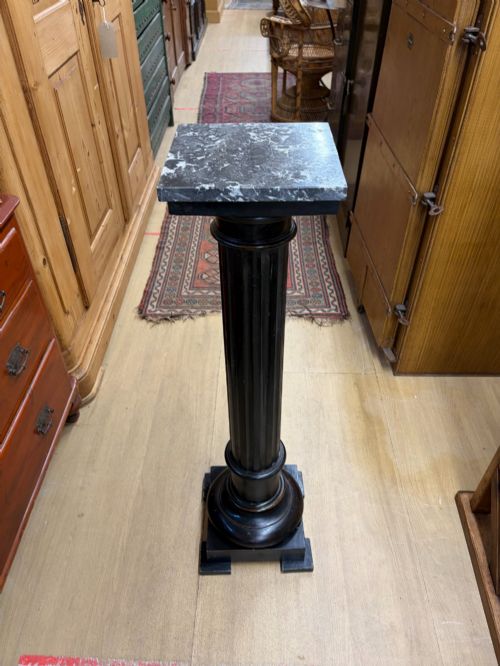
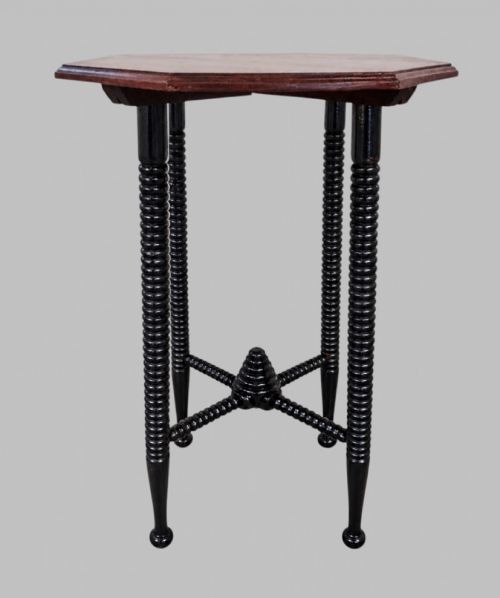
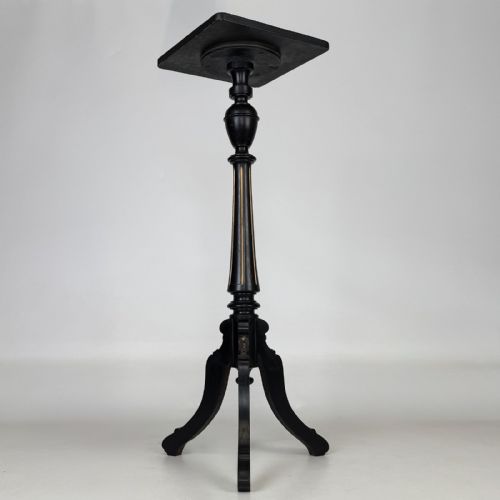
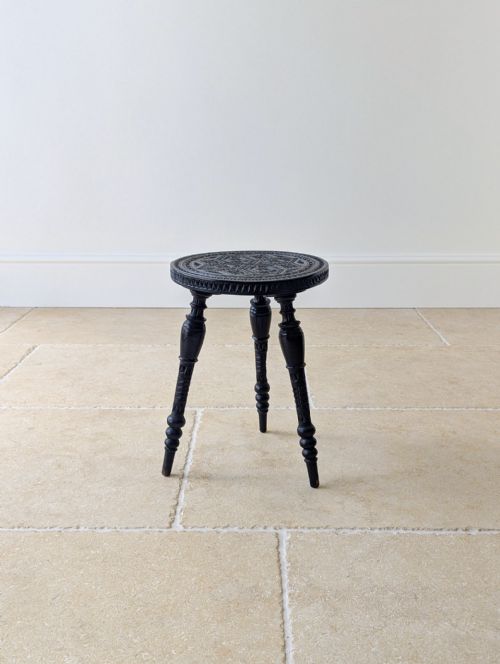


Black Wooden Plant Stand
A black wooden plant stand brings structural height and dark contrast to a room, holding greenery with architectural poise.
Black Wooden Plant Stand
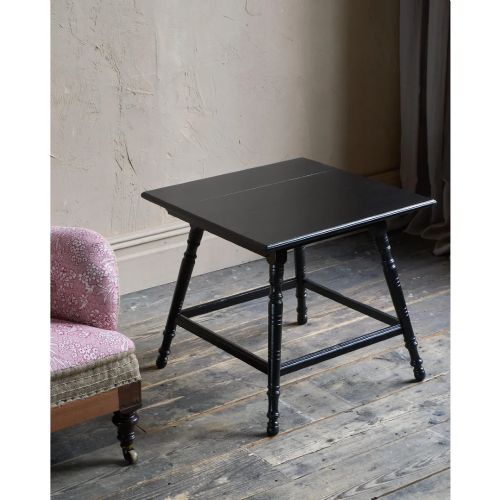
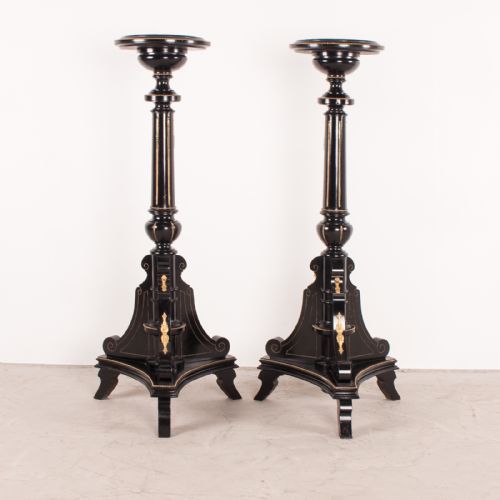
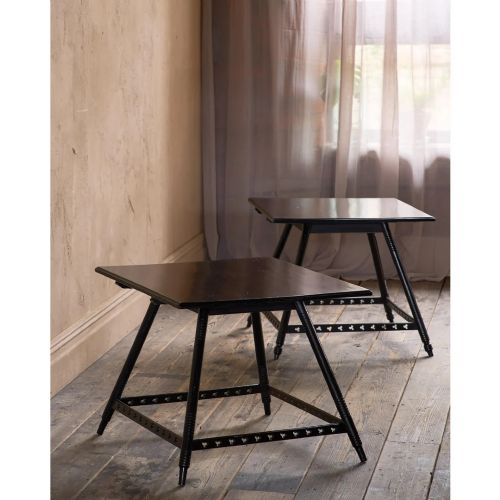
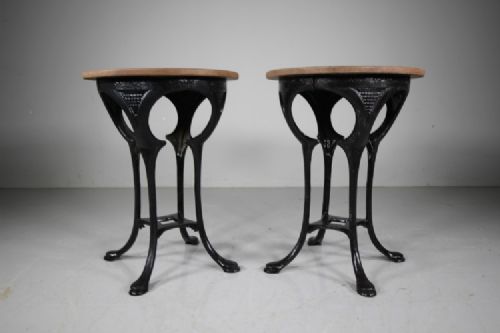
A black wooden plant stand serves to elevate decorative foliage, porcelain pots or lamps above floor level. These pieces arrive in various forms including torcheres, pedestals, columns, and small occasional or side tables.
The material surface frequently appears as ebonised wood or dark lacquer, creating a deliberate shadow effect against lighter walls. Makers from the nineteenth and early twentieth centuries produced these items in diverse regional vocabularies, ranging from Anglo-Indian and Chinese Qing Dynasty to Victorian and Arts and Crafts styles.
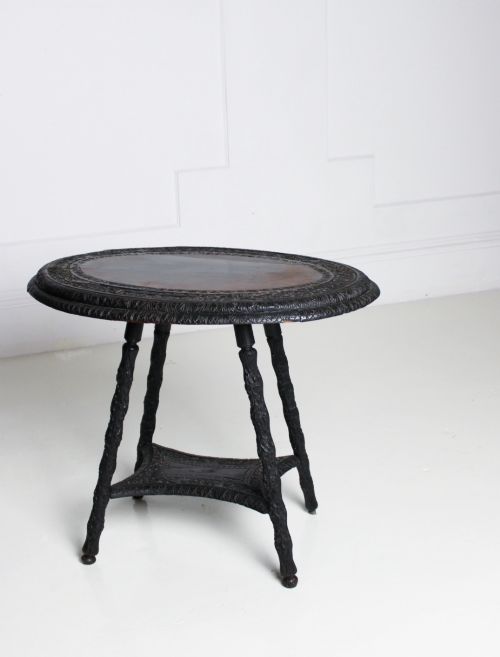
Victorian ebonised examples and carved Oriental jardiniere stands dominate the current selection. Buyers encounter tripod bases, column supports, and low pedestals designed specifically to display botanical specimens within domestic interiors.
Materials and Construction Methods
Carpenters utilised dense hardwoods such as rosewood, elm, or native timber, applying ebonisation techniques to imitate costly ebony. This process involved chemical staining or dark painting of lighter woods to achieve a uniform black finish.
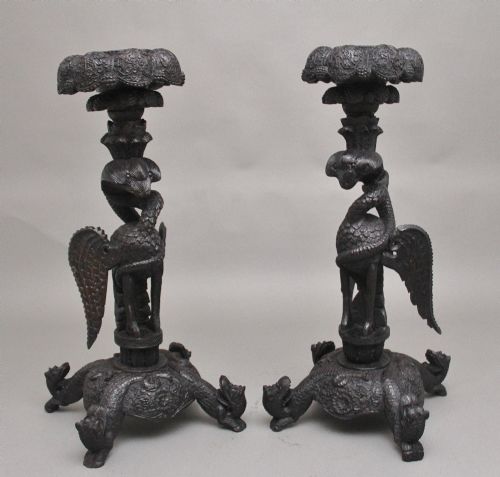
Carved decoration required skilled hand manipulation, producing intricate surface detailing like chip-carved geometric patterns or figurative elements. Lacquer applications provided a smooth, reflective sealing layer, particularly evident in Asian import pieces and Aesthetic Movement items.
Black Wooden Plant Stand Retail Price Guide 2026
Typical asking prices for black wooden plant stand among the pieces listed under this phrase on Sellingantiques today, from the lower quarter to the upper quarter. They describe what is for sale here now, not the wider market.
Materials documented across the pieces include ebonised hardwood, rosewood, elm, and applied lacquer.
Distinctions in Execution and Age
The refinement of hand-carved relief work separates standard utilitarian items from ambitious decorative pieces. Superior items display crisp undercutting in foliage or figures, whereas lesser examples rely on shallow, machine-routed patterns.
Structural integrity depends upon the joinery at the pillar and tripod base connection, where weight distribution matters. Original ebonisation or period lacquer retains a deep, soft patina that modern repainting obscures.
Hindley and Sons·Archibald Knox·Liberty
The Black Wooden Plant Stand Glossary
- Ebonised
- Wood treated with stain or dye to simulate expensive ebony timber. This dark finish gained immense popularity during the Victorian and Aesthetic Movement eras.
- Torchere
- A tall, slender stand or pedestal designed originally to carry a torch or candle, later adapted for lamps and tall plants. These pieces feature elevated platforms on single columns or tripod bases.
- Jardiniere
- An ornamental pot or stand for holding plants or flowers. They often take the form of low tables or pedestals with inset tops.
- Aesthetic Movement
- A late nineteenth-century design style emphasising visual beauty over narrative subject matter. Pieces from this movement often incorporate ebonised surfaces and orientalising motifs.
Black Wooden Plant Stand: Frequently Asked Questions
What plants suit a black wooden plant stand?
Trailing vines and plants with bright green or variegated foliage contrast sharply against a dark ebonised surface.
Heavier pots require sturdy tripod bases or solid hardwood columns to maintain balance.
Where should I place a torchere stand?
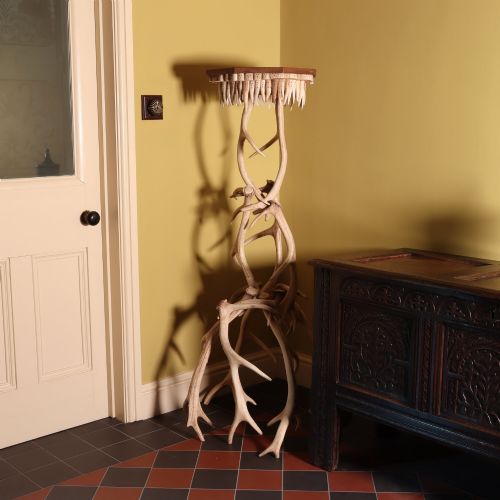
These tall stands fit well in corners or empty hallway spaces where vertical height adds proportion to a room.
They function effectively as pedestals for sculptures or lamps rather than just holding botanical displays.
How do I identify a Victorian ebonised piece?
Victorian examples often combine ebonised wood with parcel gilding, incised carving, or structural turnings.
Examine the underside and joints for period construction methods and ageing patination on the dark finish.
Are Oriental plant stands stable?
Carved hardwood stands from Chinese and Anglo-Indian traditions utilise heavy timber to anchor wide tabletops.
Their solid construction safely supports substantial ceramic bowls and heavy potted ferns.