


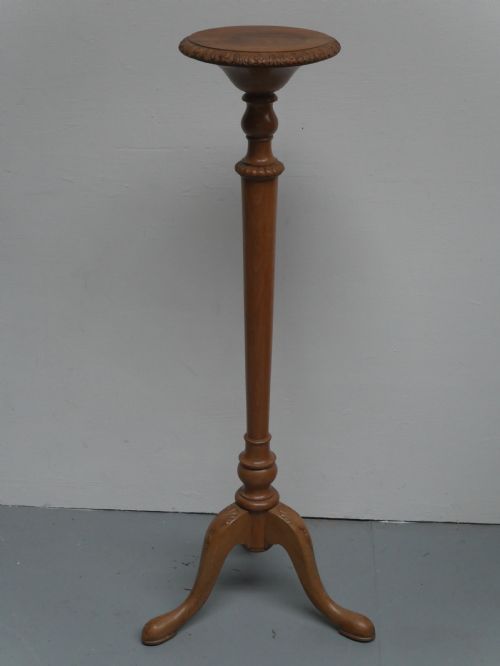


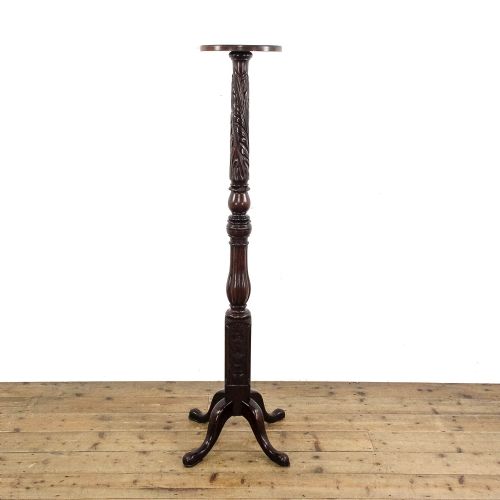
Victorian Tripod Torchere
A victorian tripod torchere lifts your flora and lamps above the floor, bringing slender nineteenth-century height to empty corners.
Victorian Tripod Torchere
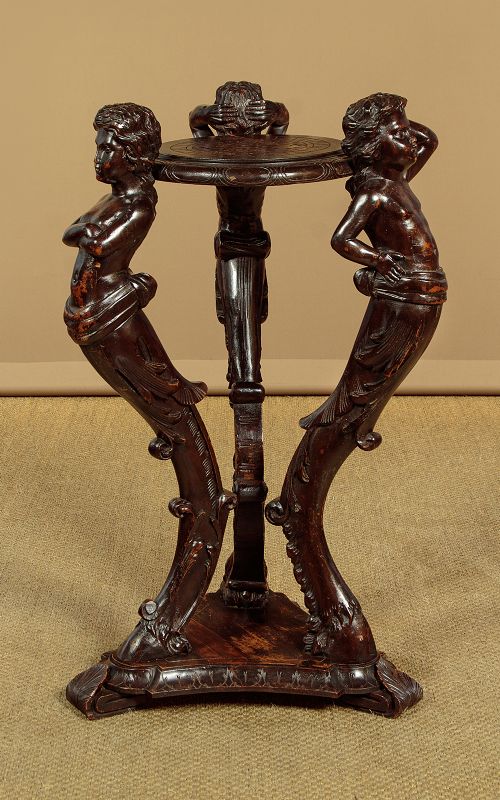
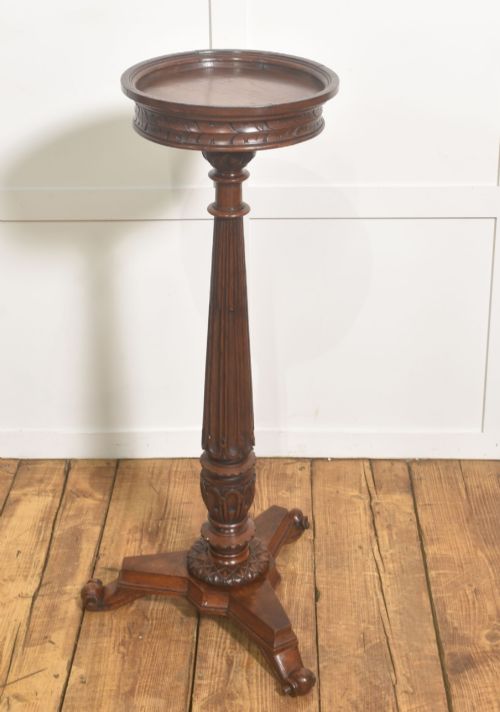
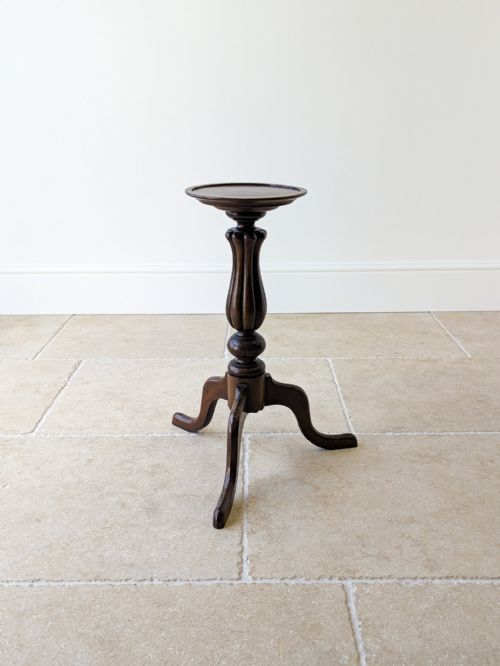
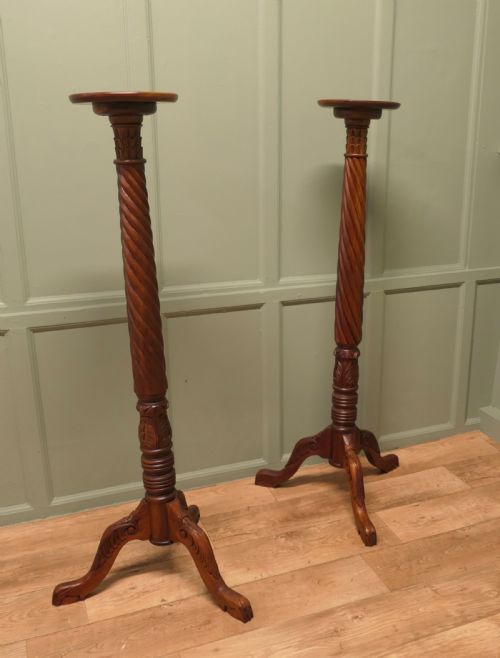
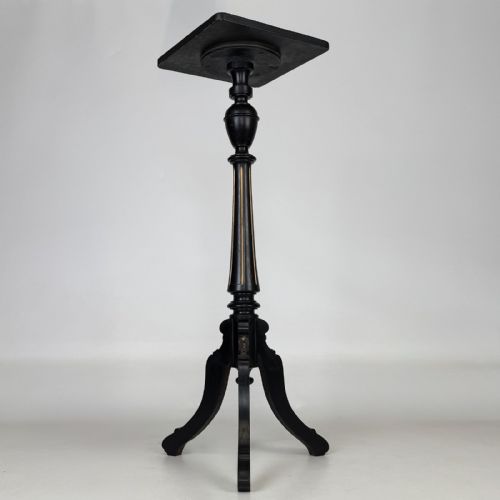
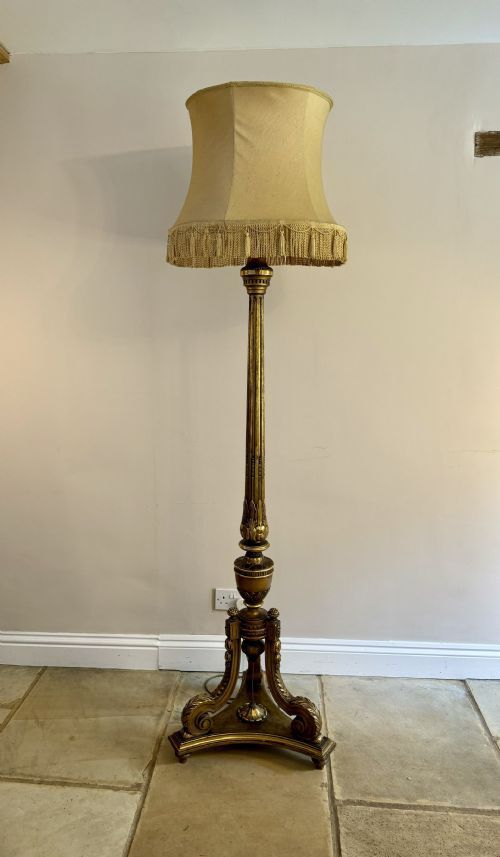
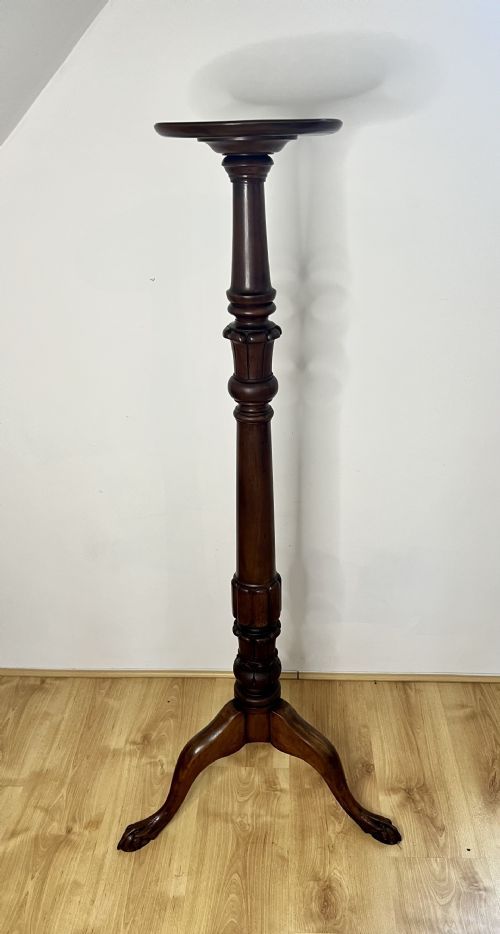
A victorian tripod torchere stands on three supporting legs, elevating plants, urns, lamps or busts in nineteenth-century interiors. These tall, slender display pieces serve primarily as functional plinths rather than central furniture.
Mahogany forms the most common timber you will encounter on this page, often accompanied by walnut, oak and ebonised wood. Styles range from plain turned shafts to heavily carved revival designs spanning the Victorian era.
How they were made
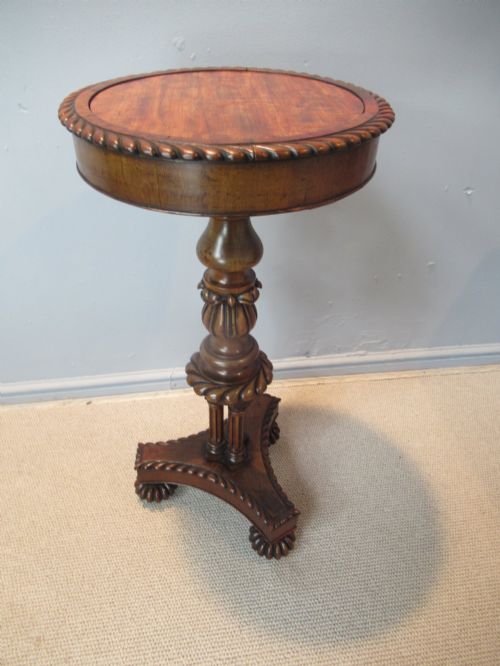
Cabinet makers utilised dense hardwoods such as mahogany and walnut, turning central columns on lathes and carving tripod legs with claw-and-ball, scroll or plain spade feet. Brass components occasionally appear in mountings and structural supports.
Surface treatments include traditional wax polishing, gilding, ebonising to imitate ebony, and black lacquer decoration. Carved details are executed by hand directly into the solid timber shafts and table tops.
Victorian Tripod Torchere Retail Price Guide 2026
Typical asking prices for victorian tripod torchere among the pieces listed under this phrase on Sellingantiques today, from the lower quarter to the upper quarter. They describe what is for sale here now, not the wider market.
Listings span the nineteenth century and early twentieth century, featuring mahogany, walnut, oak, brass, ebonised wood and gilt.
What varies in quality
The crispness of the hand-carving determines the upper tiers of quality, separating deeply undercut foliage and fluting from flat, mechanical moulding. Timber selection also dictates value, with well-figured mahogany and rich walnut commanding attention.
Structural stability on a three-legged base requires precise joinery where the legs meet the central column. Pieces that stand firm without wobble demonstrate superior original construction.
The Victorian Tripod Torchere Glossary
- Torchere
- A tall stand designed to support a lamp, candle, plant or decorative urn. The form originates from lighting stands before evolving into general display furniture.
- Tripod base
- A supporting structure featuring three legs radiating from a central column. This arrangement ensures the stand remains stable on uneven floorboards.
- Jardiniere stand
- A tall piece of furniture specifically built to hold a container of growing plants. These often feature waterproof liners or raised rims.
- Ebonised wood
- Timber treated with chemical stains or dark paint to simulate expensive ebony. This finish gained popularity during the nineteenth century for dramatic contrast.
Victorian Tripod Torchere: Frequently Asked Questions
What is a torchere used for?
A torchere raises lamps, candles, plants or sculptural busts to eye level in a room. They occupy very little floor space while adding vertical interest to dark corners.
Historically, they held lighting before electricity made them versatile display furniture for domestic interiors.
How do I style a torchere at home?
Place a torchere in an empty corner, beside a fireplace, or framing a doorway to break up flat wall lines. Ensure the top surface holds objects proportional to the narrow platform.
Trailing plants, heavy urns or heavy table lamps sit securely if the three-legged base is weighted properly.
Are all these stands Victorian?
The listings span the nineteenth century and into the early twentieth century, including revival styles like Adam and Queen Anne. Many pieces date directly to the Victorian period.
Makers frequently drew on Georgian and French chateau influences alongside native Victorian design aesthetics.
What woods are most common?
Mahogany dominates the selection of woods, accompanied by walnut, oak and hardwood. Ebonised finishes and gilded surfaces also appear frequently across the inventory.
These dense timbers provided the structural strength needed to support tall, slender columns without bowing.