


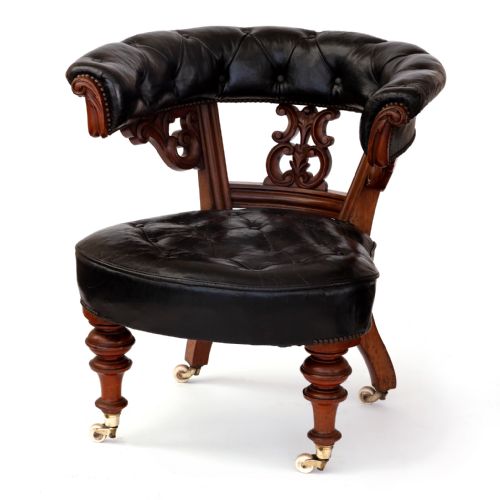


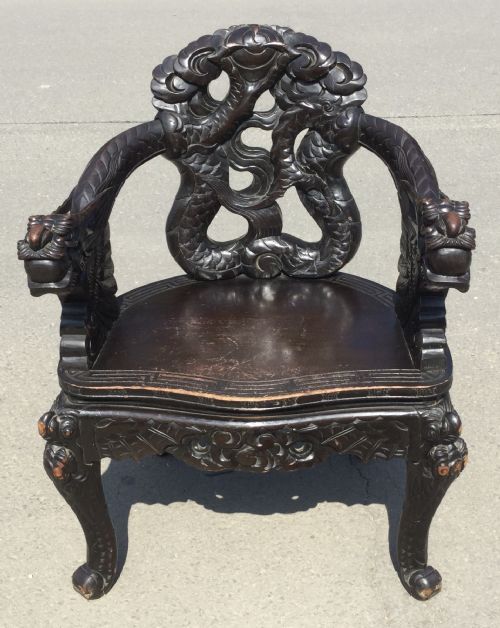


Black Wooden Desk Chair
A black wooden desk chair brings dark, sculptural presence to a room, offering sturdy utility shaped by centuries of cabinetmaking skill.
Black Wooden Desk Chair
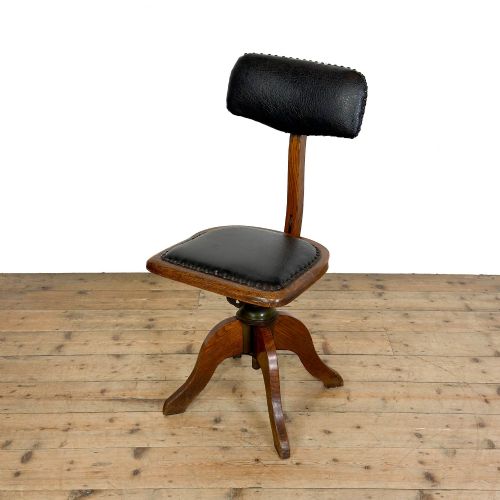
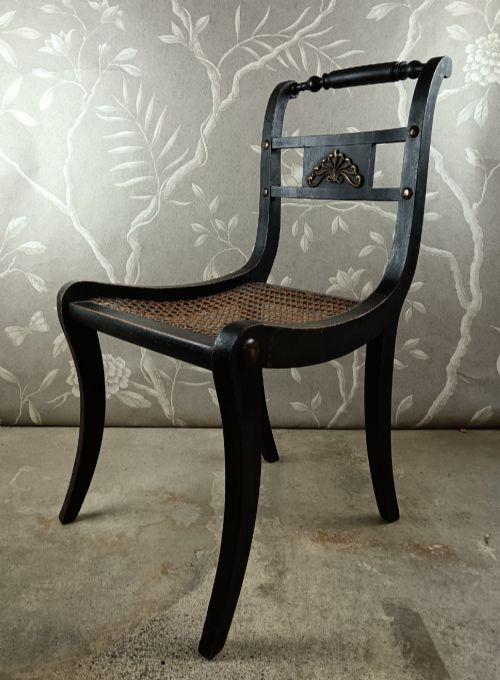
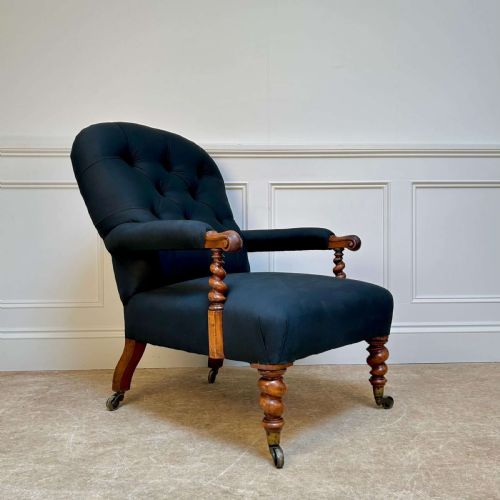
A black wooden desk chair represents a practical form built for sustained seating, frequently rendered in ebonised wood or dark hardwoods across this selection. These pieces emerge from periods ranging from the eighteenth century through the early twentieth century, spanning styles such as Regency, Victorian, and the Aesthetic Movement.
Buyers encounter various structural formats within these listings, including side chairs, armchairs, and specialised seating with origins reaching from British workshops to Chinese export and Ceylonese production. The ebonised finish remains a dominant aesthetic choice, offering a deliberate dark surface that highlights the grain or smooth turning of the timber beneath.
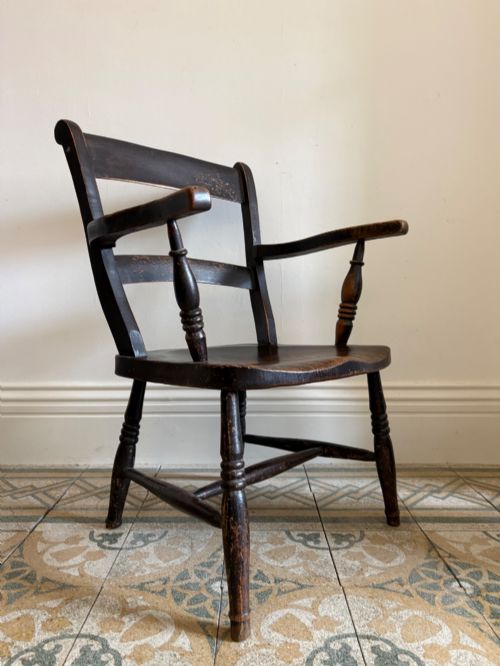
The selection includes specific regional variants like Thames Valley Windsor chairs alongside formal Trafalgar sabre leg models and Biedermeier armchairs. Each variant demonstrates how makers adapted traditional seating to serve as functional workspace furniture through robust construction in elm, ash, birchwood, and ebonised timber.
Materials and construction methods
Makers utilised hardwoods such as walnut, oak, mahogany, and ash to build the foundational frames of these chairs, frequently applying ebonising techniques to achieve a uniform black surface. Structural joints often rely on traditional pegging, turning, and joinery methods suited to enduring heavy daily use.
Seating surfaces incorporate materials like original cane, leather, and fabric inserts, supported by wood or woven bases. Decorative details emerge through hand-carving, brass mounts, and gilded highlights that accent the dark wooden structures.
The listings span multiple centuries, incorporating nineteenth-century ebonised designs alongside eighteenth-century mahogany forms and early twentieth-century office seating.
Distinctions in quality and execution
Quality rests in the precision of the joinery and the integrity of the timber frame, where tighter construction and substantial material weight distinguish superior examples. The execution of the ebonised finish or the depth of hand-carved elements reflects the maker's proficiency.
The survival of original surface finishes, upholstery materials, and seating elements such as cane or leather influences the character of each piece. Greater refinement appears in balanced proportions and harmonious stylistic details that remain faithful to their period of origin.
Hindley & Sons·Collier and Plucknett
The Black Wooden Desk Chair Glossary
- Ebonised Wood
- Timber treated with stain, dye, or paint to imitate the dark appearance of ebony. This finish gained notable popularity during the nineteenth century across various stylistic movements.
- Trafalgar Chair
- A distinctive British chair type associated with the Regency period, characterised by sabre legs and often featuring carved rope-twist or Trafalgar motifs.
- Windsor Chair
- A traditional seating form featuring a solid wooden seat into which the legs and back spindles are directly wedged. Thames Valley examples often utilise woods like elm and ash.
- Biedermeier
- A Central European style dating from the nineteenth century that prioritised clean lines and utilitarian comfort over excessive ornamentation, frequently utilising birchwood.
- Aesthetic Movement
- A late nineteenth-century design ethos that emphasised visual beauty and craftsmanship, often drawing inspiration from Japanese art and employing ebonised finishes.
Black Wooden Desk Chair: Frequently Asked Questions
Are these chairs comfortable for daily work?
Most of these historic pieces were designed for upright posture rather than modern ergonomics, often featuring supportive wooden or cane backs.
Buyers intending to use them daily at a desk frequently add a discrete, period-appropriate pad to enhance seating comfort during longer hours.
How do I care for ebonised wood surfaces?
Ebonised timber requires gentle dusting with a soft, dry cloth to prevent microscopic abrasion of the dark finish over time.
Avoid placing these chairs near direct heat sources or strong sunlight, which can fade the dark stain and dry out the underlying wood.
What is the difference between a side chair and an armchair?
Side chairs are built without armrests, making them compact enough to tuck neatly beneath standard desk surfaces or dining tables.
Armchairs provide integrated side supports that offer a more enclosed seating experience, typically requiring additional clearance around a workspace.
How can I tell a Regency chair from a Victorian one?
Regency seating typically exhibits classical restraint, featuring elements like sabre legs, reeding, and influences from ancient Roman or Greek design.
Victorian pieces often display heavier proportions, more robust carving, and eclectic revivals of Gothic or earlier historical styles.