
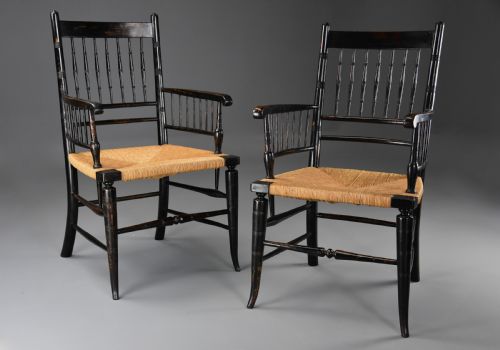


Black Ebonised Armchair
A black ebonised armchair brings a dark, striking silhouette to a room, offering both formal architectural presence and deep historical interest across various periods.
Black Ebonised Armchair
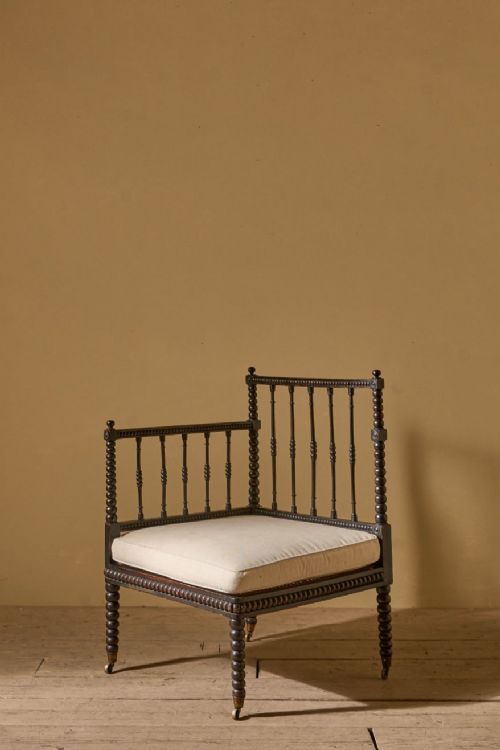
A black ebonised armchair encompasses diverse seating forms, ranging from library and salon chairs to rocking chairs, nursing chairs, and corner chairs. These pieces stretch across the 18th century, Regency, and Victorian eras, extending into the early 20th century.
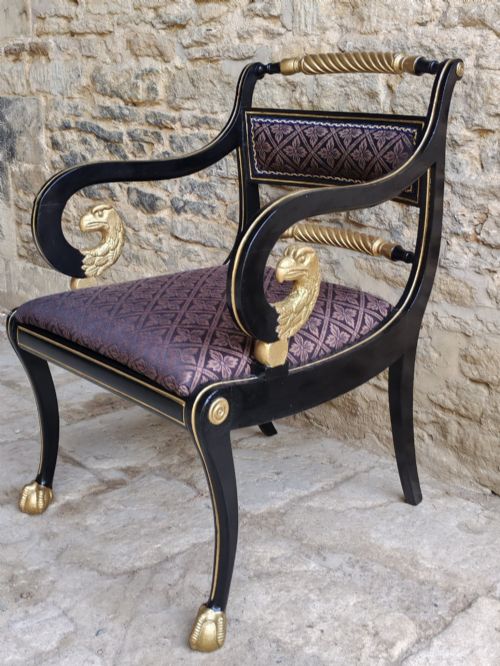
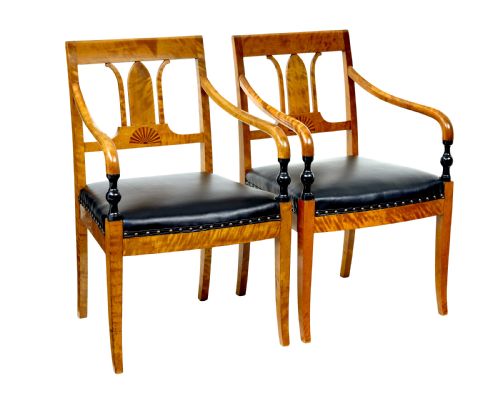
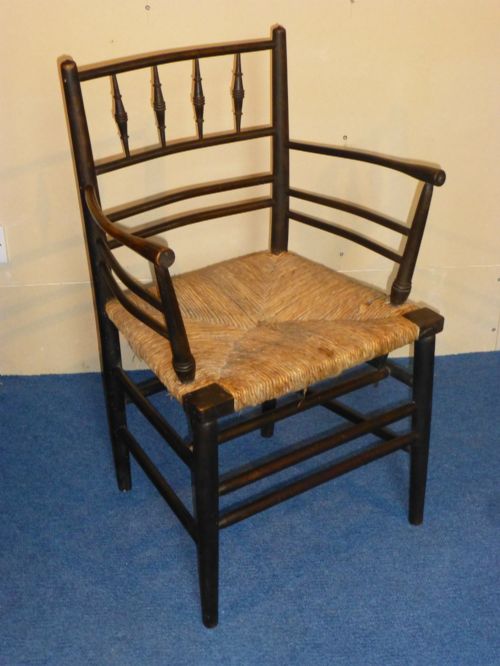
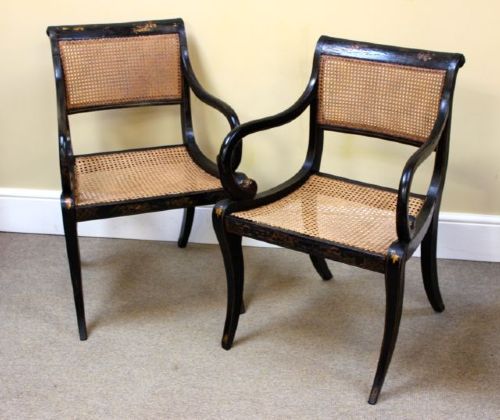
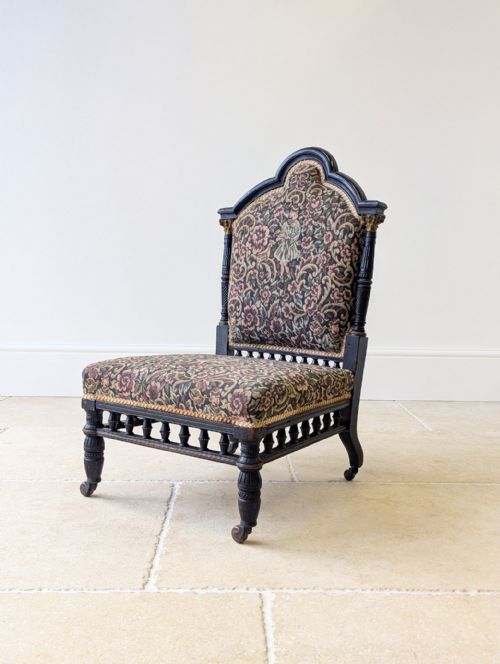
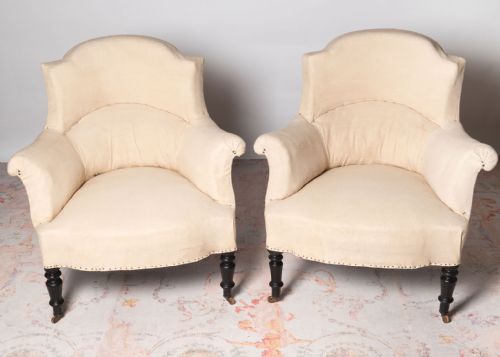
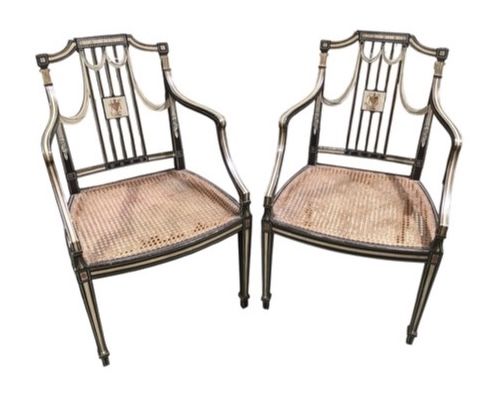
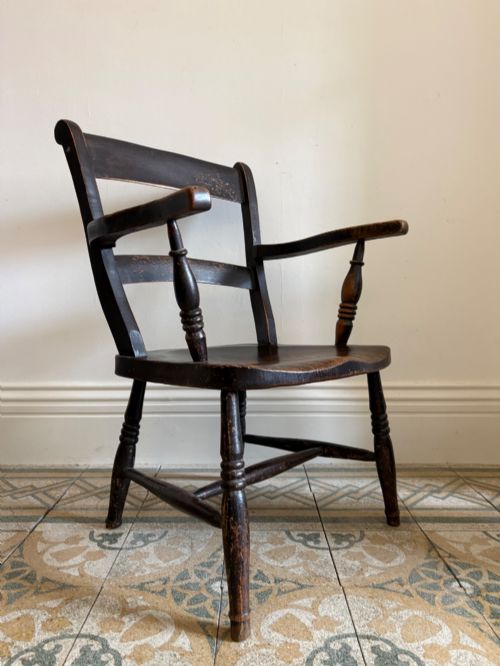
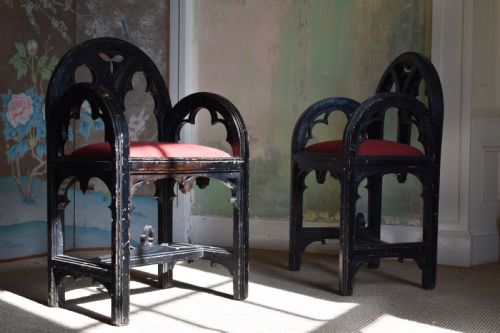
The selections on this page are dominated by 19th-century interpretations, particularly Victorian Aesthetic Movement pieces, alongside Regency library chairs and regional Windsor chairs. Buyers frequently encounter variants featuring turned members, caned seats, or low profiles suited to specific domestic rooms.
Materials and Construction
Craftsmen utilised various hardwoods such as beech, ash, elm, and birch, often applying a black paint or ebonising process to imitate costly exotic ebony. Surface treatment frequently combined this dark finish with contrasting gilt highlights, brass mounts, or painted decoration.
Upholstery and structural webbing incorporated materials like cane, leather, velvet, and fabric. Frameworks relied on traditional joinery, including bobbin turning, bentwood steaming, and carved detailing.
Listings feature 19th-century, Regency, and Victorian periods, alongside materials like ebonised wood, cane, brass, leather, and velvet across various chair forms.
Evaluating Quality
Quality rests upon the crispness of the turning and carving, the integrity of the ebonised finish, and the structural stability of the underlying timber. Pieces with original surface decoration or retained gilt details command greater attention than later or heavier resprays.
The refinement of the proportions and the cleverness of the design - whether in an Aesthetic Movement frame, a Regency library bergère, or a turned bobbin structure - define the distinction between ordinary utility seating and accomplished cabinet work.
Morris & Co·Philip Webb·Gillows·Collier and Plucknett·Maple & Co·Thonet
The Black Ebonised Armchair Glossary
- Ebonised
- Wood treated with stain, paint, or chemical processes to simulate expensive ebony. This finish gained immense popularity during the Victorian and Aesthetic periods.
- Bergère
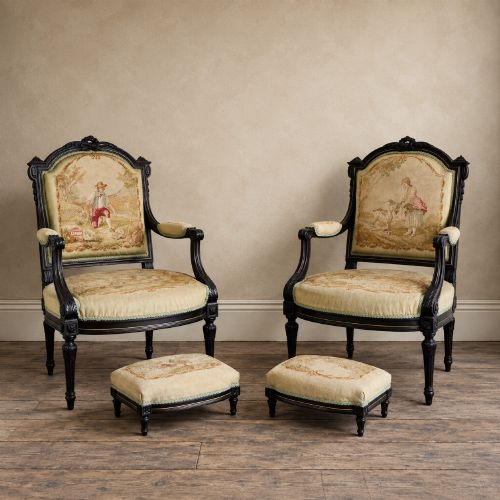
- An enclosed upholstered armchair with closed sides, originating in France. These seats often feature cane work or padded arm panels.
- Cockpen
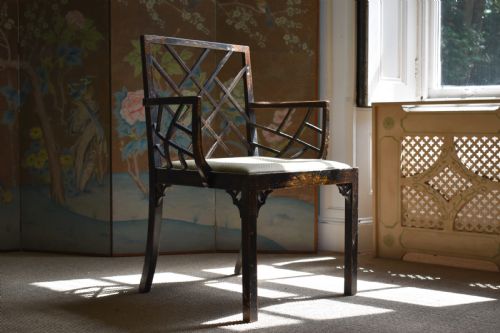
- A Chinese Chippendale style of lattice-work chair featuring open square geometric patterns. This form appears frequently in British seating of the 18th and later centuries.
- Bobbin turned
- Timber turned on a lathe to resemble a string of beads or bobbins. This decorative turning style defines many 19th-century corner and child chairs.
- Aesthetic Movement
- A late 19th-century design style emphasising visual beauty over narrative subject matter. Furniture from this movement often employs ebonised surfaces and gilt incising.
Black Ebonised Armchair: Frequently Asked Questions
What is an ebonised armchair?
An ebonised armchair is a wooden seat finished in deep black to resemble solid ebony wood. This treatment was widely favoured during the Regency and Victorian eras to create dramatic, formal silhouettes.
Cabinet makers applied this dark finish to various timbers, including beech, birch, and ash, sometimes pairing the black surface with gilt highlights or contrasting upholstery.
How do I date a black armchair?
Dating relies on examining the structural form, turning style, and decorative motifs present on the frame. Regency models display classical restraint, whereas Victorian Aesthetic examples often incorporate incised gilt decoration and spindle turnings.
Matching the timber species and upholstery methods to known period standards helps narrow down the decade of manufacture.
Where were these chairs used?
These chairs served multiple domestic functions depending on their specific form, from libraries and studies to salons and bedrooms. Library chairs provided sturdy comfort for reading, while low nursing chairs suited fireside sitting.
Corner chairs and salon chairs occupied drawing rooms and hallways, acting as decorative and functional furniture pieces.
How do I care for ebonised wood?
Care requires gentle dusting with a soft, dry cloth to prevent surface scratching on the dark finish. Avoid using harsh chemical sprays or excessive moisture, which can degrade the ebonised coating.
Maintaining a stable indoor environment away from direct sunlight protects both the wooden frame and any historic fabric or leather upholstery.