





Gillows Style Library Chair
These gillows style library chair pieces are robust nineteenth-century seating built for reading rooms, crafted from mahogany and oak.
Gillows Style Library Chair
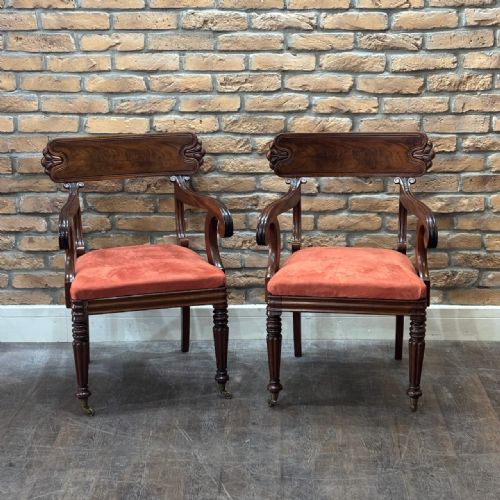
A gillows style library chair is a sturdy nineteenth-century armchair designed for studies, libraries, and reading rooms. These armchairs appear in periods ranging from Regency and William IV to Victorian and Victorian Gothic Revival, often showing direct attribution or stylistic influence from the Lancashire firm.
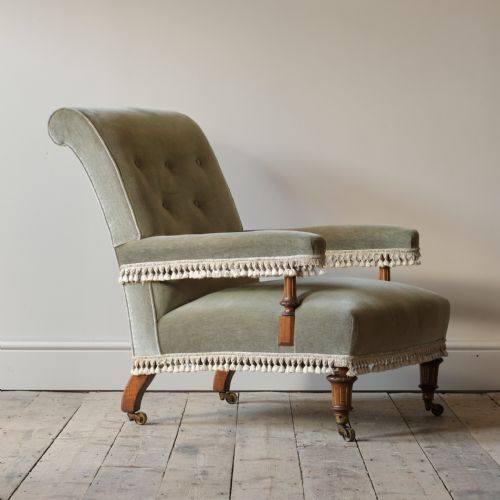
The forms span open armchairs, bergères, X-frame library chairs, and porter's chairs. Mahogany and oak dominate the timber frames, frequently upholstered in leather, velvet, calico, or modern textiles with fringe details.
How they were made
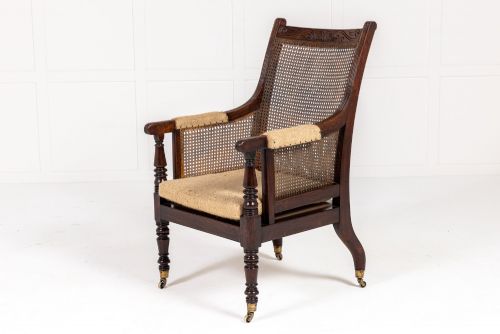
Makers utilised dense timbers such as mahogany and golden oak to construct the supportive frames, often incorporating ebonised finishes or carved details. Brass fittings and castors frequently appear on these heavy seating pieces to aid movement across carpets and wooden floors.
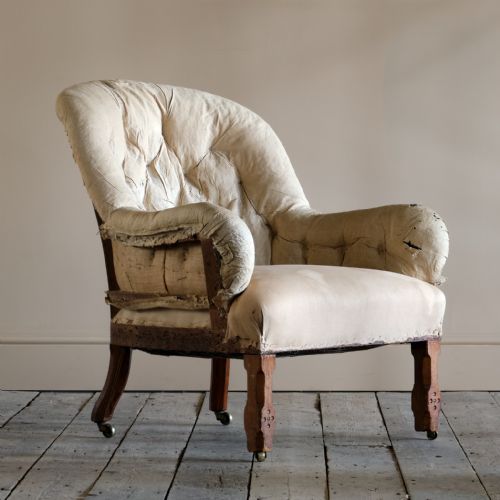
Upholstery methods involved horsehair stuffing and deep springing beneath surfaces of leather, velvet, cane, or calico. Textile fringes finished the lower borders of upholstered reading chairs.
Deep ocean navy blue leathers sit comfortably beside nineteenth-century horsehair and textile fringe.
What varies in quality
The standard of carving and the selection of timber dictate the distinction between everyday workshop production and finer cabinet work. High-grade pieces display crisp mouldings, carefully turned legs, and substantial mahogany frames without structural compromise.
The choice of covering material and the preservation of original or sympathetic upholstery methods also separate ordinary examples from superior ones. Leather surfaces finished by hand and intact cane panels indicate greater attention to traditional craftsmanship.
Bruce James Talbert
The Gillows Style Library Chair Glossary
- Bergère
- An upholstered armchair with closed sides, typically featuring cane work panels within a wooden frame. This French-inspired form became a staple of nineteenth-century English libraries.
- X-frame
- A structural chair design featuring intersecting diagonal stretchers or legs forming an X shape. This configuration provides robust support for heavy reading and library armchairs.
- Gainsborough
- A spacious, wide-seated armchair with an upholstered back and arms, standing on short legs. They were traditionally used in libraries and studies during the Georgian and Regency eras.
- Porter's chair
- A high-backed, enclosed armchair originally designed to shield occupants from draughts in entrance halls. The hood and deep sides created a private seating enclosure.
Gillows Style Library Chair: Frequently Asked Questions
What periods do these chairs cover?
The pieces span the Regency, William IV, and Victorian eras, stretching from the early nineteenth century through to the late nineteenth century. These periods encompass distinct stylistic shifts from neoclassical Regency lines to heavier Victorian Gothic Revival forms.
Cabinet makers during these decades adapted traditional library seating designs, incorporating sturdy mahogany and oak frames alongside cane panels and leather upholstery to suit contemporary domestic interiors.
How were library chairs used?
These armchairs served as comfortable seating for reading, writing, and studying in private libraries and gentleman's clubs. Their robust construction supported long periods of use.
Enclosed forms like porter's chairs kept occupants warm from draughts near grand doorways, while bergères and open armchairs suited fireside reading and desk work.
What woods were used for frames?
Mahogany and oak are the primary timbers encountered in these library seating pieces, often selected for their strength and weight. Golden oak and ebonised finishes also appear.
Cabinet makers utilised dense hardwoods to ensure the frames could bear the stress of heavy upholstery, springs, and daily use in busy studies.