





Black Vitrine Cabinet
A black vitrine cabinet brings focus to curated collections through glazed doors and dark surfaces.
Black Vitrine Cabinet
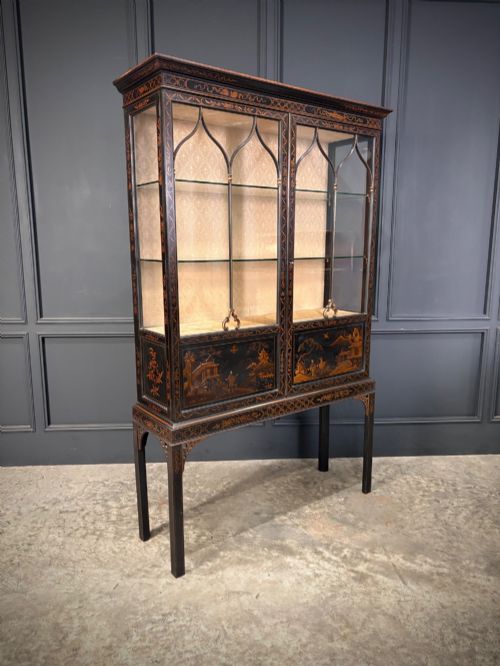
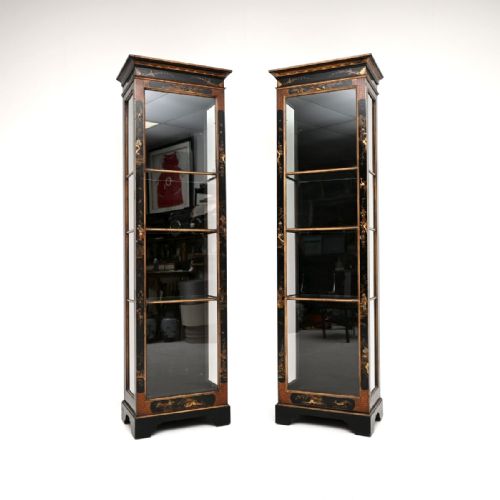
A black vitrine cabinet is a glazed display piece designed to protect and showcase porcelain, books, or curiosities while offering a strong visual frame through its dark finish. Buyers searching for a black vitrine cabinet encounter forms ranging from freestanding Victorian ebonised towers to Dutch painted cupboards and Edwardian chinoiserie lacquered pairs.
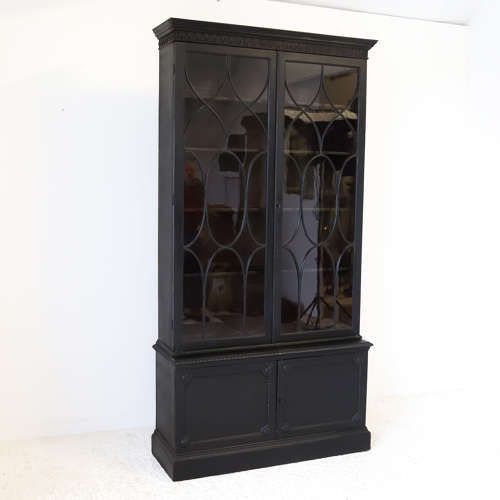
The selection on this page draws heavily on nineteenth century ebonised wood, French boullework, and twentieth century shop display counters. Pieces vary from compact countertop vitrines to large country house bookcases in black paint.
Origins stretch across England, France, America, and the Netherlands, taking shape as pier cabinets, tower cabinets, and glazed bookcases. Each variation serves the fundamental purpose of framing objects behind glass within a dark, contrasting enclosure.
What varies in quality
Quality rests in the depth of the dark finish, the crispness of brass or ormolu mounts, and the integration of glazing bars. Superior pieces display finely detailed inlay, intact lacquering, and substantial timber frames rather than superficial surface coatings.
Proportion and the handling of decorative details such as parcel-gilding or Boulle marquetry distinguish standard utility pieces from exceptional cabinet work. The alignment of doors and the clarity of original glass panels further separate finer examples from more utilitarian shop counters.
Black Vitrine Cabinet Retail Price Guide 2026
Typical asking prices for black vitrine cabinet among the pieces listed under this phrase on Sellingantiques today, from the lower quarter to the upper quarter. They describe what is for sale here now, not the wider market.
Some tower cabinets previously spent decades guarding shop counters before retiring to domestic display duty.
QUINCY SHOWCASE WORKS ILLINOIS·SAGE AND CO
The Black Vitrine Cabinet Glossary
- Ebonised wood
- Timber stained or treated to imitate ebony, widely utilised in nineteenth century cabinet making to achieve a deep black finish.
- Vitrine
- A glass-fronted display cabinet intended for the exhibition of valuable objects or curiosities.
- Ormolu
- Gilded bronze mounts applied to furniture, frequently seen enhancing nineteenth century ebonised and boulle cabinets.
- Boulle
- A style of marquetry utilising brass and tortoiseshell inlay, named after French cabinet maker André-Charles Boulle.
- Pier cabinet
- A narrow display cabinet designed to fit against the wall space between windows.
- Chinoiserie
- European decorative style employing imitation Chinese motifs, often rendered in lacquer on black ground cabinets.
Black Vitrine Cabinet: Frequently Asked Questions
What is a black vitrine cabinet used for?
These cabinets serve to display and protect collections of porcelain, glassware, books, or small artefacts behind glass doors. The dark ebonised or painted exterior provides a contrasting backdrop that draws the eye to the contents inside.
Historically, they occupied drawing rooms, libraries, and retail spaces where items required both security and clear visibility. Today, they function similarly in domestic interiors to organise and highlight cherished objects.
How do I identify a Victorian ebonised cabinet?
Victorian ebonised cabinets typically feature stained timber finished to resemble ebony, often highlighted with gilt incising, ormolu mounts, or brass stringing. They frequently incorporate glazed doors and internal shelving tailored for display.
Examining the construction methods, such as dovetail joints and glass quality, helps confirm the nineteenth century origin. The presence of Aesthetic Movement or Boulle influences also points firmly to this period.
Are these cabinets suitable for small rooms?
Many variants, such as countertop vitrines, narrow pier cabinets, and neat sized ebonised bookcases, fit comfortably into compact spaces without dominating a room. Their vertical proportions and glass panels maintain an open feeling despite the dark finish.
Placement against a wall or on a counter allows them to utilise minimal floor area while still offering substantial display capacity.
How do I care for ebonised wood and lacquer?
Ebonised wood and lacquered surfaces require gentle dusting with a soft, dry cloth to prevent scratching the dark finish. Avoiding direct sunlight and sustained moisture protects the wood and any delicate brass or gilt mounts from deterioration.
Periodic application of appropriate furniture wax, where the finish permits, helps maintain the lustre of the black surface without buildup.