
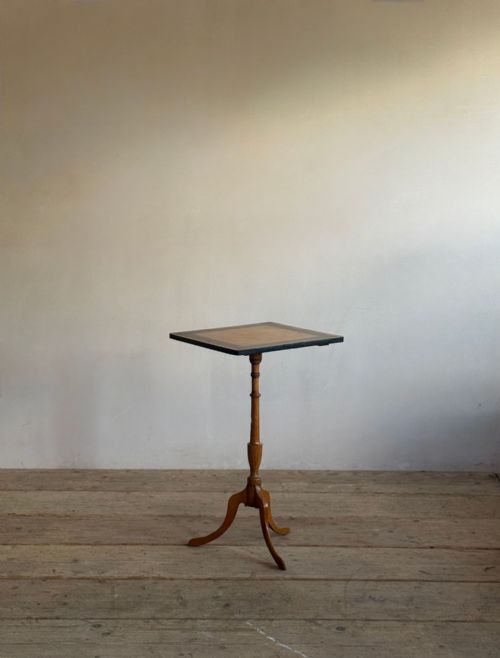
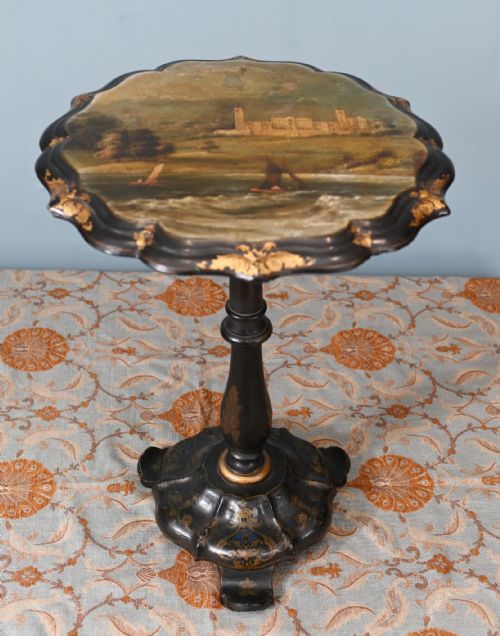
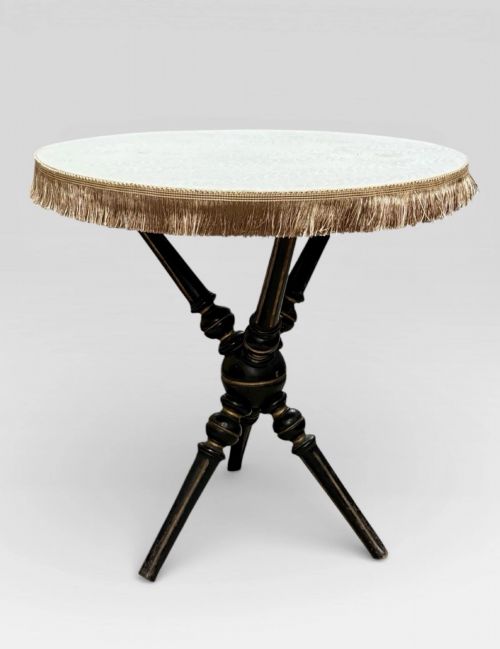
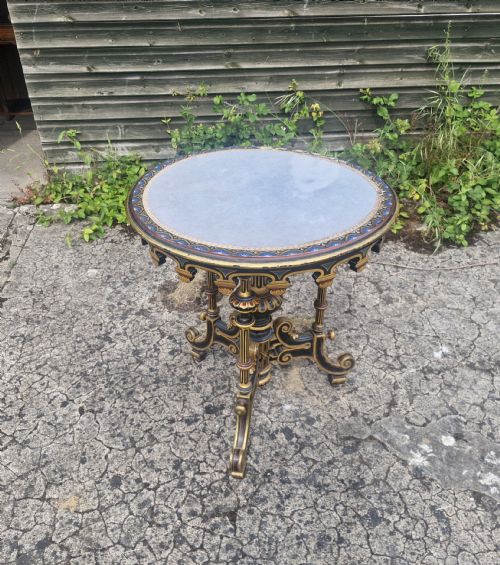
Black Tripod Table
A black tripod table brings dark surface and slender balance to a room, offering practical reach beside a chair or sofa.
Black Tripod Table
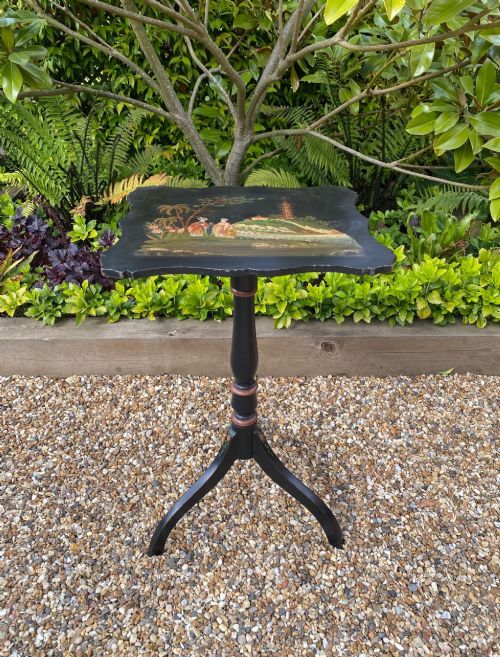
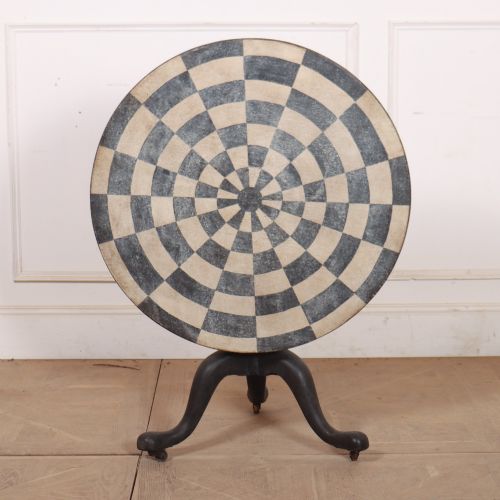
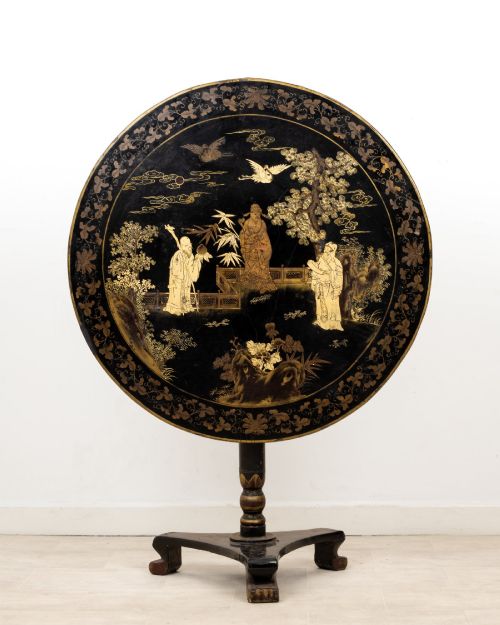
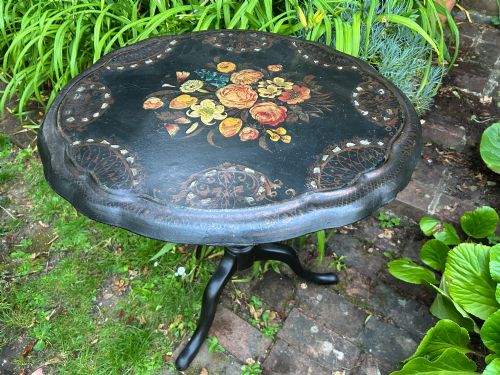
A black tripod table appears across Georgian, Regency, and Victorian periods, taking forms from tilt-top supper tables to games tables and small occasional stands.
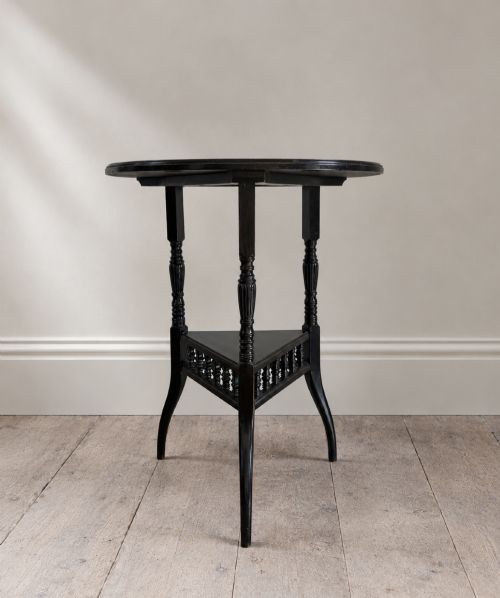
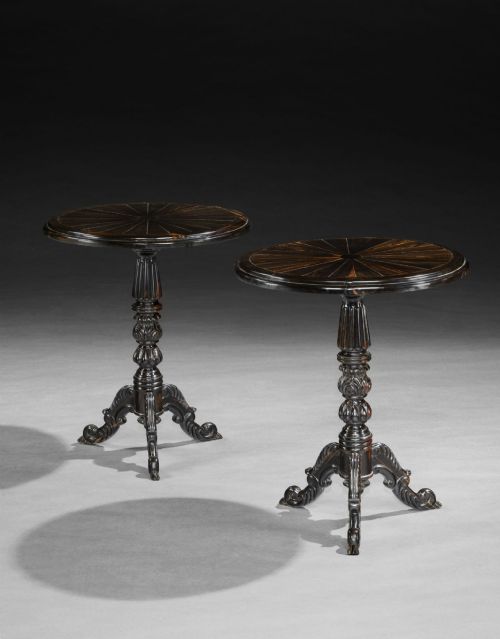
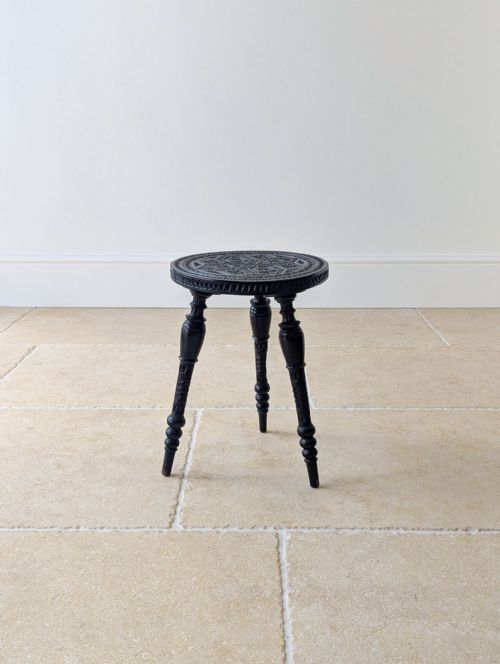
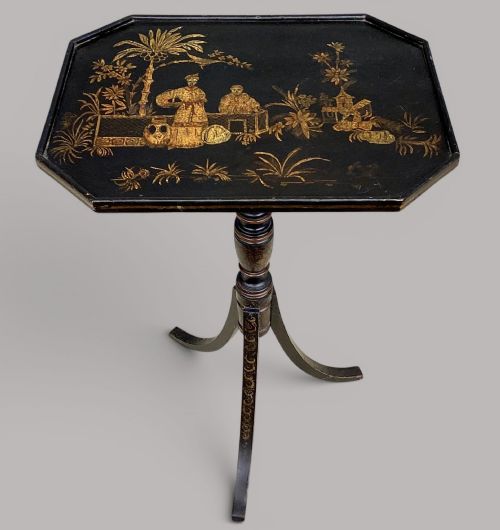
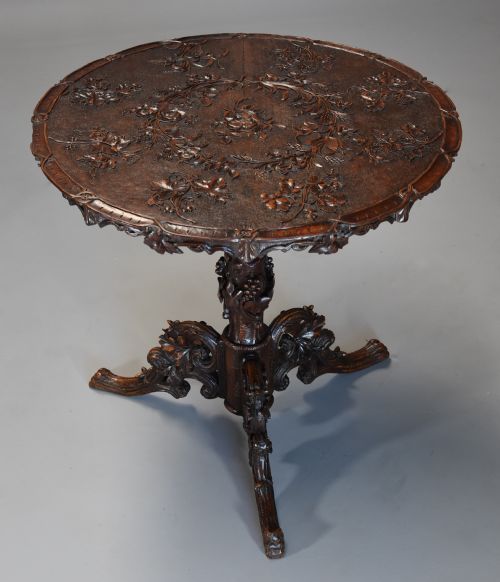
The materials span ebonised wood, lacquer, paint, and solid ebony, alongside specific styles like Chinoiserie, Black Forest, and the Aesthetic Movement.
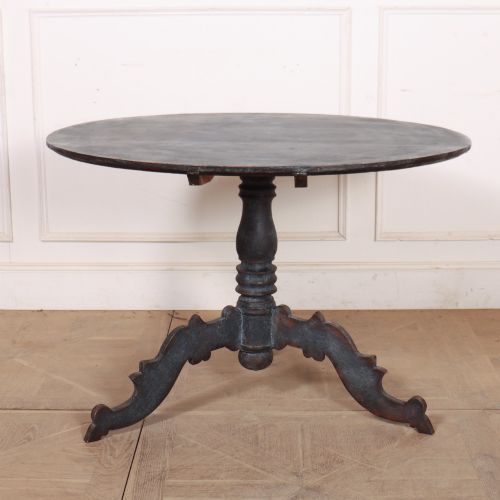
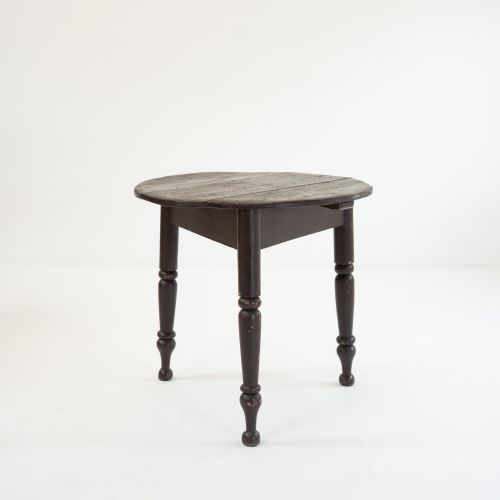
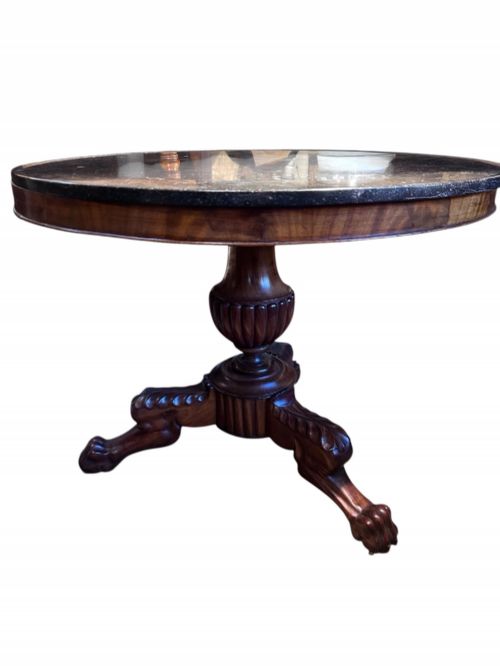
Buyers seeking a black tripod table will encounter side tables, wine tables, and centre tables supported by three-legged pedestals in various regional traditions.
How they were made
Wood serves as the primary base, shaped into solid timber or pine and enhanced through ebonising, black paint, or dark lacquer finishes.
Surface decoration relies on hand painting, parcel gilt, penwork, ink work, and mother-of-pearl inlay to create contrasting detail against the dark ground.
Joinery includes tilting mechanisms, turned pedestals, and carved tripod legs, sometimes incorporating brass, iron, or marble elements.
Periods represented span from the 18th century through the Georgian, Regency, and Victorian eras into the early 20th century.
What varies in quality
Quality rests in the execution of the surface finish, distinguishing simple painted pine from intricate hand-painted Chinoiserie, gilt work, or penwork decoration.
The crispness of the carving, whether in Black Forest linden wood or chip-carved ebonised surfaces, determines the distinction between standard production and finer output.
Structural integrity of the tilt mechanism and the stability of the three-legged base dictate the mechanical success of the piece.
George Merrifield·EW Godwin
The Black Tripod Table Glossary
- Ebonised
- Wood treated to imitate ebony through staining or black painting. This finish was widely utilised during the Victorian and Aesthetic periods.
- Tripod table
- A small table supported by a central pillar on three legs. This form allows the table to stand stable on uneven floors.
- Tilt-top
- A tabletop hinged to the pedestal so it can swing to a vertical position when not in use. This mechanism saves floor space.
- Penwork
- Decoration created using ink applied with a pen to produce intricate linear designs. It appears on Regency games and occasional tables.
- Parcel gilt
- Wood or metal partially gilded with gold leaf. This technique highlights carved details against a dark painted ground.
Black Tripod Table: Frequently Asked Questions
Where should I place a black tripod table?
These pieces suit tight corners, hallways, or beside a seating arrangement where a small surface is needed without dominating the room.
Their compact footprint and raised top make them useful for holding a lamp, book, or cup.
How do I identify a tilt-top table?
Look underneath the tabletop for a brass catch or wooden butterfly wedge that locks the surface to the pedestal block.
When released, the top pivots vertically to rest flat against the central pillar.
What is the difference between lacquer and paint?
Lacquer involves applying multiple coats of resin or varnish, often polished to a hard, glossy sheen associated with Asian-inspired styles.
Paint sits on the wood surface as a flat or decorated layer without the depth of built-up resin.
How do I clean an ebonised wooden surface?
Dust gently with a dry, soft cloth to prevent scratching the dark finish.
Avoid liquid cleaners and harsh chemicals that can strip the black stain or damage the underlying wood.