
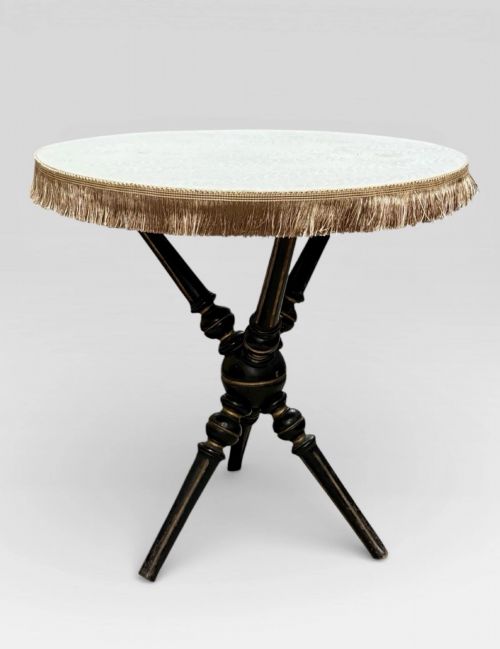


Upholstered Side Table
These pieces known as an upholstered side table combine solid timber frames with fabric surfaces, offering a practical fusion of seating, work and display.
Upholstered Side Table
When searching for an upholstered side table, buyers encounter a mix of occasional tables, work tables and drum tables alongside seating forms that incorporate textile tops. The selection spans the nineteenth century, including Regency, Victorian and early twentieth-century examples.
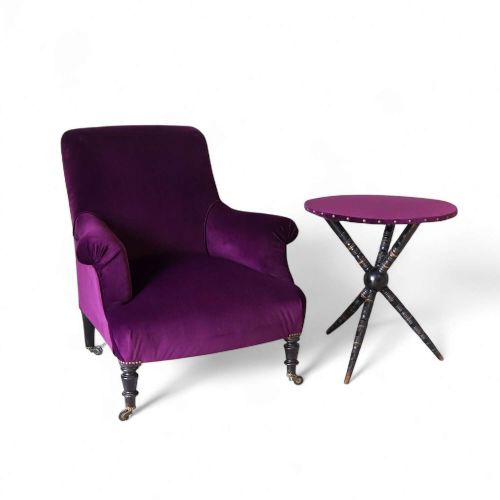
Forms range from pedestal work tables and gypsy tables covered in fabric to small occasional tables and drum tables draped in hide or velvet. Many pieces bridge the gap between auxiliary tables and small stands used for reading or needlework.
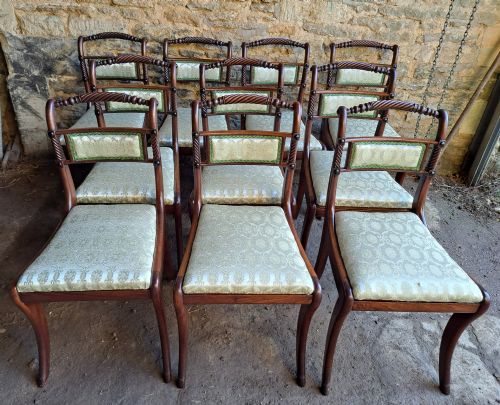
The most frequent examples draw on Victorian and Regency aesthetics, often utilising timbers such as mahogany, walnut and rosewood beneath their textile elements. Pieces from the period combine timber framing with distinct upholstered tops or draped covers.
Materials and construction
The primary structural frames rely on hardwoods like mahogany, walnut, rosewood and oak, shaped into pedestals, cabriole legs and turned supports. Timber joints and turned columns provide the stable skeleton necessary to bear weight.
Surfaces and covers integrate fabrics such as velvet, hide, upholstery fabric and traditional textiles. These materials are stretched, buttoned or draped over timber bases, often secured with brass detailing.
The documented periods span the Regency era, Victorian decades and early twentieth-century revivals.
Factors determining quality
The choice of primary timber sets the baseline, with dense hardwoods like Cuban mahogany and figured rosewood marking out the more substantial examples. Cabinetmaking skill shows in the joinery of the underframes and the precision of turned pedestals.
The grade of the textile covering and the execution of the upholstery work, whether buttoning or drapery, dictate the finish. Finer pieces demonstrate careful hand-finishing in both the timber polish and the textile application.
John Taylor Edinburgh·James Shoolbred London·Waring
The Upholstered Side Table Glossary
- Gypsy table
- A small occasional table featuring a fabric cover that drapes down over the frame, popular during the nineteenth century.
- Work table
- A small freestanding table equipped with compartments or a fabric bag for sewing and needlework materials.
- Drum table
- A circular occasional table with a deep rim, frequently supported on a central pillar and tripod base.
- Cabriole leg
- A furniture leg that curves out and then in, resembling the leg of an animal.
- Pedestal
- A central upright column supporting the top of a table or desk.
Upholstered Side Table: Frequently Asked Questions
How were these tables used?
These pieces served multiple functions in nineteenth-century interiors, acting as surfaces for lamps, books and needlework. Work tables specifically held sewing equipment within integrated compartments or fabric bags.
Smaller occasional and gypsy tables were easily moved around drawing rooms and bedrooms to hold personal items or decorative ornaments.
Where should I place an upholstered side table?
These tables fit well beside armchairs, sofas or beds where a soft surface or a compact footprint is desirable. Their varied heights and forms allow them to act as accent pieces in living spaces and studies.
Care should be taken to protect antique textiles from direct sunlight and heavy moisture to preserve the fabric.
How do I identify a Victorian piece?
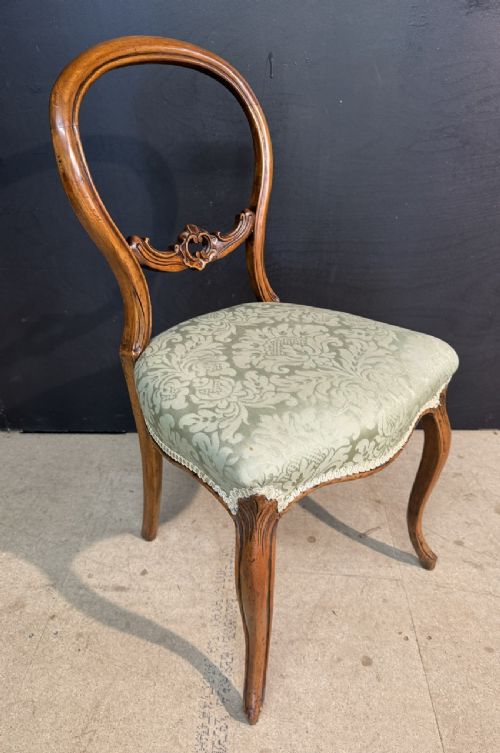
Victorian examples often feature dark hardwoods such as walnut and mahogany, combined with rich textiles like velvet and patterned upholstery fabrics. Common motifs include scroll-carved backs and button-tufted upholstery.
Construction methods from this era typically involve machine-assisted timber preparation alongside traditional hand-assembly.
What distinguishes a Regency table?
Regency pieces often display classical influences with clean architectural lines, pillar supports and brass mounts. Timbers like rosewood and mahogany are frequently polished to a high finish.
These items date from the early nineteenth century and prioritize balanced proportions inspired by classical antiquity.