





Black Silk Wall Hanging
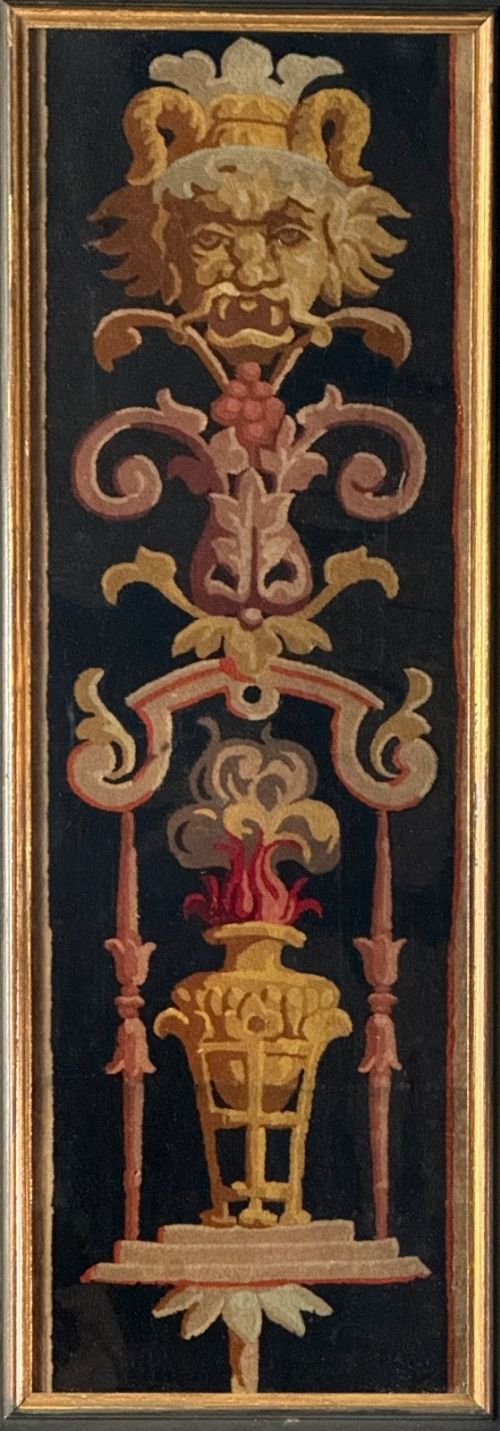
A black silk wall hanging brings dense embroidery and rich Central Asian or Persian tribal work directly into a room.
Black Silk Wall Hanging
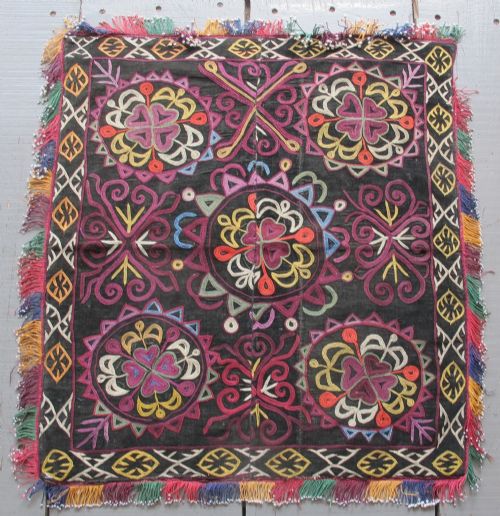
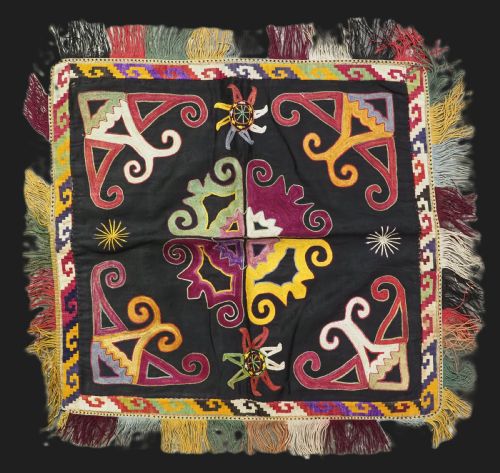
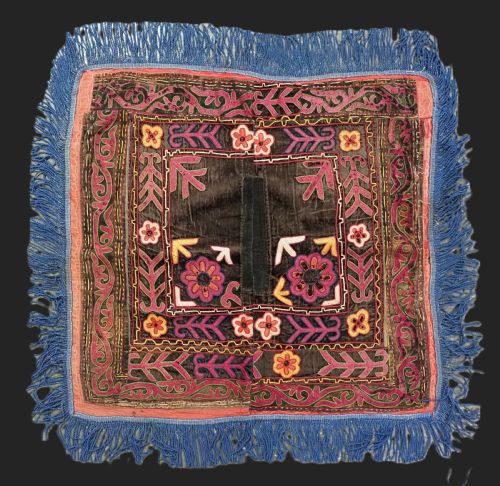
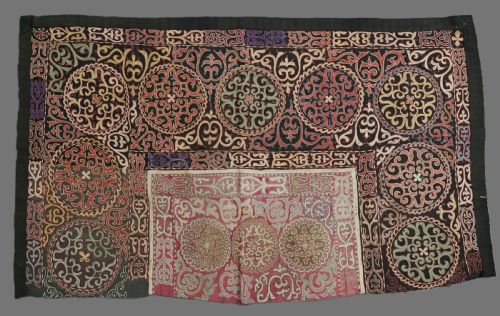
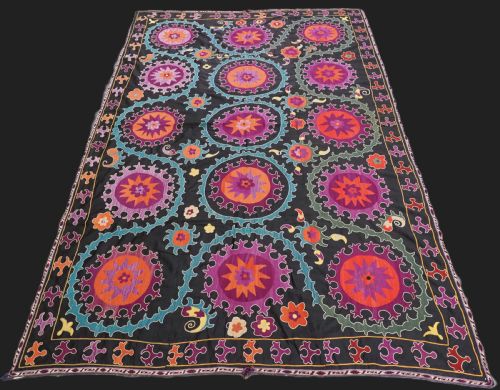
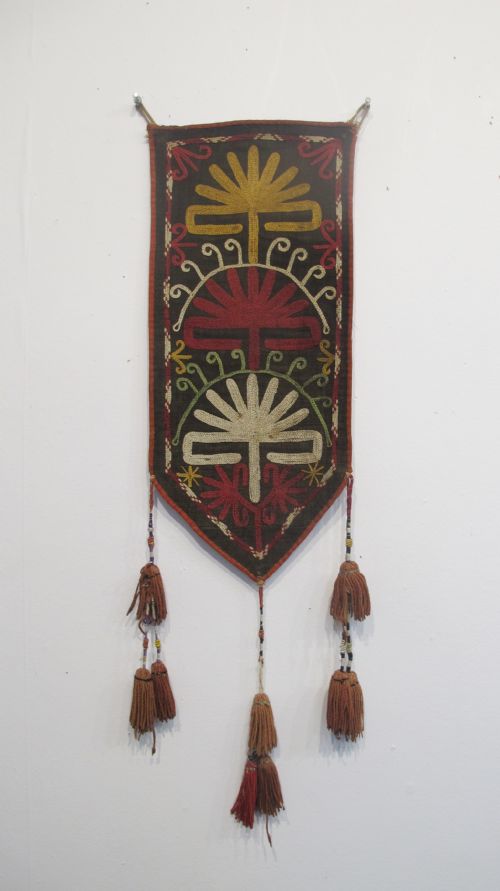
A black silk wall hanging encompasses antique tribal embroideries, dowry hangings, mirror covers, and yurt decorations originating from Central Asia and Persia. These textiles draw the eye through intricate needlework created by communities such as the Lakai Uzbek tribes and Persian workshops.
The versions most commonly met on this page date from the late nineteenth century into the early decades of the twentieth century. Examples range from small amulet covers and horse trappings to large yurt hangings and embroidered panels adapted for display.
Makers utilised dark grounds of silk, cotton, felt, or wool to create dramatic contrast with brightly coloured threads. Each object carries the distinct visual vocabulary of its nomadic or regional origin.
How they were made
Craftspeople worked silk, cotton, and metallic threads onto dark foundation fabrics including black felt, cotton, and woven silk. Needlework techniques involved dense surface embroidery, often augmented with appliqué elements, wool felt, glass beads, and sequins.
The structure relies on durable backing materials to support the heavy stitching used in traditional dowry pieces and ceremonial covers. Artisans utilised contrasting palettes where vibrant floral or geometric motifs stand proud against the dark ground.
Listings feature periods spanning from the late nineteenth century through to the nineteen-thirties, with materials including silk, wool felt, and glass beads.
What varies in quality
Quality rests upon the density of the stitching, the complexity of the design layout, and the survival of delicate materials like sequins and glass beads. Finer pieces display exceptionally tight needlework and balanced composition across the entire surface.
The condition of the ground fabric and the stability of the embroidery threads dictate the structural integrity of the hanging. Pieces retaining their original borders and vibrant dye lots command greater attention from collectors.
The Black Silk Wall Hanging Glossary
- Ilgich
- A Central Asian embroidered hanging produced by the Lakai tribe, often used for domestic decoration or dowry purposes. These pieces feature dynamic geometric patterns stitched in bright silk.
- Suzani
- A large embroidered wall hanging from Central Asia, traditionally made by brides as part of their dowry. They typically display bold floral and vine motifs.
- Torba
- A small storage bag or trapping produced by tribal groups, occasionally adapted as a decorative hanging. They display characteristic nomadic motifs executed in wool and silk.
- Rasht embroidery
- Needlework originating from the Persian city of Rasht, distinguished by laid-work and couching techniques on felt grounds. These textiles frequently use bold figurative or floral designs.
Black Silk Wall Hanging: Frequently Asked Questions
How do I hang a textile safely?
Mount a textile using a padded sleeve or a velcro strip attached gently along the top edge to distribute the weight evenly.
Avoid using direct pins or nails that pierce the fabric and compromise the historical ground material.
Where were these textiles originally placed?
Nomadic and regional communities hung these embroideries inside tents, yurt interiors, and homes to adorn living spaces during ceremonies and daily life.
Many specific forms served as dowry elements, bed decorations, or protective covers within the household.
How do I care for antique silk embroidery?
Keep textiles away from direct sunlight to prevent the natural silk threads and bright dyes from fading over time.
Light dusting with a soft brush helps maintain the surface without disturbing delicate beads or loose stitches.
How are different tribal styles identified?
Attribution relies on examining the specific stitch structures, colour combinations, and geometric or zoomorphic motifs characteristic of groups like the Lakai.
Regional variations in foundation materials, such as heavy black felt versus woven silk, also signal distinct origins.