
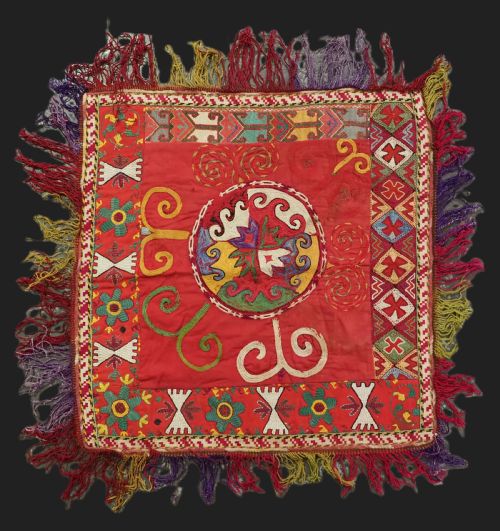


Lakai Tribe Embroidered Panel
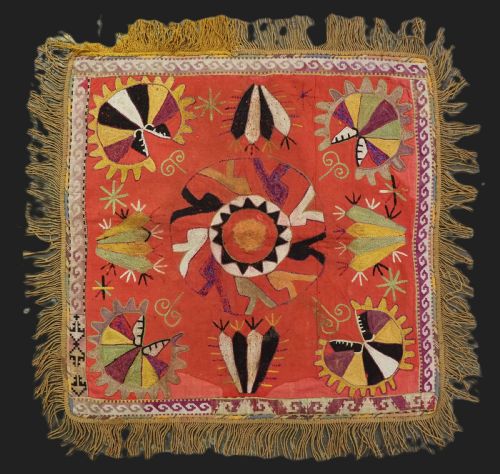
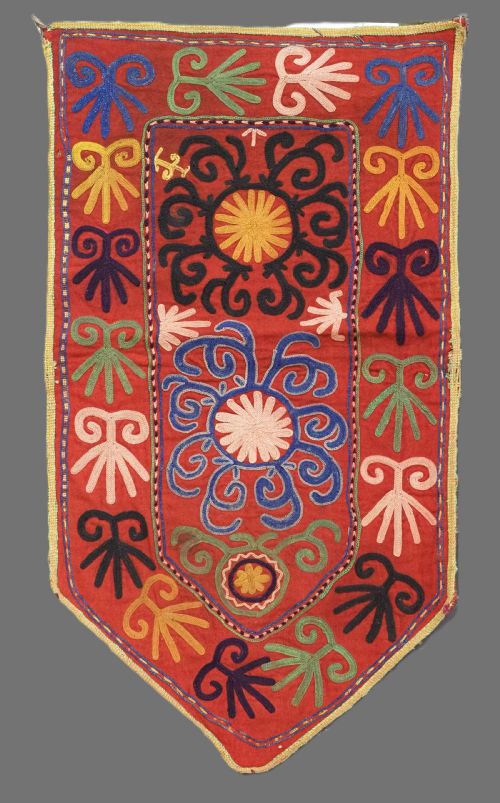
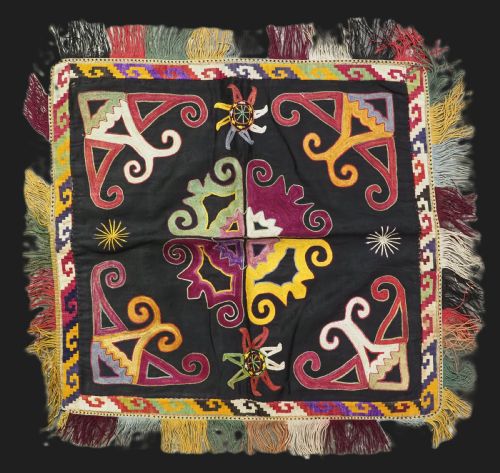
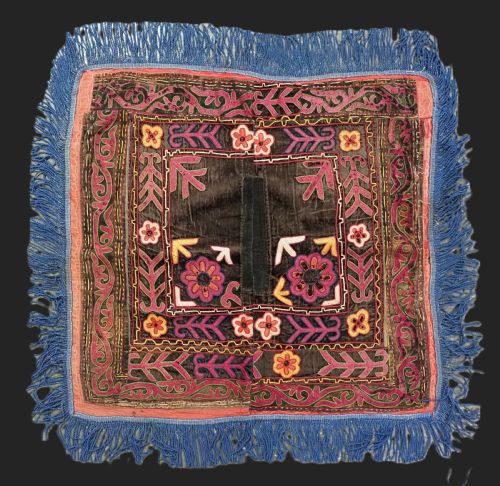
These lakai tribe embroidered panel examples are vibrant Central Asian textiles created for dowries and ceremonies, prized for their bold geometric motifs.
Lakai Tribe Embroidered Panel
A lakai tribe embroidered panel originates from the nomadic and semi-nomadic peoples of Central Asia, specifically Uzbekistan, produced across the late nineteenth and early twentieth centuries. These pieces typically take the form of ilgich wall hangings, dowry embroideries, storage bags, or ceremonial horse covers.
The version most frequently met on this page is the antique dowry embroidery created for wall hanging, dating from around nineteen hundred. They reflect Uzbek folk art traditions and Central Asian tribal aesthetics through dynamic compositions.
How they were made
Artisans constructed these textiles using a combination of silk, cotton, wool, and velvet materials. Silk embroidery threads provide rich colour and lustre when applied to a cotton or wool foundation.
Stitchwork techniques define the visual structure of each panel, building dense geometric patterns and symbolic motifs by hand. The integration of contrasting velvet elements adds textural depth to the surface design.
Listings span periods from eighteen eighty to nineteen twenty, featuring silk, cotton, wool, and velvet materials.
What varies in quality
The distinction between panels rests upon the tightness of the stitchwork and the complexity of the design layout. Superior examples display meticulous execution in every geometric repeat and symbol.
Material selection also dictates overall merit, particularly the vibrancy and retention of the original silk and wool threads. Coarser execution or faded palettes separate simpler utility pieces from finer ceremonial items.
The Lakai Tribe Embroidered Panel Glossary
- Ilgich
- A Central Asian wall hanging used for decoration or domestic storage inside a yurt. These textiles form a large portion of traditional embroidery.
- Suzani
- An embroidered tribal textile originating from Central Asia, traditionally worked by women as part of a bride's dowry. They showcase elaborate botanical and geometric motifs.
- Uut kap
- A specialised hanging bag used in nomadic dwellings for storing tent bands and household items. They feature intricate embroidery on the front face.
- At torba
- A ceremonial horse cover or saddle bag produced by tribal groups for festive occasions and processions. They display bold decorative stitching.
Lakai Tribe Embroidered Panel: Frequently Asked Questions
What is a lakai tribe embroidered panel?
These items are traditional Central Asian textiles created by Uzbek tribal groups, primarily serving ceremonial functions or dowry purposes.
They represent nomadic folk art traditions through expressive stitching and distinct geometric symbolism.
How were these embroidered panels used?
Nomadic families utilised them as interior wall hangings, storage bags, or decorative elements for horses during ceremonies.
They functioned both as practical household objects and as displays of familial status and textile skill.
How do I hang a textile panel?
Collectors typically mount these antique pieces on a padded wooden batten using conservation-grade cotton tape or display them within glazed frames.
Direct contact with metal pins should be avoided to protect the historic fabric fibres.
How do I date these embroidered panels?
Dating relies on assessing the dye types, fabric grounds, and stylistic conventions characteristic of late nineteenth and early twentieth-century Central Asia.
Natural fading and wear patterns also provide indicators of age and traditional usage.