




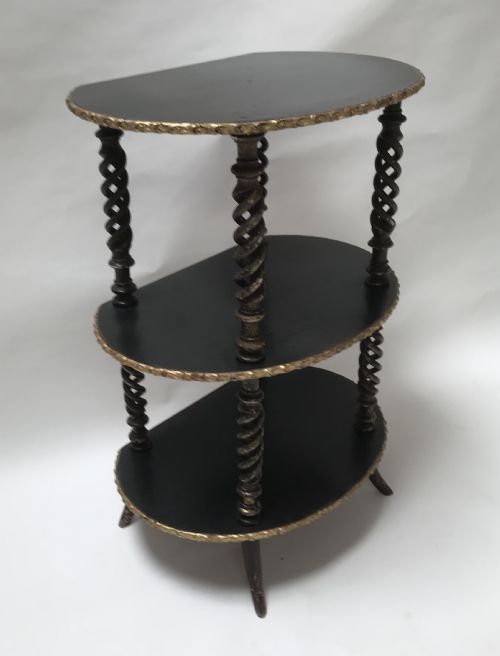

Black Painted Shelving
Black painted shelving brings dark, architectural presence to a room, offering practical display surfaces with strong period character.
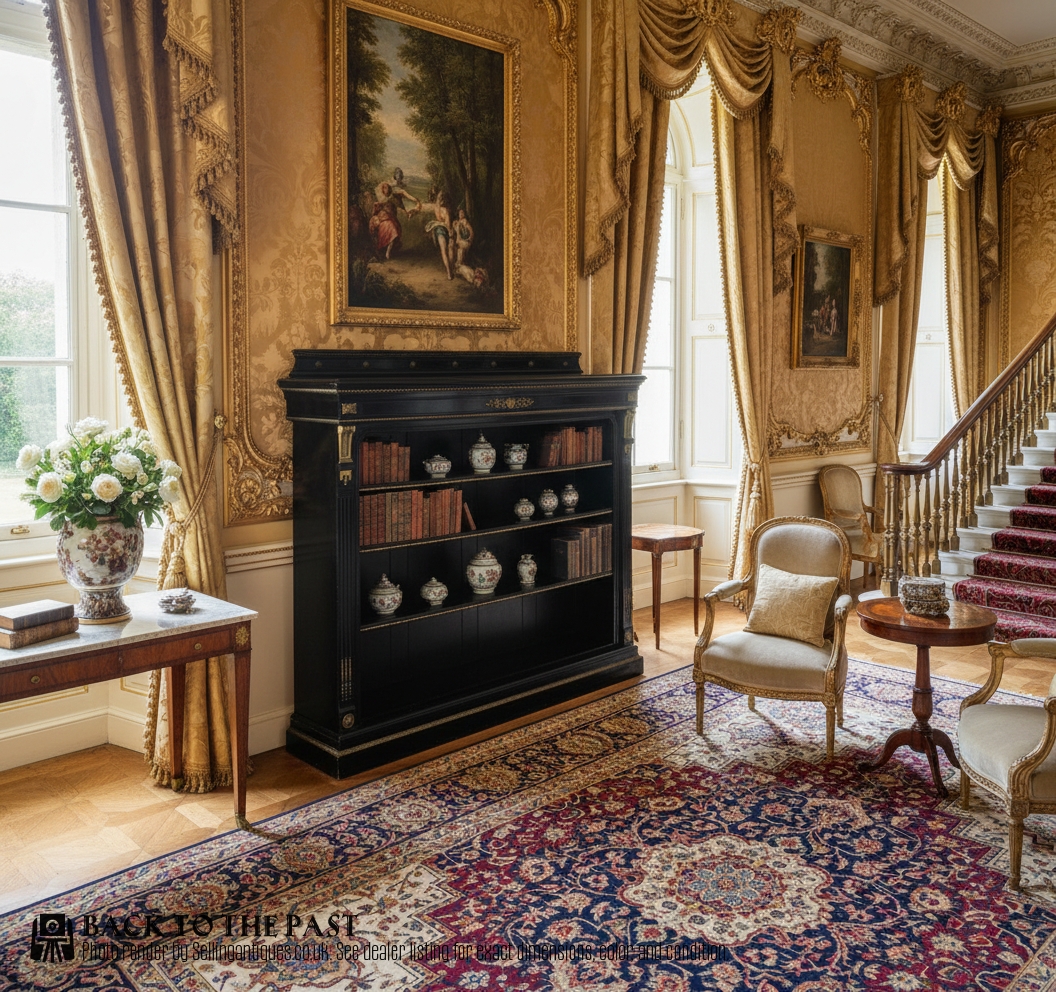
Black Painted Shelving
When you search for black painted shelving, you encounter an array of wall brackets, bookcases, overmantel mirrors, and cabinets spanning the nineteenth and early twentieth centuries. These pieces cross various design traditions, ranging from French provincial and neoclassical models to English country and Victorian aesthetic styles.
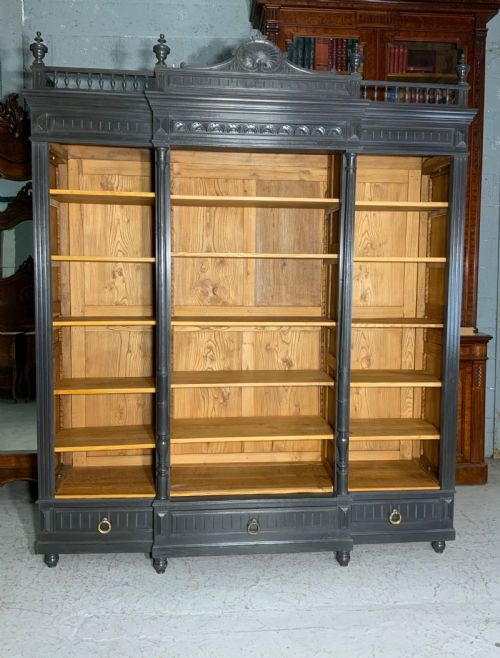
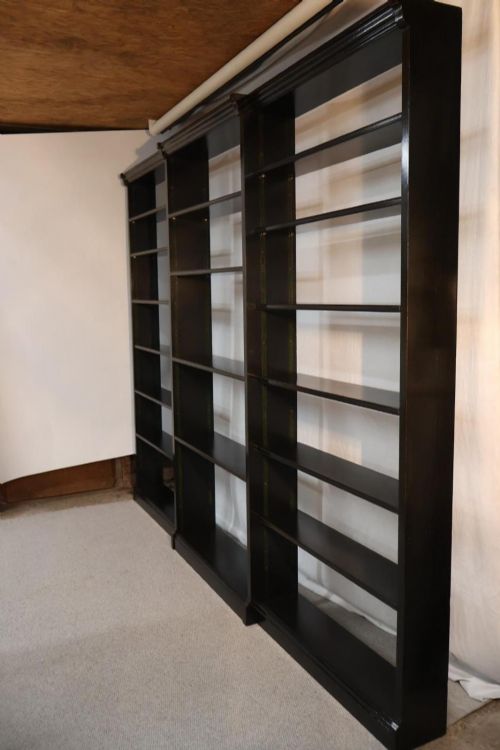
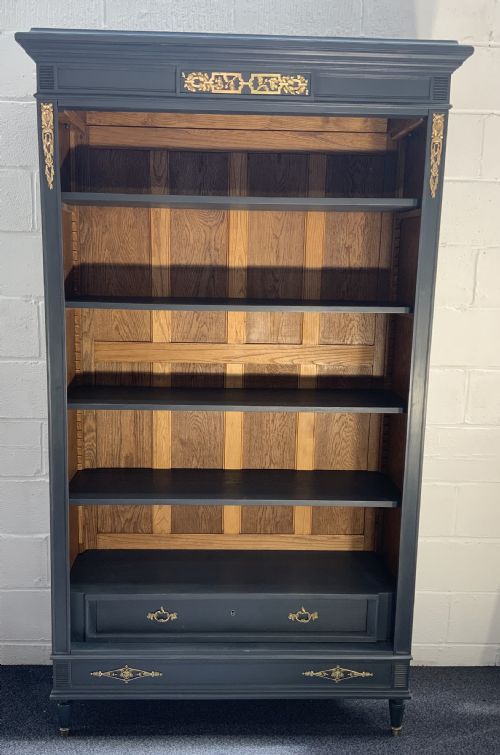
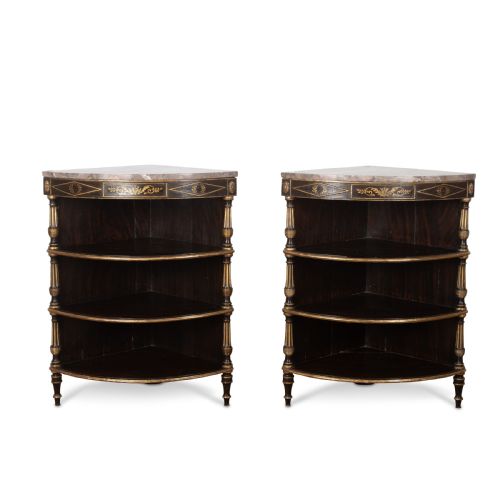
The most common versions met on this page are open bookcases and overmantel mirrors finished in ebonised wood or dark paint, often accented with brass mountings or gold leaf. You also find smaller desk organisers, corner cabinets, and wall consoles designed for compact display.
Origins stretch across English and French workshops from the Victorian, Edwardian, and George V eras, alongside the Aesthetic Movement. Each piece uses its dark surface treatment to frame books, mirrors, or decorative objects against a wall.
How they were made
Makers utilised pine and general wood carcasses, applying dark paint, black lacquer, or ebonisation to mimic costly exotic hardwoods like ebony. This finish often received parcel gilt highlights to catch the light along moulded edges and carved details.
Many examples incorporate brass embellishments, mounts, and occasional marble tops to add weight and contrast to the painted wooden structures. Glass elements also appear in mirrors and display configurations, held within sturdy timber frames.
Listings feature materials including pine, glass, brass, gold leaf, and ebonised wood across the nineteenth and twentieth centuries.
What varies in quality
The distinction between standard utility items and finer decorative examples rests on the depth of the ebonisation, the crispness of the applied gold leaf, and the refinement of the brass mounts. Superior pieces display integrated design motifs and balanced proportions that reflect specific stylistic movements such as the Aesthetic Period or French neoclassical design.
Construction methods also separate the range, with better items showing careful joinery in cornices, shelves, and panelled backs rather than basic assembly. The integration of decorative elements like heart mirrors, marble tops, or console brackets elevates the execution beyond simple storage.
The Black Painted Shelving Glossary
- Ebonised
- Wood treated with stain, dye, or polish to simulate solid ebony. This dark finish was especially popular during the Victorian and Aesthetic periods.
- Parcel Gilt
- Wood or ornament partially gilded with gold leaf. It highlights carved details and contrasts sharply against a black painted surface.
- Overmantel Mirror
- A large mirror designed to hang above a fireplace mantelpiece. These often incorporate shelving or decorative wooden frames.
- Whatnot
- A set of open shelves tiered for the display of ornaments and curiosities. They emerged during the nineteenth century as popular interior furnishings.
- Breakfront
- A piece of furniture whose central section projects forward from the flanking sides. This configuration creates visual depth and architectural interest.
Black Painted Shelving: Frequently Asked Questions
What periods do these shelves come from?
The pieces span the nineteenth and early twentieth centuries, covering Victorian, Edwardian, and George V eras alongside specific stylistic revivals.
You will find items produced through the eighteen-eighties and nineties, continuing into the nineteen-twenties and thirties.
How do I distinguish ebonised wood from painted wood?
Ebonised wood uses a chemical or stain treatment that penetrates the grain to darken timber while retaining its natural texture. Painted wood relies on an opaque surface coating that completely masks the underlying grain.
Both finishes achieve a dark aesthetic, but ebonisation typically reveals more of the material's character beneath the black surface.
Were these shelves used in specific rooms?
Bookcases and open shelving were primarily placed in libraries, studies, and drawing rooms for the storage of literature and collected volumes. Overmantel mirrors and wall brackets functioned as principal decorative fixtures in formal reception spaces.
Smaller accessories like desk organisers served functional roles in private offices and writing rooms.
What is an aesthetic period piece?
Aesthetic Movement pieces date to the late nineteenth century and prioritise artistic design and visual harmony over conventional historic revival. They frequently utilise ebonised finishes paired with gold leaf to create striking linear contrasts.
Such items reflect a deliberate shift towards art for art's sake in domestic interiors.