


Black Lacquered Clock
A black lacquered clock brings depth and narrative to a room, offering the dark sheen of japanned surfaces paired with meticulous gilt decoration.

Black Lacquered Clock
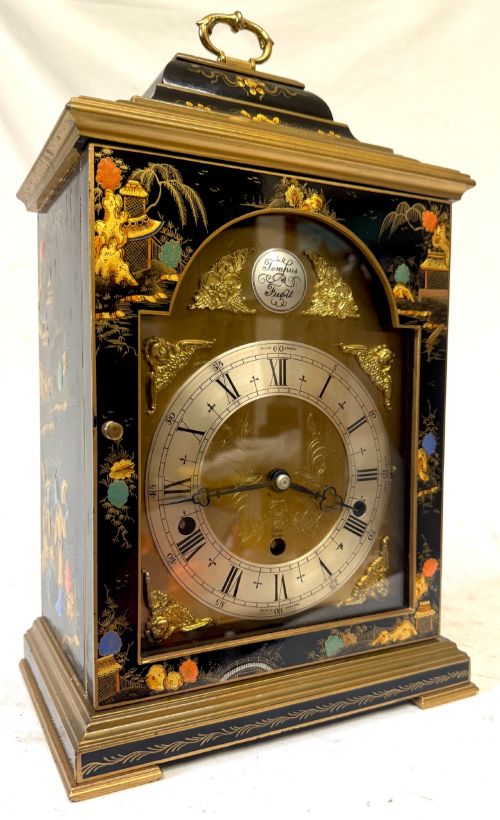
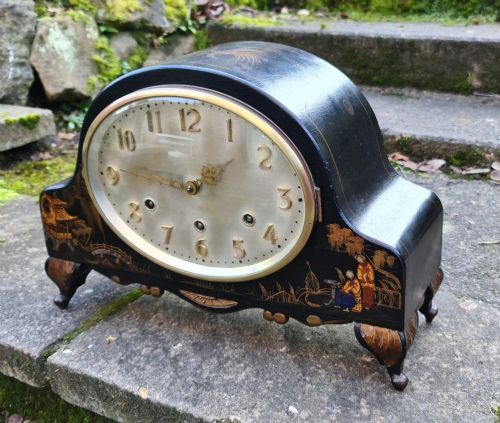
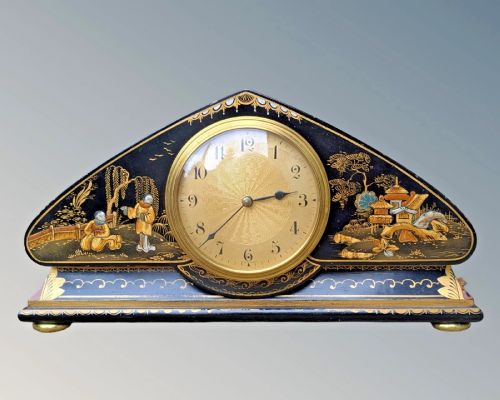
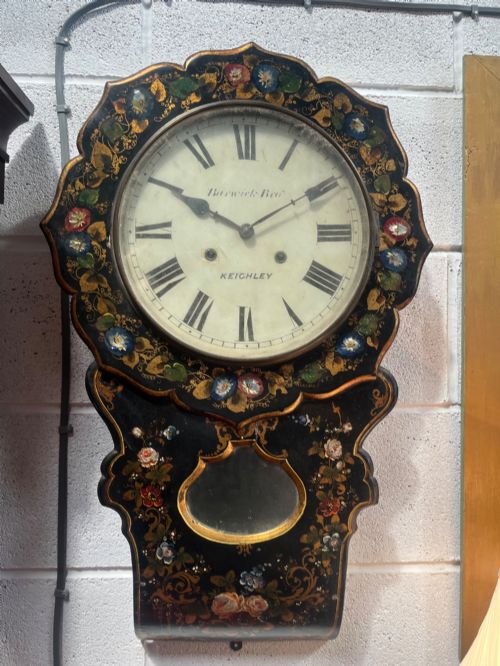
When searching for a black lacquered clock, buyers encounter a diverse range of horological forms spanning multiple centuries. The selection on this page demonstrates that longcase clocks dominate the older periods, whilst mantel, wall and bracket clocks emerge strongly in later decades.
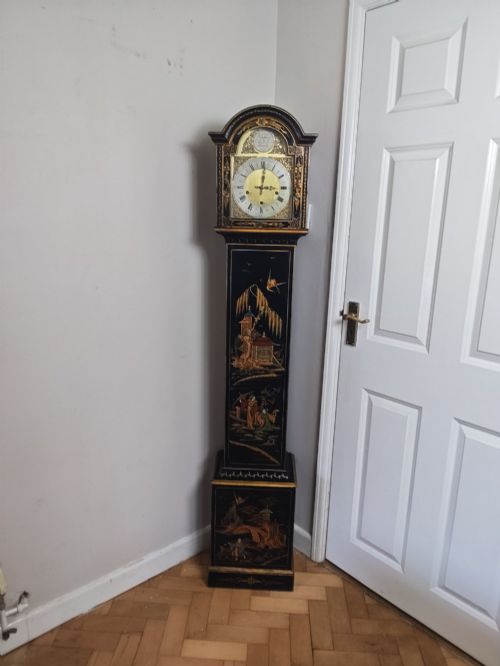
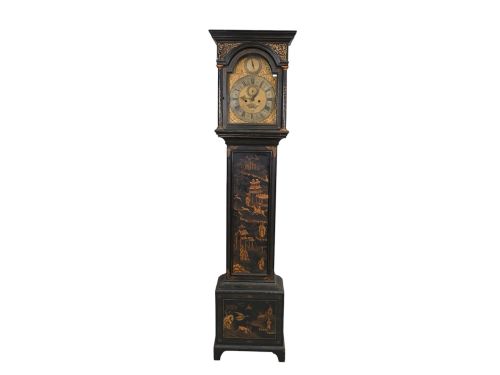
The aesthetic is deeply rooted in Chinoiserie traditions, displaying raised motifs of figures, pavilions and landscapes upon dark grounds. Examples stretch from 18th century grandfather clocks by notable makers to 20th century musical mantel versions.
Grandmother and longcase clocks provide imposing vertical presence, whereas mantel and bracket variants suit smaller spaces without losing decorative impact. The pieces present a continuous dialogue between traditional English movement-making and orientalist surface design.
Materials and construction
Makers built these clock cases using wood substrates such as ebonised or japanned timber, preparing the surface to receive successive layers of dark lacquer. This finish created a hard, glossy ground capable of supporting intricate painted decoration and gilt highlights.
Brass components feature heavily in the movements, dials and mounts, contrasting with the dark lacquer cases. Glass protects the clock faces on mantel, wall and longcase variants alike, allowing clear view of the chapter rings and hands.
Some models hide musical movements and chaff-cutter escapements behind their dark polished doors, ready to serenade the room.
Assessing quality in black lacquered clocks
Quality rests upon the depth and preservation of the japanned or lacquered finish, alongside the intricacy of the Chinoiserie decoration. Superior examples display crisp, raised gilt motifs and harmonious proportions across the wooden case.
The reputation of the horological maker and the complexity of the movement drive distinction between standard and exceptional pieces. Clocks featuring musical chimes or signed movements by established makers represent the upper tier of the range.
Wise of Reading·Thomas Utting of Yarmouth·Gardner of London·Robert Berry·Elliott of London
The Black Lacquered Clock Glossary
- Japanned wood
- Wood finished with a European imitation of East Asian lacquerwork, typically built up in layers and decorated with raised gilt figures or landscapes. This technique became highly fashionable in British furniture and clockmaking during the eighteenth century.
- Chinoiserie
- The European interpretation and imitation of Chinese and East Asian artistic traditions, prominent in the decoration of clock cases. It manifests through painted scenes of pagodas, exotic birds and figures.
- Longcase clock
- A tall pendulum clock enclosed in a wooden case standing upon the floor, commonly referred to as a grandfather or grandmother clock depending on its height. These pieces house the weight-driven movements securely within the trunk.
- Bracket clock
- A portable table or shelf clock, originally designed to sit upon a wall bracket. Many examples from later periods incorporate musical movements and arched brass dials.
- Three train clock
- A clock movement with three distinct gear trains dedicated to timekeeping, striking the hour and playing musical chimes or quarter hours. This mechanism is frequently found in musical Elliott models.
Black Lacquered Clock: Frequently Asked Questions
How do I care for black lacquer?
Keep the clock away from direct sunlight and fluctuating heat sources to prevent the lacquer from cracking or fading. Dust gently with a dry, soft cloth and avoid modern chemical polishes.
Maintaining a stable indoor climate preserves the integrity of the gilt decoration and the wooden substrate. Professional conservation ensures the movement remains clean and properly lubricated.
What is a grandmother clock?
A grandmother clock is a smaller, more slender version of the traditional longcase or grandfather clock. They typically measure under six feet in height.
Introduced largely in the twentieth century, these pieces suit rooms with lower ceilings while retaining weight-driven or spring-driven mechanical movements.
How do I wind an 8 day clock?
An eight-day movement requires winding approximately once a week using the specific key provided with the clock. Insert the key into the winding holes on the dial and turn steadily until resistance is felt.
Take care not to overwind the springs or weights, as this can damage the internal mechanism. Consult the specific instructions for musical or chiming variants to ensure the train aligns correctly.
Where should I place a longcase clock?
Position your longcase clock against an interior wall away from exterior doors and heavy foot traffic to minimise vibrations. A stable floor surface ensures the pendulum swings evenly and the clock keeps accurate time.
Ensure the case is properly levelled using feet or shims where necessary. This prevents uneven wear on the escapement and keeps the chime synchronised.