


Black Lacquered Chinese Cabinet
A black lacquered chinese cabinet brings deep dark surfaces and intricate gilt detailing into a room, offering both bold visual weight and practical storage.
Black Lacquered Chinese Cabinet
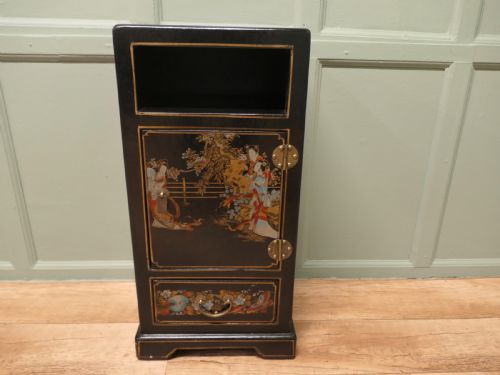
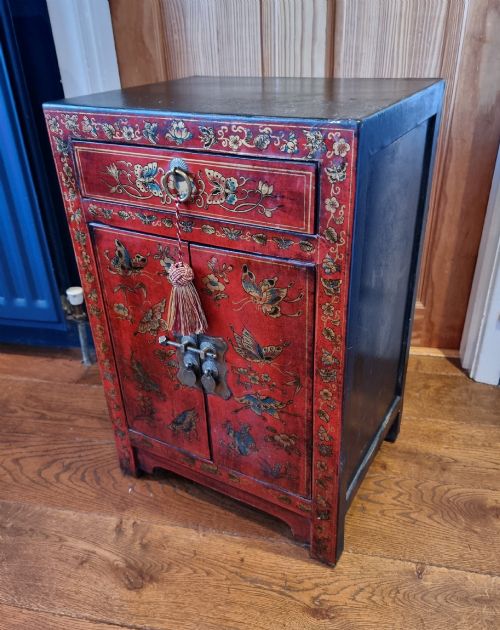
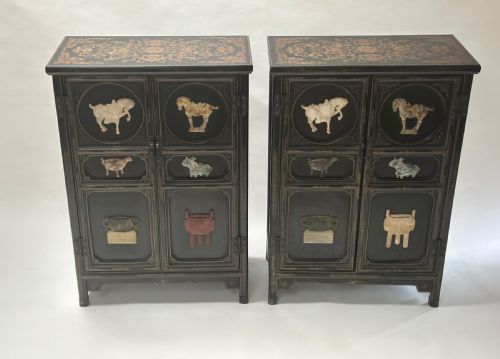
A black lacquered chinese cabinet groups together various case furniture forms finished with dark resinous coatings, ranging from compact table chests to large compound cupboards and standing display pieces. When you search for this phrase, you encounter examples spanning several centuries, with nineteenth century regional pieces and early twentieth century export items appearing most frequently.
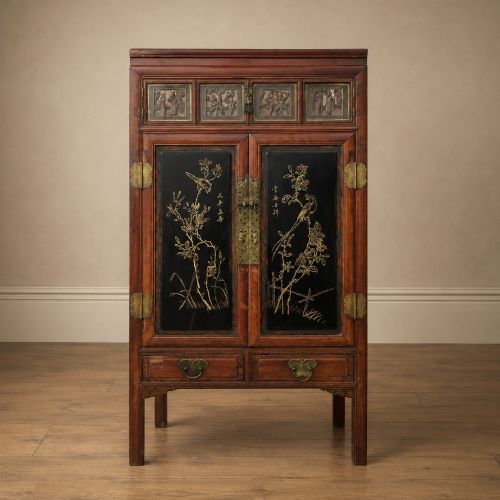
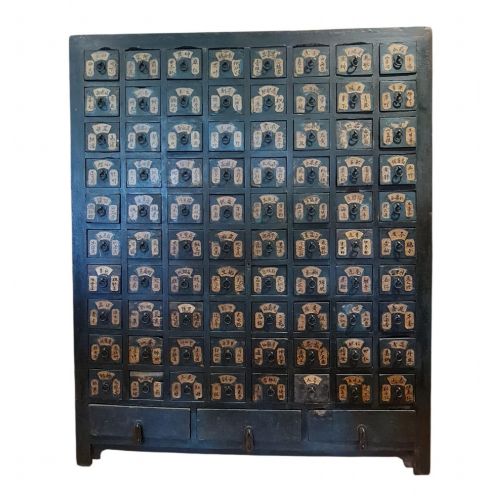
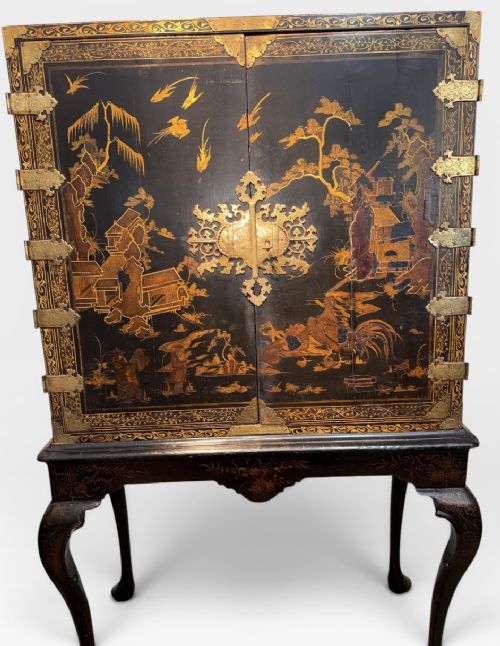
The selection encompasses diverse regional styles, including traditional Chinese provincial work, Qing dynasty pieces from Fujian and Shanxi provinces, and European-influenced Chinoiserie interpretations. Forms vary from apothecary chests with numerous small drawers to side cabinets, corner units, and elaborate cabinets on stands.
These items served practical domestic and commercial purposes, from storing medical herbs and documents to holding household valuables and tablewares. Today, they function primarily as focal storage furniture in living spaces, hallways, and dining rooms.
Materials and construction methods
Makers built the foundational carcass from timbers such as elm and general hardwoods, providing a stable structure for the successive layers of finish. Joinery techniques relied on traditional framing methods suited to regional workshop traditions.
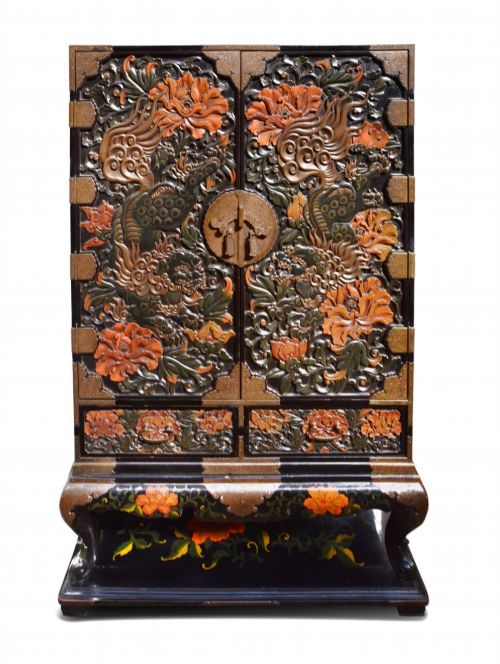
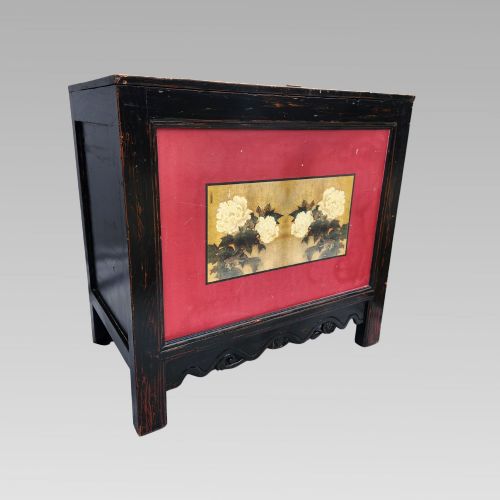
The surface finish relies on natural lacquer applied in multiple coats to achieve a deep, durable sheen, often enriched with gold leaf details, painted floral motifs, and applied hardstone or brass hardware. Artisans built up these decorative layers by hand, combining painting, carving, and gilding to create complex pictorial scenes.
Shanxi apothecary chests on this page manage up to eighty tiny drawers, proving that historical organisation reached levels of genuine obsession.
What distinguishes finer examples
Quality separates along the depth and complexity of the surface decoration, where finely executed gold leaf painting and delicate carving mark out superior workshop production. The preservation of the original lacquer coating without extensive modern repainting dictates the historical integrity of the piece.
Construction details also separate standard commercial pieces from finer cabinetwork, particularly in the precision of the joinery, the quality of the timber substrate like elm, and the original state of brass hinges and mountings.
The Black Lacquered Chinese Cabinet Glossary
- Lacquer
- Protective and decorative resin finish derived from tree sap, applied in successive coats to wood surfaces. It cures to a hard, smooth shell that accepts pigments and gilding.
- Compound cabinet
- Large stacking cabinet form constructed in separate sections for easier transport and placement. These pieces often feature substantial capacity and formal presence.
- Apothecary chest
- Multi-drawer cabinet originally used by traditional practitioners to sort medicinal herbs and roots. The numerous small drawers create a distinctive gridded facade.
- Cabinet on stand
- Elevated storage piece supported by a dedicated frame or base, which can be carved or plain. This form lifts the main body of the cabinet to eye level.
Black Lacquered Chinese Cabinet: Frequently Asked Questions
How do I clean a lacquered surface?
Dust gently with a soft, dry cloth to prevent scratching the delicate finish.
Avoid chemical polishes, modern detergents, and excessive moisture, which can damage the aged lacquer layers.
Where should I place my cabinet?
Position the piece away from direct sunlight and strong heat sources like radiators to prevent the wood and lacquer from drying out and cracking.
Ensure the room maintains stable humidity levels to protect the traditional materials.
How do I distinguish regional pieces?
Examine the structural timber, construction methods, and stylistic motifs to identify specific origins.
Provincial pieces often show simpler construction using elm, while export and Qing dynasty pieces display more formal ornamentation.
Are these cabinets structurally sturdy?
Most examples utilise solid hardwoods and traditional joinery designed to support everyday use.
Careful handling of doors, drawers, and brass hardware preserves the mechanical function of older mechanisms.