


Brass Mounted Chinese Cabinet
A brass mounted chinese cabinet brings hard wood and polished metal together, offering storage wrapped in centuries of decorative tradition.
Brass Mounted Chinese Cabinet
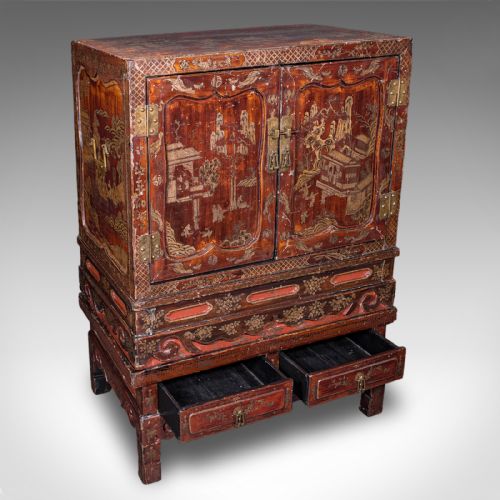
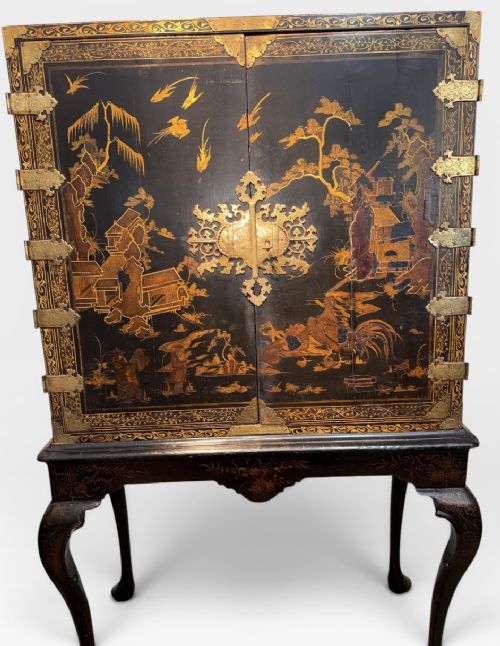
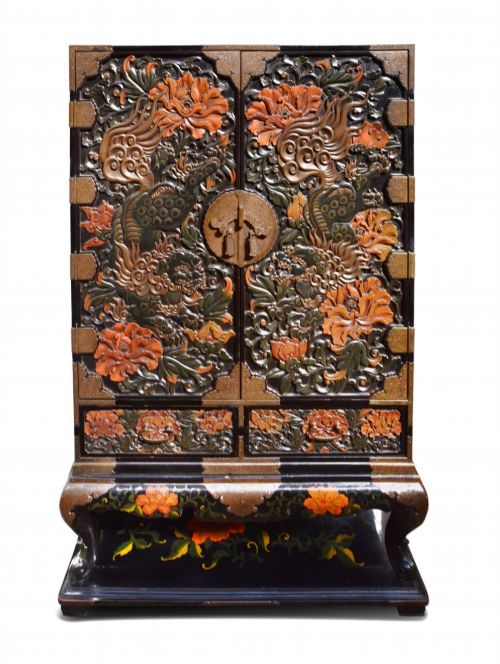
A brass mounted chinese cabinet takes many forms across the inventory, ranging from tall compound cupboards and side cabinets down to table cabinets, bedside lamp cabinets and spice boxes.
The materials span hardwood, elm, and rosewood, frequently finished in black or red lacquer alongside gold leaf highlights.
Dated examples stretch from the eighteenth century through the Victorian era into the early twentieth century, including pieces from the Qing Dynasty and the Chinese Republic Period.
Construction and materials
Construction relies heavily on dense hardwoods, elm, and rosewood, shaped into sturdy frames for floor, wall, and table placement.
Surfaces receive layers of lacquer in black or red, sometimes decorated with gold leaf or carved motifs in traditional Chinoiserie styles.
Brass mountings provide structural reinforcement and visual contrast against the dark wood and coloured lacquer surfaces.
The inventory records brass mounted chinese cabinet pieces spanning the eighteenth century, the Victorian period, and the early twentieth century.
Assessing quality and craftsmanship
Quality rests in the weight of the timber and the depth of the lacquer finish, where multiple applications create a resilient surface.
The precision of the brass mounts and the clarity of any hand carving distinguish finer workshop output from simpler utilitarian storage.
Proportion and the integration of the stand, whether separate or built into the frame, dictate the overall balance of the piece.
The Brass Mounted Chinese Cabinet Glossary
- Lacquer
- A durable finish applied in thin coats to wood, derived from tree sap and often pigmented in black or red.
- Chinoiserie
- European interpretation and imitation of Chinese artistic traditions, visible in decorative motifs and painted scenes.
- Compound cabinet
- A traditional stacked storage form where smaller units sit atop a larger base or stand.
- Rosewood
- A heavy, dense hardwood prized for its dark grain and used in finer cabinets and collector boxes.
- Qing Dynasty
- The final imperial dynasty of China, spanning the seventeenth to the early twentieth century and influencing many surviving design forms.
Brass Mounted Chinese Cabinet: Frequently Asked Questions
What is a noodle cabinet?
A noodle cabinet is a traditional form of Chinese storage furniture, typically constructed from elm with simple lines and functional doors.
These pieces were originally designed for domestic use and often feature clean joinery without heavy ornamentation.
How do I date a lacquered cabinet?
Dating relies on examining the timber construction, the wear patterns on the lacquer, and the style of the brass hardware.
Earlier pieces from the eighteenth century show distinct hand-tool marks and patination that differ from Victorian or early twentieth-century examples.
Where were table cabinets placed?
Table cabinets and spice chests were compact units designed to sit on desks, larger furniture pieces, or floors for organising small valuables.
Their portable nature allowed them to be moved easily between rooms while providing secure enclosed storage.
What distinguishes red lacquer from black?
Red lacquer finishes often indicate higher-status decorative pieces, sometimes incorporating gold leaf or detailed carving for formal rooms.
Black lacquer provides a more subdued surface that still offers high durability and a polished contrast to brass mounts.