


Traditional Asian Armoire
These traditional Asian armoire examples offer striking storage solutions that anchor a room with centuries of cultural craftsmanship and rich finishes.
Traditional Asian Armoire
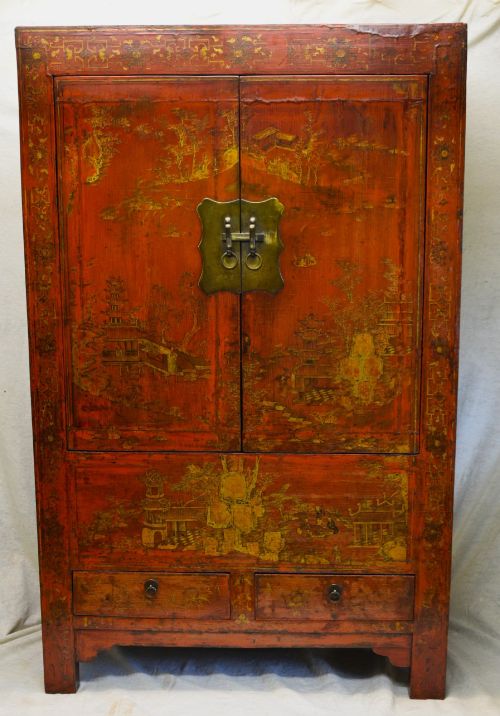
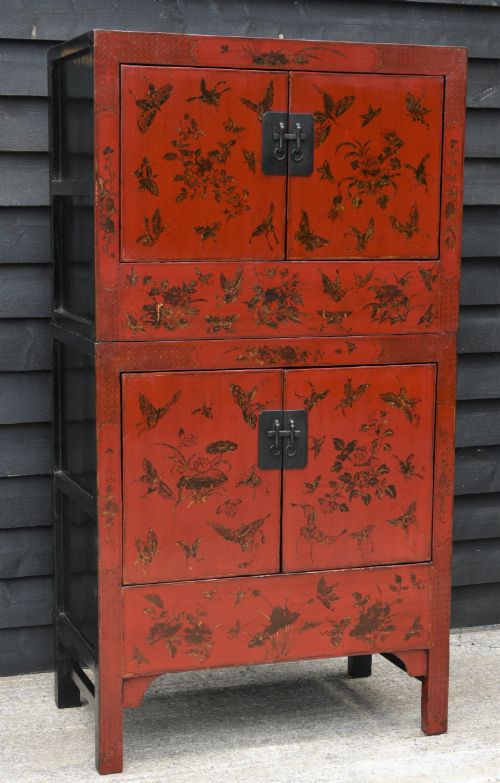
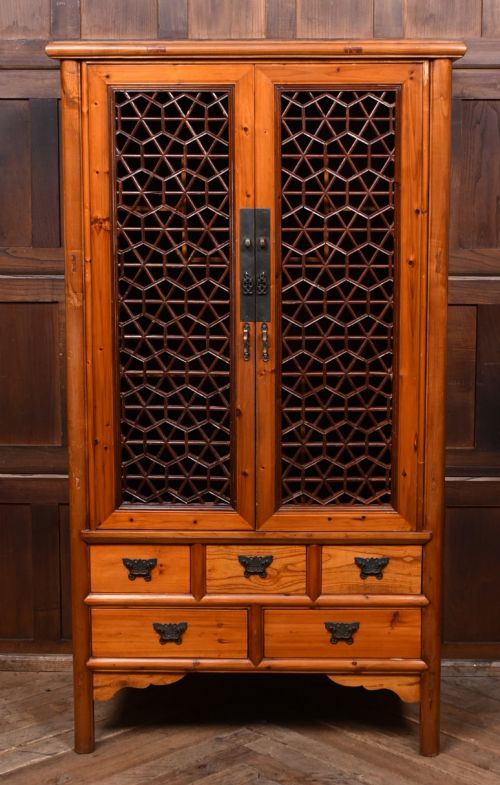
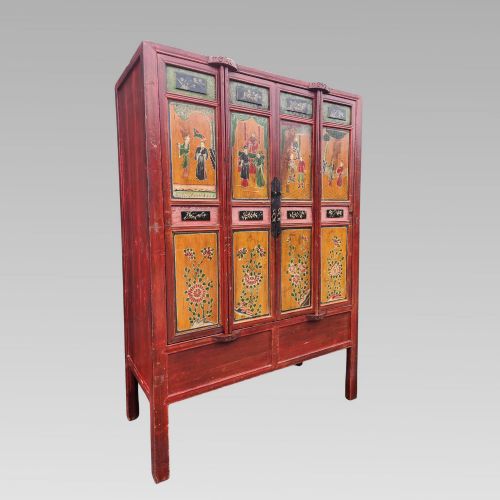
A traditional Asian armoire encompasses large storage cabinets and marriage cupboards originating from regions such as China and Japan, spanning the nineteenth century through the early twentieth century. Buyers searching for traditional Asian armoire options will frequently encounter red lacquer wedding cabinets, elm noodle cabinets, and compound storage cupboards.
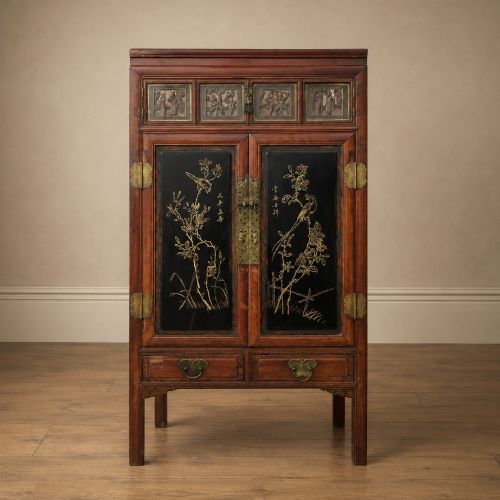
The selections on this page range from monumental red lacquer marriage pieces from Shanxi and Fujian provinces to compact camphor wood cabinets on chests and Japanese larder cupboards. These forms serve primarily as statement storage furniture, combining deep historical roots with functional utility for modern living spaces.
Most pieces date to the nineteenth century, with Victorian-era items and Chinese Republic period works also appearing among the listings. Collectors select these items for their architectural presence and the distinct regional styles that reflect Qing Dynasty and Meiji period traditions.
How they were made
Craftsmen utilised native timbers such as elm, camphor wood, zitan, pine, and mixed hardwoods to build the core structures of these cabinets. These woods provided the stable, durable foundation necessary for large compound cupboards and storage chests.
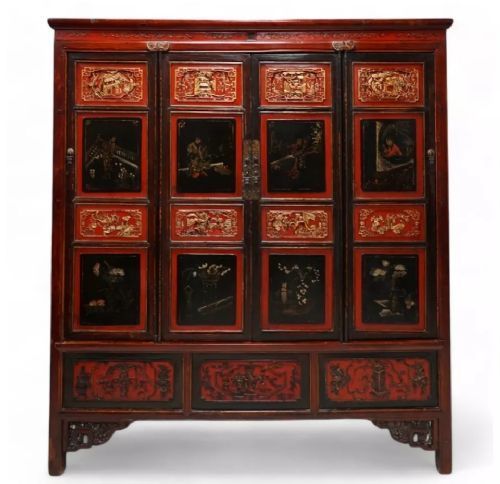
Surfaces were frequently finished with layers of red or black lacquer, sometimes incorporating intricate carved details or Chinoiserie motifs. Metalwork components, specifically brass and iron hinges, plates, and lock boxes, were integrated to secure the heavy doors and reinforce structural joints.
Some marriage cabinets feature removable centre stiles, built so brides could squeeze bulky quilts through the doors without snagging.
What varies in quality
The distinction between standard pieces and exceptional ones rests upon the depth of the original lacquer finish, the complexity of wood carvings, and the preservation of authentic brass or iron hardware. Cabinets featuring rich multi-layered red or black lacquer with intact regional patination sit higher on the scale than plain utility pieces.
Construction methods also dictate quality, particularly the presence of traditional joinery in compound cabinet designs and the selection of dense timbers like zitan or aged elm over simpler pine. Intricately carved dragon motifs or specialised regional styles from provinces such as Shanxi indicate finer workshop output.
The Traditional Asian Armoire Glossary
- Lacquer
- A durable finish applied in multiple coats to wood surfaces, derived from tree sap and often pigmented in striking red or black hues. It protects the timber while providing a smooth, glossy surface.
- Compound cabinet
- A tall storage unit constructed in two stacked sections, where a smaller upper cabinet rests securely upon a larger base cupboard. This form was traditionally used for storing valuables and clothing in elite households.
- Marriage cabinet
- A large dual-door cupboard traditionally presented to a bride as part of her dowry, typically finished in bright red lacquer and decorated with symbols of auspicious union. These pieces often feature removable centre stiles to facilitate internal storage.
- Chinoiserie
- European decorative style and artistic interpretation drawing upon Chinese and Asian design motifs, frequently applied to furniture finishes and decorative arts. It reflects Western fascination with Eastern aesthetics.
- Zitan
- A dense, heavy Asian hardwood prized by master cabinetmakers for its dark colour and fine grain. It allows for crisp, detailed carving that survives centuries of handling.
Traditional Asian Armoire: Frequently Asked Questions
What is a marriage cabinet?
A marriage cabinet is a traditional large storage armoire given to a bride as part of her dowry in China, designed to hold garments and household linens. These pieces are traditionally finished in vibrant red lacquer and feature prominent brass or iron hardware.
They stand out in a room due to their imposing scale and symbolic decorative elements. Modern interiors utilise them as statement wardrobes or living room storage.
How do I care for lacquered wood?
Lacquered wood surfaces require protection from direct sunlight and extreme humidity fluctuations to prevent cracking or fading. Dusting gently with a soft, dry cloth is sufficient for routine maintenance.
Avoid chemical polishes and abrasive cleaners that can damage the delicate historical finish. Maintaining stable indoor room temperatures preserves the integrity of both the timber and the lacquer layers.
Where were these cabinets made?
These cabinets originate from various workshops across Asia, with specific pieces attributed to Chinese provinces like Shanxi and Fujian, as well as Japanese makers. Regional woodworking traditions dictated the choice of timber, such as elm, camphor wood, or mixed hardwoods.
Local aesthetics also influenced the hardware design and exterior ornamentation. Provincial styles range from austere scholar's cupboards to ornate, carved dragon cabinets.
How do I date an antique cabinet?
Dating relies on examining construction techniques, wood ageing, wear patterns, and regional stylistic markers from periods like the Qing Dynasty or Meiji era. Hand- forged iron or brass hardware and traditional joinery without modern fasteners suggest nineteenth-century or earlier origins.
Documentation of provincial styles and lacquer composition further helps narrow the period of creation. Comparative study of known historical examples provides the most reliable chronological context.