





Black Japanned Serving Tray
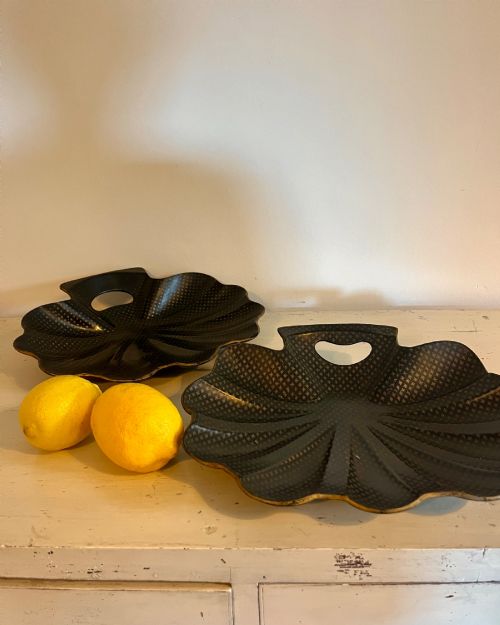
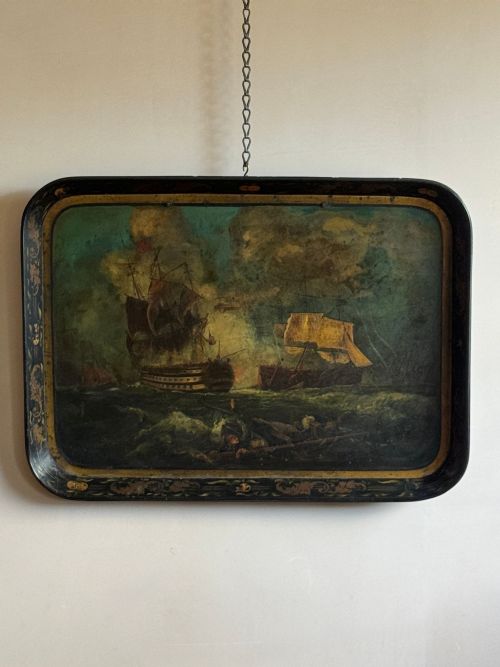
A black japanned serving tray brings glossy lacquer and gilded detail to a room, offering a durable surface that doubles as wall display.
Black Japanned Serving Tray
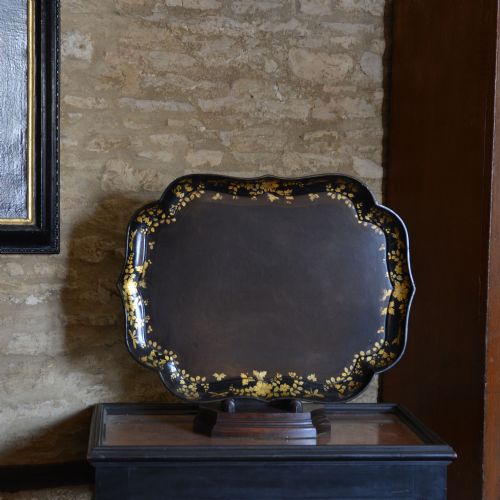
A black japanned serving tray appears in forms ranging from small servers to large oval and kidney-shaped tea trays. These pieces span the Georgian, Regency, and Victorian periods, alongside French Napoleon III and Japanese export examples.
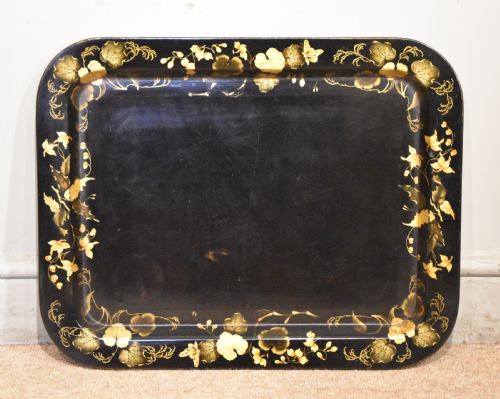
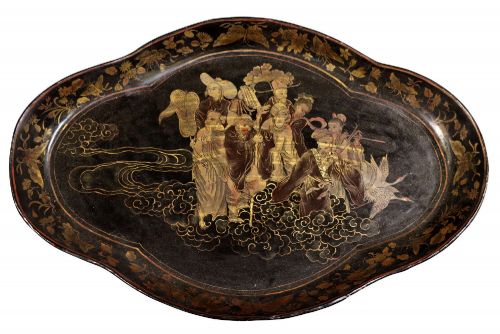
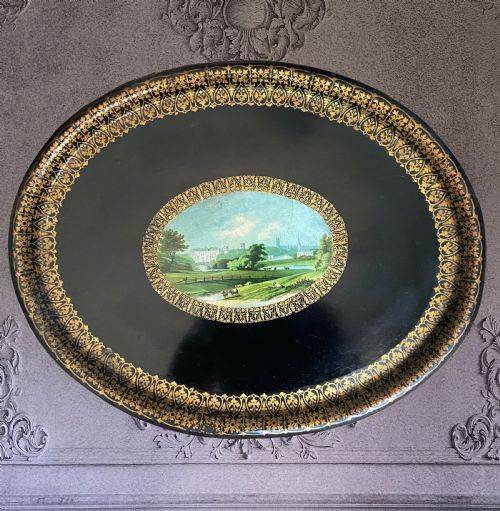
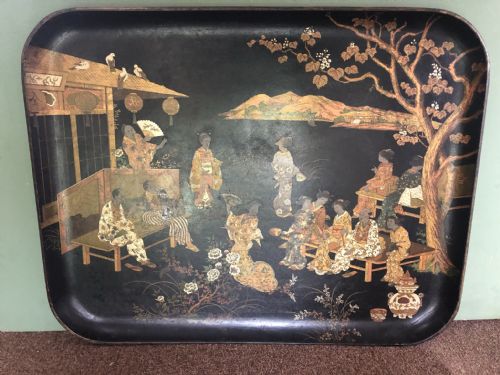
The most common formats on this page are papier-mâché and toleware trays, often decorated with Chinoiserie scenes, floral motifs, or gold leaf borders. Some examples survive mounted on stands as tray tables.
Origins stretch across English workshops in Pontypool and Birmingham, French centres, and Japanese export commissions. Buyers encounter both utilitarian servers and highly decorative display pieces.
Materials and construction
Papier-mâché trays utilise layers of paper pulped and pressed under heavy pressure, then baked and treated to form a rigid board. Toleware trays employ sheet iron, shaped and coated with protective enamel finishes.
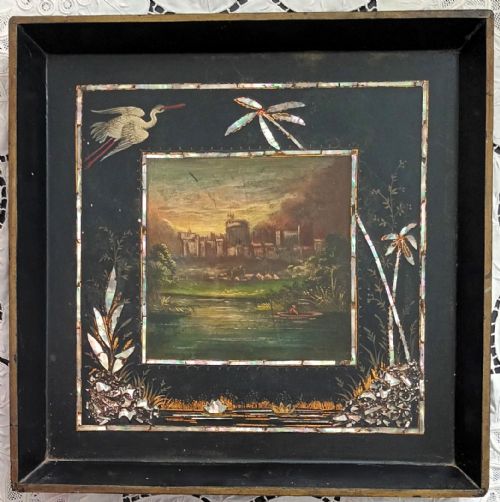
Craftsmen applied black lacquer surfaces, building depth through successive layers before hand-painting landscapes, figures, or botanical subjects. Gilding, paint, and occasional mother-of-pearl inlay enhanced the final composition.
Black Japanned Serving Tray Retail Price Guide 2026
Typical asking prices for black japanned serving tray among the pieces listed under this phrase on Sellingantiques today, from the lower quarter to the upper quarter. They describe what is for sale here now, not the wider market.
Listings feature papier-mâché and sheet iron materials spanning the Georgian, Regency, and Victorian periods.
Distinctions in quality
Quality rests upon the crispness of the hand-painted detail and the stability of the foundation material, whether pressed paper or sheet iron. Superior examples demonstrate secure integration of gold leaf and minimal craquelure across the lacquer ground.
Renowned makers such as Jennens and Bettridge or Clay applied finer brushwork and more complex Chinoiserie compositions. Weight, edge finish, and the preservation of original gilding further separate standard utility pieces from masterwork productions.
Jennens and Bettridge·Clay
The Black Japanned Serving Tray Glossary
- Japanned
- European imitation of East Asian lacquerwork, created by applying layers of varnish and dark finishes to wood, metal, or papier-mâché.
- Papier-mâché
- A composite material formed from paper pulp or sheets mixed with glue, pressed into moulds, and baked until rigid.
- Toleware
- Enamelled or painted sheet metalware, often produced in factories such as those in Pontypool during the eighteenth and nineteenth centuries.
- Chinoiserie
- European artistic style reflecting Chinese motifs, featuring pagodas, figures, and exotic landscapes rendered in gold and colour.
- Tôle Peinte
- Painted sheet metal objects, denoting French production styles from the nineteenth century.
Black Japanned Serving Tray: Frequently Asked Questions
Can I use these trays for serving food?
While originally designed for serving tea, antique surfaces are sensitive to moisture and heat.
Most owners prefer to use them for display, desk organisation, or dry service with protective linens.
How do I distinguish papier-mâché from toleware?
Papier-mâché feels warm to the touch and possesses a fibrous core visible on close inspection of the reverse.
Toleware is made of sheet iron, which feels cool and rings slightly when tapped.
What is the difference between Georgian and Victorian trays?
Georgian and Regency examples often feature restrained neoclassical borders or fine Chinoiserie executed in rich gold leaf.
Victorian pieces frequently incorporate mother-of-pearl inlay and heavier floral painting styles.